Auto Dealership Roofing in Franklin, TN
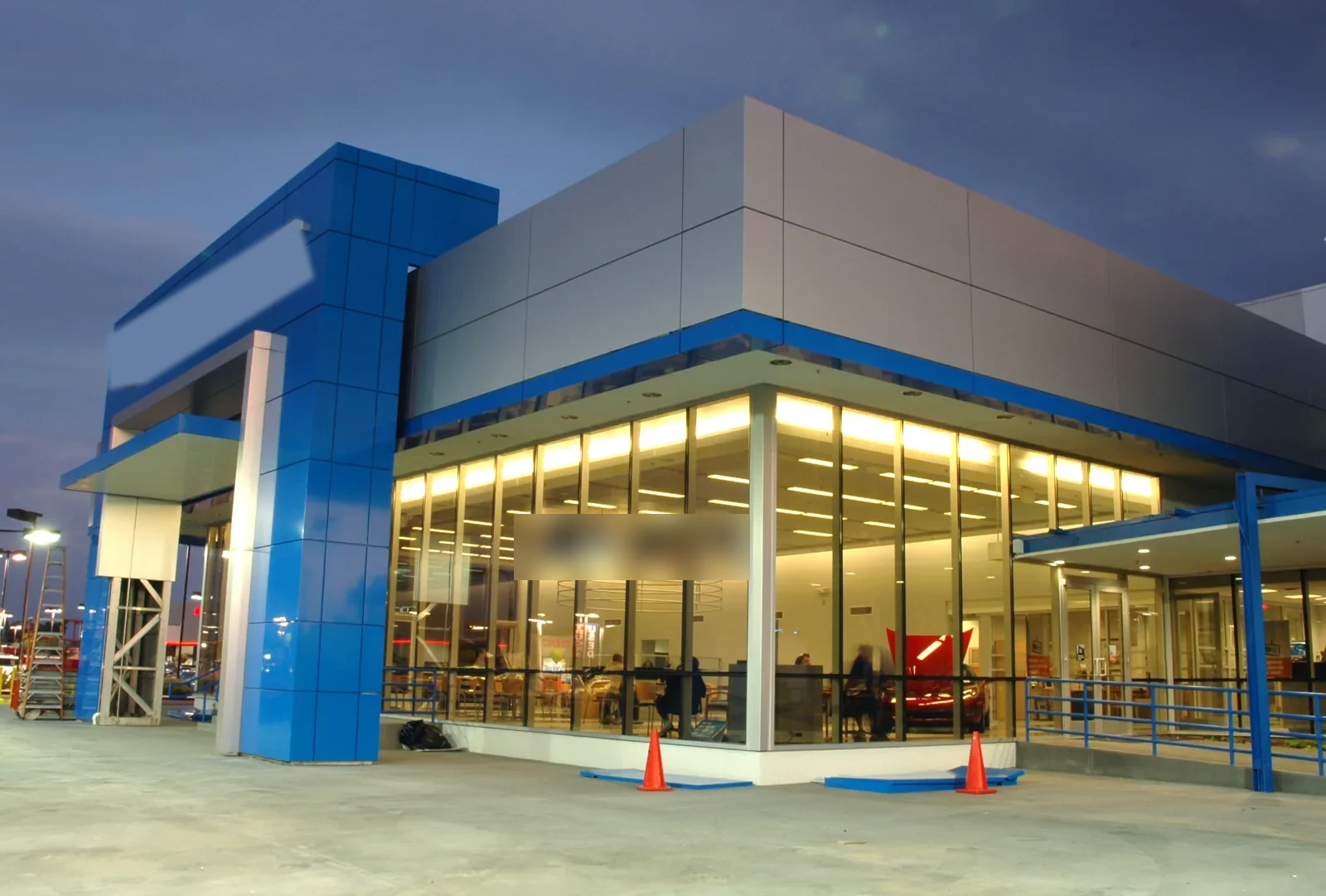
A water drip landing on a new car's hood in the showroom is the first sign, and nobody has to explain why it matters. The drip only shows where the water landed. Tracing it up through the ceiling and the membrane to the opening above comes first. A dealership roof in Franklin, TN is rarely one roof: the showroom, the service bays, the parts area, the offices and the canopies each have their own slope, material and details. Each can fail in its own way, and the repair starts by working out which one is leaking.
Four roofs under one name
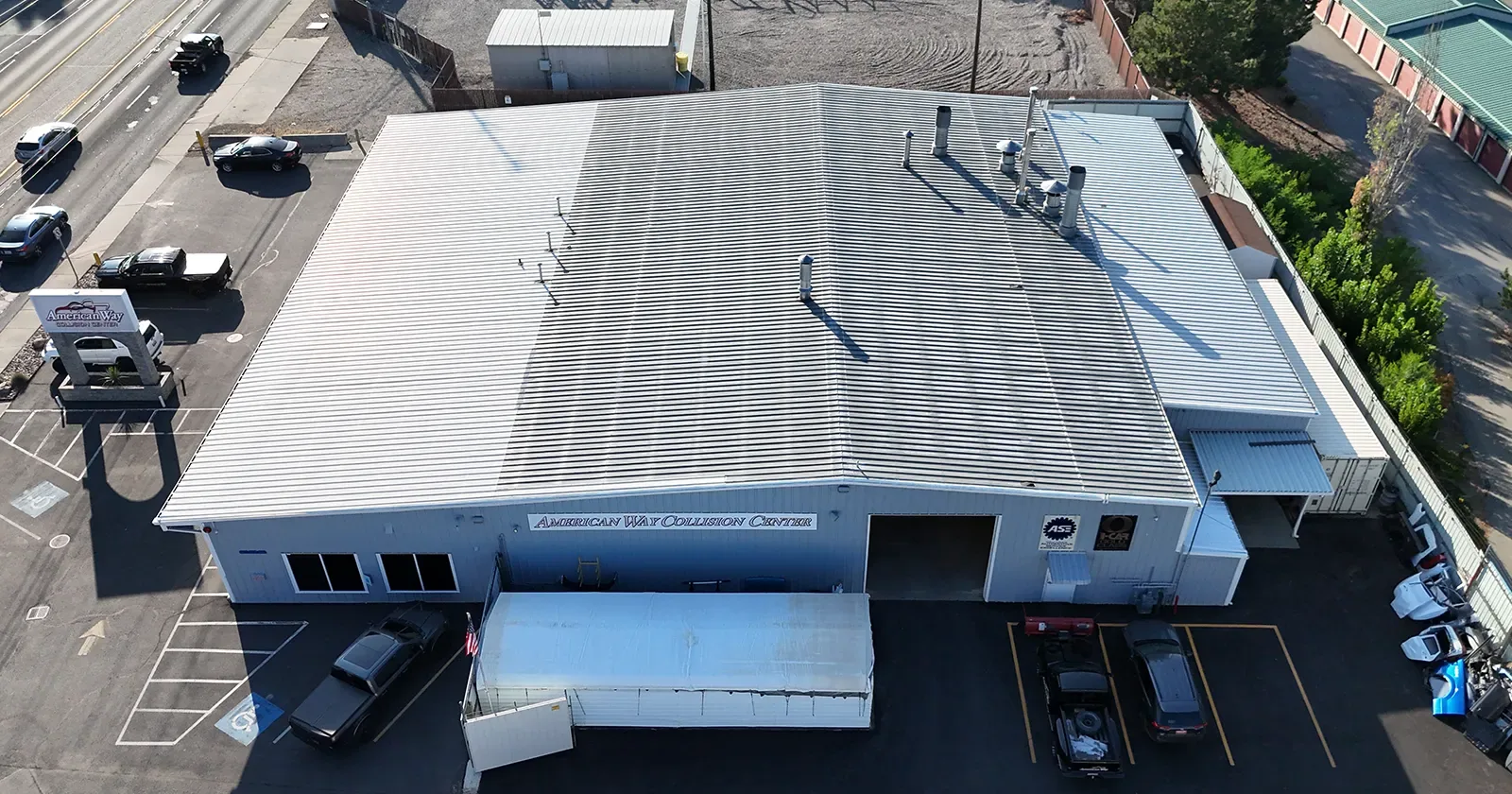
The showroom roof can be a flat or low-slope section with tall glass walls below. The service building may have a roof with exhaust fans, make-up air units and skylights. Parts and storage areas may have plainer roofs with fewer penetrations. Canopies over delivery or drop-off lanes are exposed on all sides.
We walk each section separately and give it a line on the roof plan. The record lists the material, the condition, the penetrations and the way each section connects to its neighbor. Most leaks begin at those connections, where a low roof meets a high wall and the flashing has to cope with movement from two different structures.
The canopy is the section most often forgotten. It sits outside the main building and takes wind and rain from every side. Gutters, fascia and the underside of the soffit show the first signs, such as peeling paint and stains. A canopy leak lands on customers' cars and walkways, so it gets its own line in the record.
Heat movement at the details
A Franklin July runs near 91 F, and the record is 108 F. A dark roof in that sun is far hotter than the air, and the metal around it expands. Exhaust fan curbs, skylight frames and flashing at the wall move a little every day, and the sealant that holds them shuts and opens like a hinge.
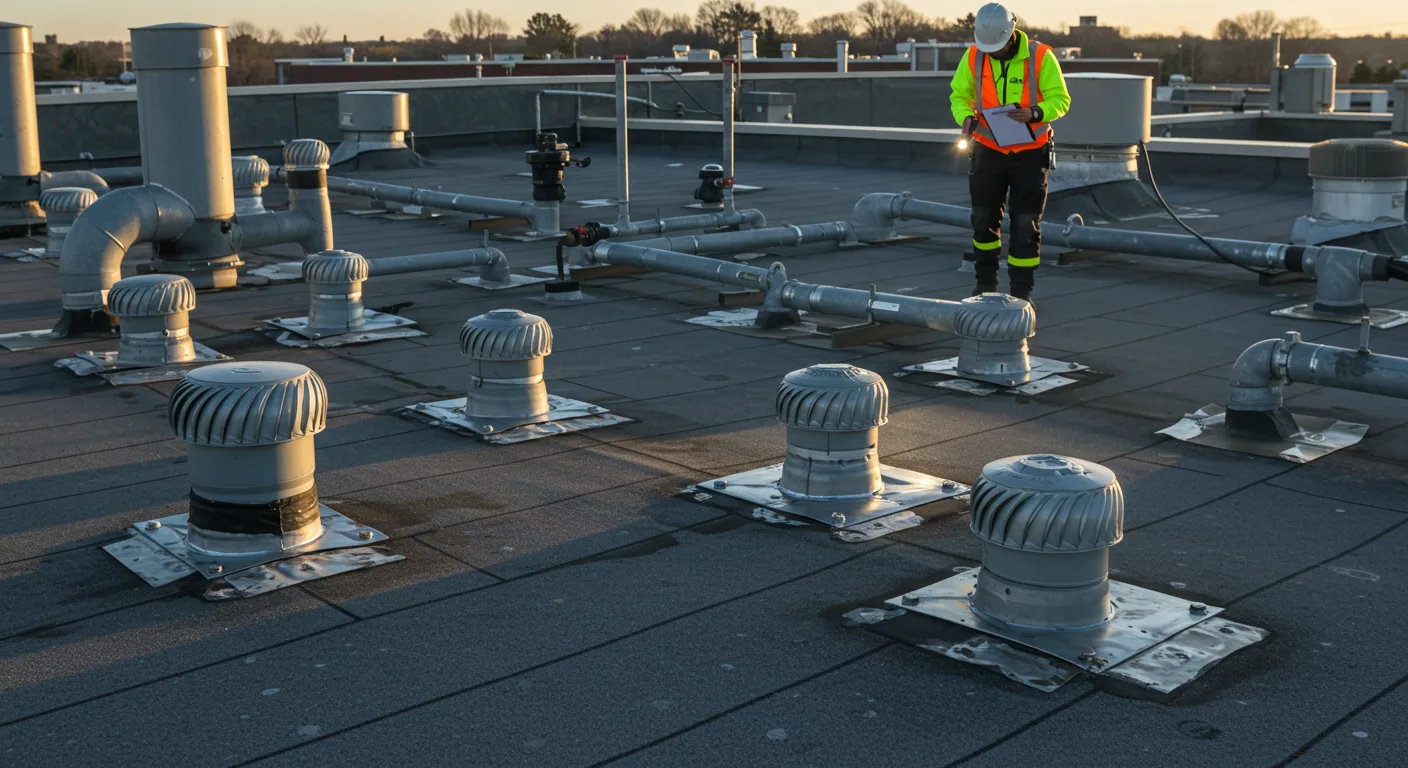
Sealant ages. It hardens, shrinks and splits along a hairline. A heavy rain needs only that hairline to push water into the insulation below, and the insulation carries it to the nearest ceiling joint. We find the hairline by running a hand along the termination, probing seams with a rounded tool and scanning for the wet layer. A skylight and penetration flashing review often covers the worst offenders.
Where the water stopped
A showroom roof has to shed roughly 54 inches of rain a year across a large area. Drains, scuppers and internal gutters carry the load, and a strainer clogged with leaves leaves a pond that finds any seam beginning to lift.
The path starts at the stain. A scan across the area outlines the wet layer, and a few core cuts verify it. The write-up shows where the water entered, where it traveled and where it showed, which tells the owner if a local repair will hold or if the wet area calls for a larger scope.
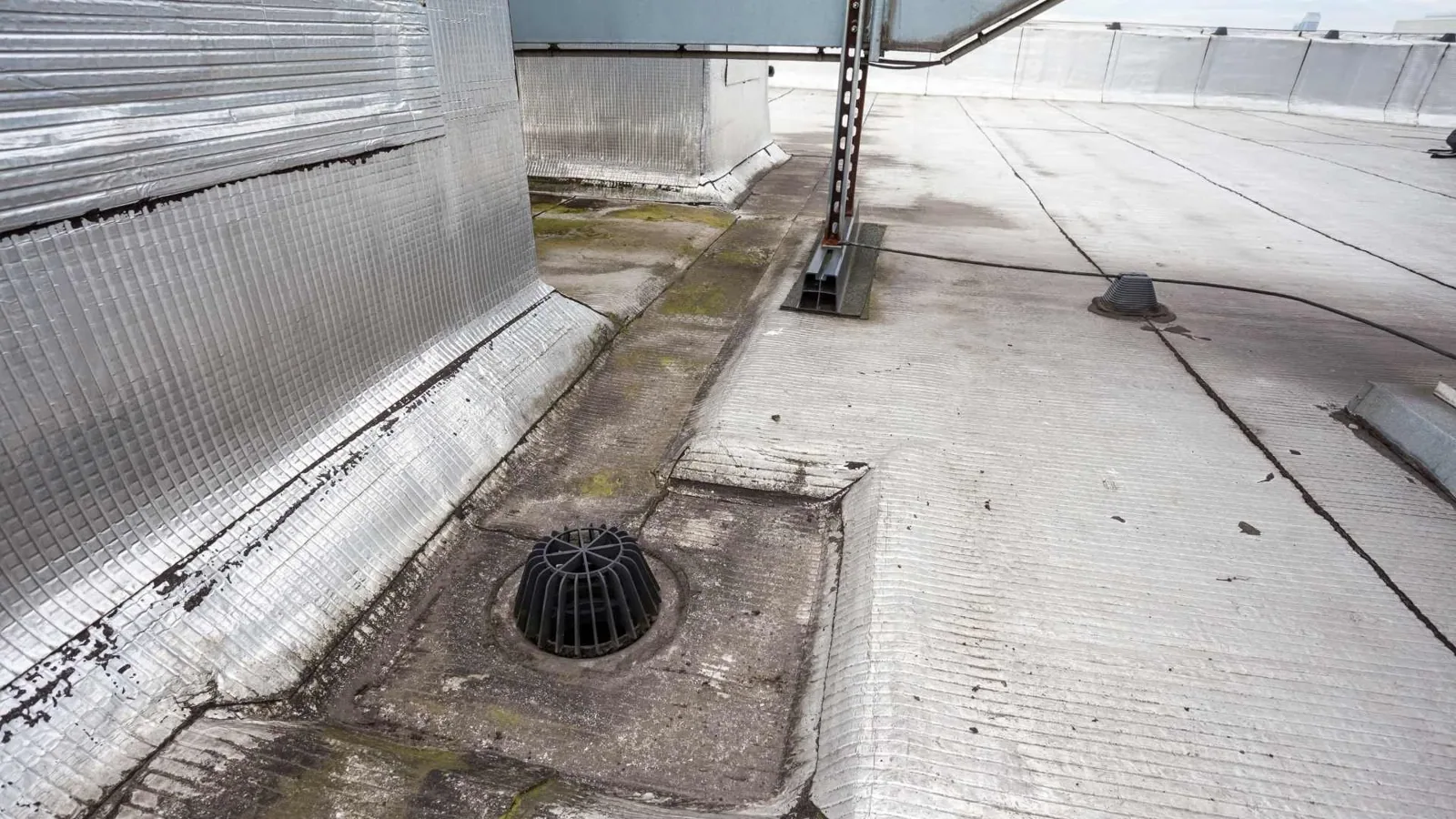
Internal gutters and roof drains need a particular look. A drain that backs up in a heavy storm can send water into a showroom ceiling in minutes. We lift strainers, flush lines where we can and check the overflow openings. The drain and scupper check goes in the record with photographs before and after.
Storms, hail and exposed edges
Brentwood sits in the Dixie Alley tornado zone, and Franklin's own EF0 in August 2023 left minor roof and exterior damage at businesses along Highway 96. In July 2026 a severe thunderstorm warning for northeastern Williamson County mentioned gusts near 60 mph and hail of about three-quarters of an inch.
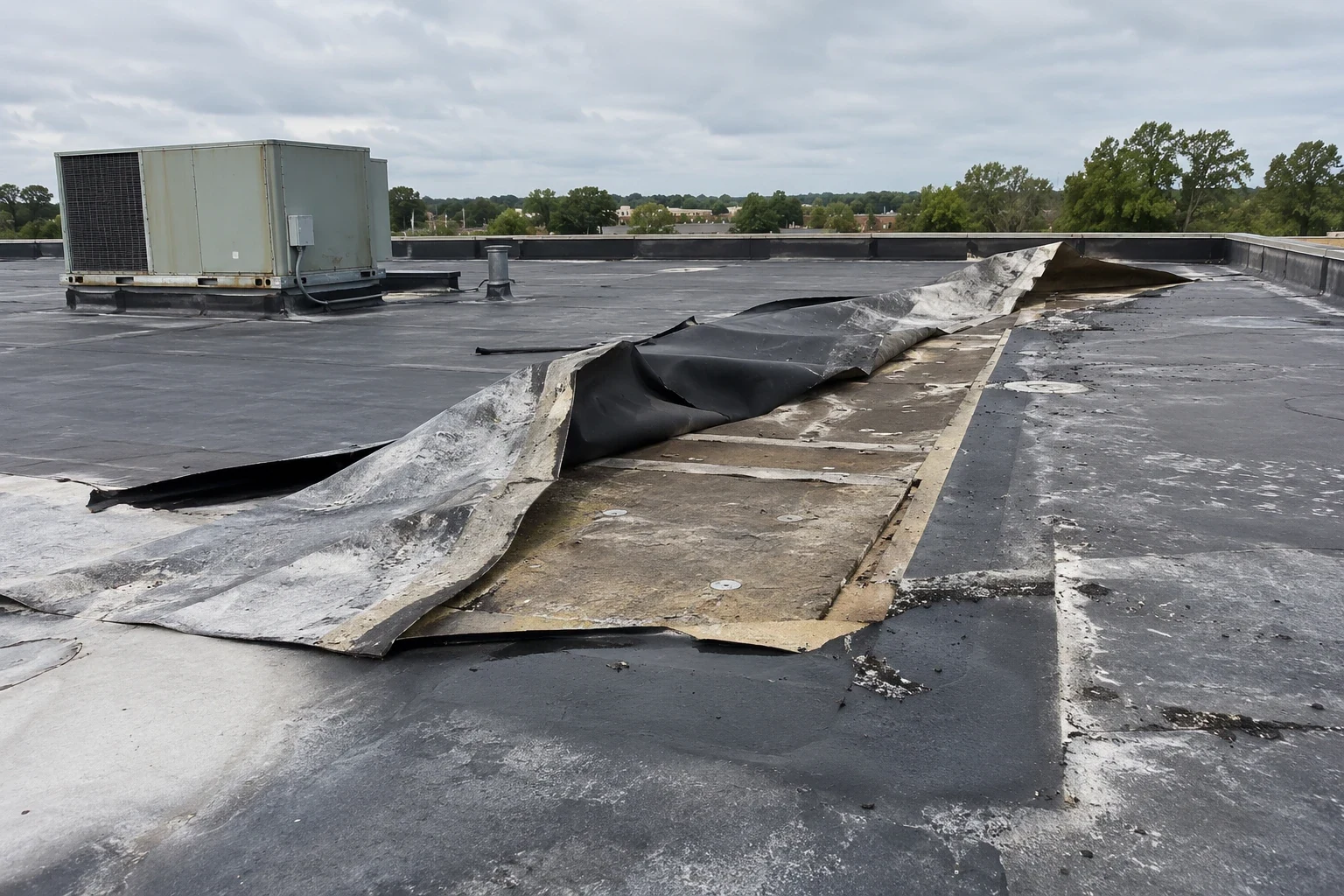
Dealerships also have large lots of cars, and hail damage to a roof is easy to confuse with damage to the inventory. We separate them. Our roof walk looks for dents in vent hoods and caps, bruises in the membrane and displaced edge metal, and documents each with dated photographs. That trail helps if a claim follows, and edge repairs after wind follow the wind damage repair method.
Roof work during sales hours
A dealership cannot close a showroom for a week. Work is planned in sections, with interior protection under each, and noisy tasks are scheduled for early mornings, evenings or service-light days. We agree on days with the general manager, keep customer parking clear and keep lifts and materials away from the front lanes.
For service bays, the plan names which lifts and tools must be covered, and where fumes from adhesives might reach technicians. Each section is closed before the crew leaves for the day. When a storm threatens, the area is dried in and work stops. A large project is run like occupied building reroofing, in phases.
Glass walls and curtain-wall edges deserve a word. Where a roof meets a window wall, the flashing is the only barrier between rain and the interior finish. We check the termination and the sealant at that joint, and we mark any place where water has stained the ceiling near the glass.
What the record should show
A dealership roof file is simple. It holds a roof plan with each section named, the install year of each section, the warranty papers, a list of repairs with dates and a set of dated photographs. Each entry names the section and the finding. When a leak appears, the manager can open the file, find the section and see its history.
The file also supports planning. A showroom roof with two repairs in three years at the same corner is telling the owner something, and so is a service roof whose drains clog every autumn. A shopping center and a big-box store keep the same kind of file, with each section named and each repair dated. Owners with several rooftops across the retail and restaurant side of the business can use one format everywhere.
Repair, recover or replace
One failure on a sound roof is a repair, and widespread wet insulation or many open seams make the case for replacement. Between the two, a recover over a dry, sound roof can save tear-off cost and disruption, subject to code limits. Each option comes with the scan, the cores and the repair count.
Dealerships along the Murfreesboro Road corridor, which mixes auto repair and sales with banks, grocery stores and pharmacies, may have roofs of different ages on neighboring buildings. A shared inspection format lets an owner with several rooftops compare them. A run of lots along the Murfreesboro Road corridor can be walked in one trip, with the roof of each lot rated on the same scale and photographed from the same points.
Commercial Roofing Questions
Can roof work happen without closing the showroom?
Yes, with phasing, interior protection and quiet-hour scheduling. We agree on days with your manager.
What if a leak shows up in a service bay?
Phone as soon as water shows. The area is dried in, the water is traced to the roof opening, and the permanent repair follows.
How do we tell hail damage from wear?
Look for fresh dents on soft metal, bruised membrane and bright spots on edges. Photographs with dates help.
Do skylights above the showroom need special care?
They need regular checks. Flashing, curb height and glazing seals are the common failure points.
How often should the roof be inspected?
A spring walk and an autumn walk, with another after any severe storm. A rated baseline shows which sections need the most attention.