Roofing for Retail and Restaurant Chains in Franklin, TN
A wet ceiling tile over a dining room table, photographed by a guest, is the first sign, and for a multi-location brand it travels fast. The tile only shows where the water landed. Tracing it from the ceiling tile up past the insulation and the membrane to the opening above comes first, then closing it quickly and writing down what was found so the brand can check its other sites for the same pattern. Retail and restaurant roofs in Franklin, TN carry rooftop units, grease exhaust and a lot of small penetrations on buildings that serve the public every day. A failure trail kept in one format makes each site's repair easier to compare with the next.
What a store or restaurant puts on the roof
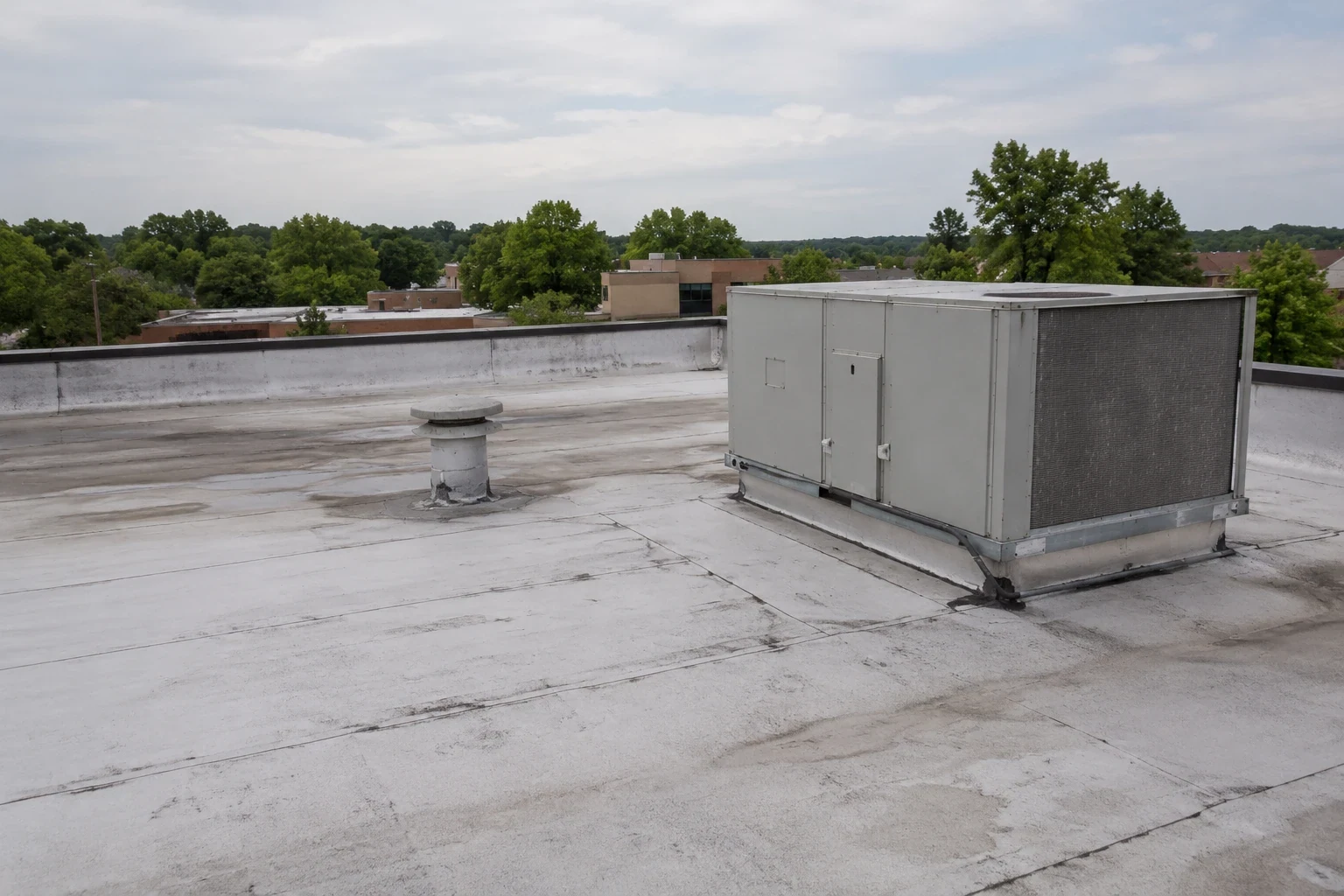
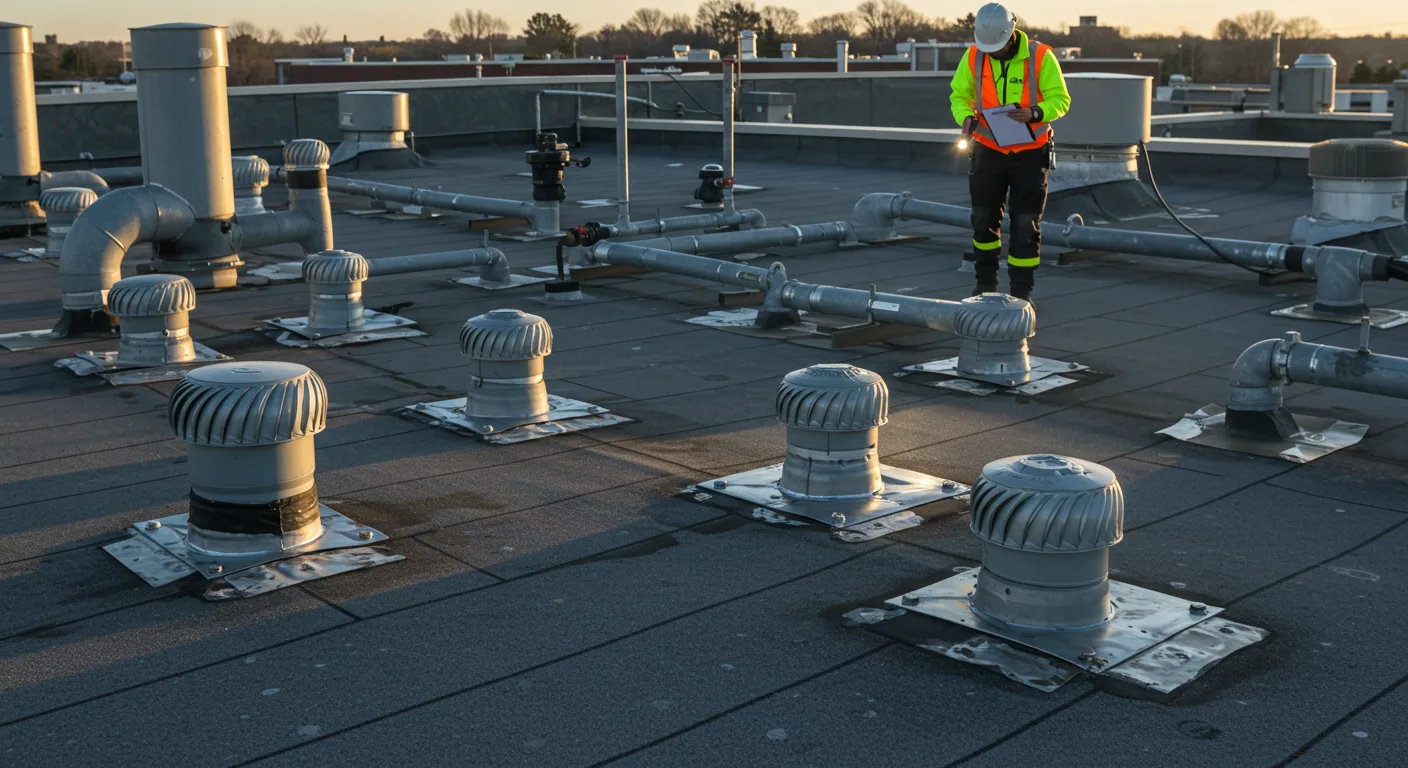
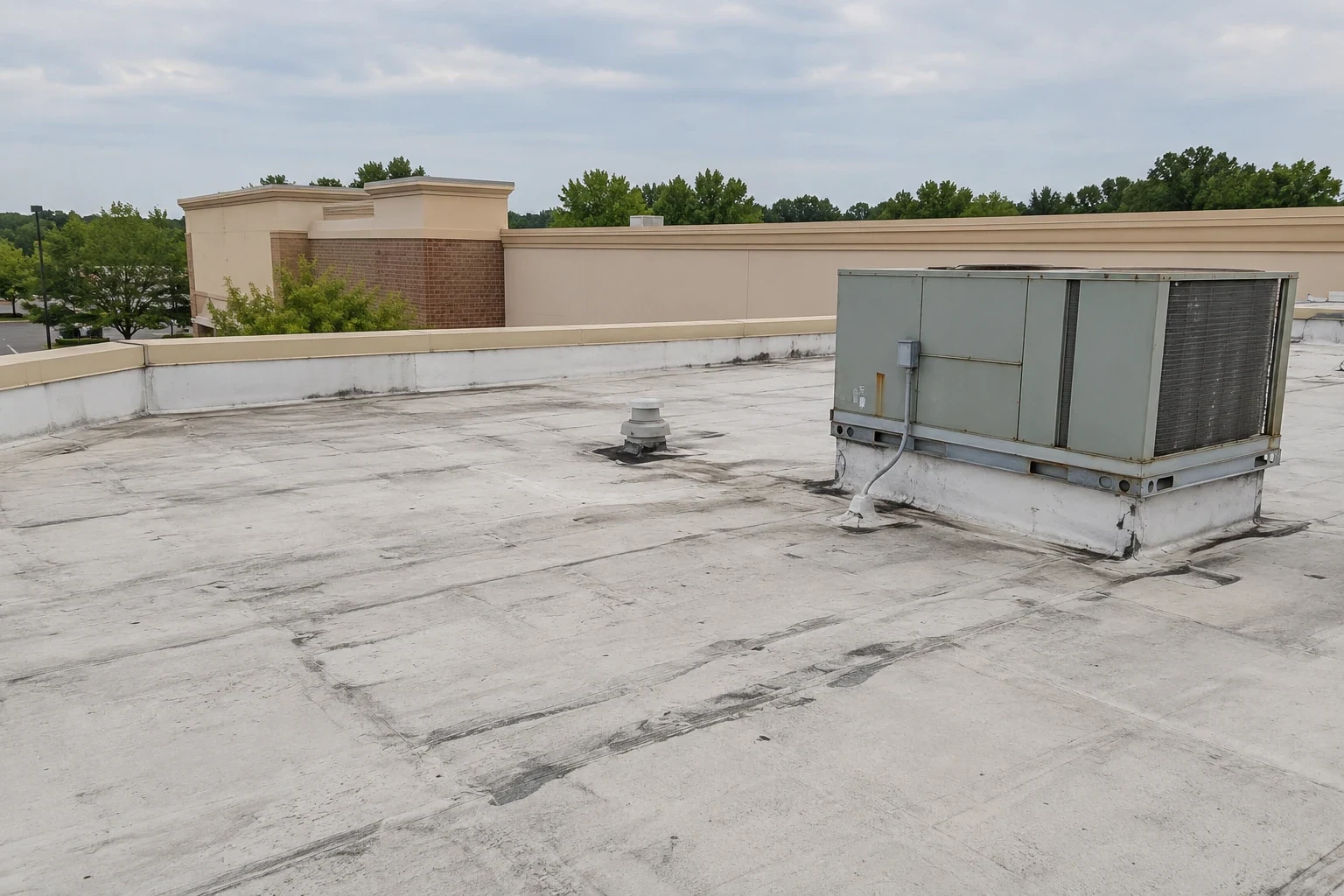
A restaurant roof carries exhaust fans, make-up air units, refrigeration condensers and gas lines. A store roof carries rooftop units, vents, skylights and signage supports. Each unit sits on a curb or a stand, and every one of those is a hole in the membrane that someone had to seal by hand.
Kitchen exhaust adds a particular wear. Grease and heat soften some membranes near the fan, and grease on the surface attracts dirt and slows drainage. We check the fan curb, the grease containment and the membrane around the outlet, and we log the condition with a photograph. The record tells the brand which sites need cleaning or protection, and how often.
Signage and lighting add penetrations that are easy to forget. Pole signs, wall signs and parapet lights have conduit and brackets that pass through or over the roof edge. We list each one on the plan and check the flashing, since a sign installer may have cut a hole and sealed it with mastic years ago.
Heat, rain and the hairline
A flat roof in Franklin swings between a record low of minus 22 F and a record high of 108 F, with summer afternoons averaging near 91 F and roughly 54 inches of rain across the year. Sealant at a curb corner hardens until it splits, and a heavy rain finds the gap.
Heat opens the hairline, rain soaks the layer under it and the stain shows up in the ceiling below. The nearest seam gets probed, curb corners and counterflashing get checked and a scan finds the wet layer. A review of skylight and penetration flashing pays off at restaurants, where pipe boots and small openings come in numbers.
Tracing a leak without closing the doors
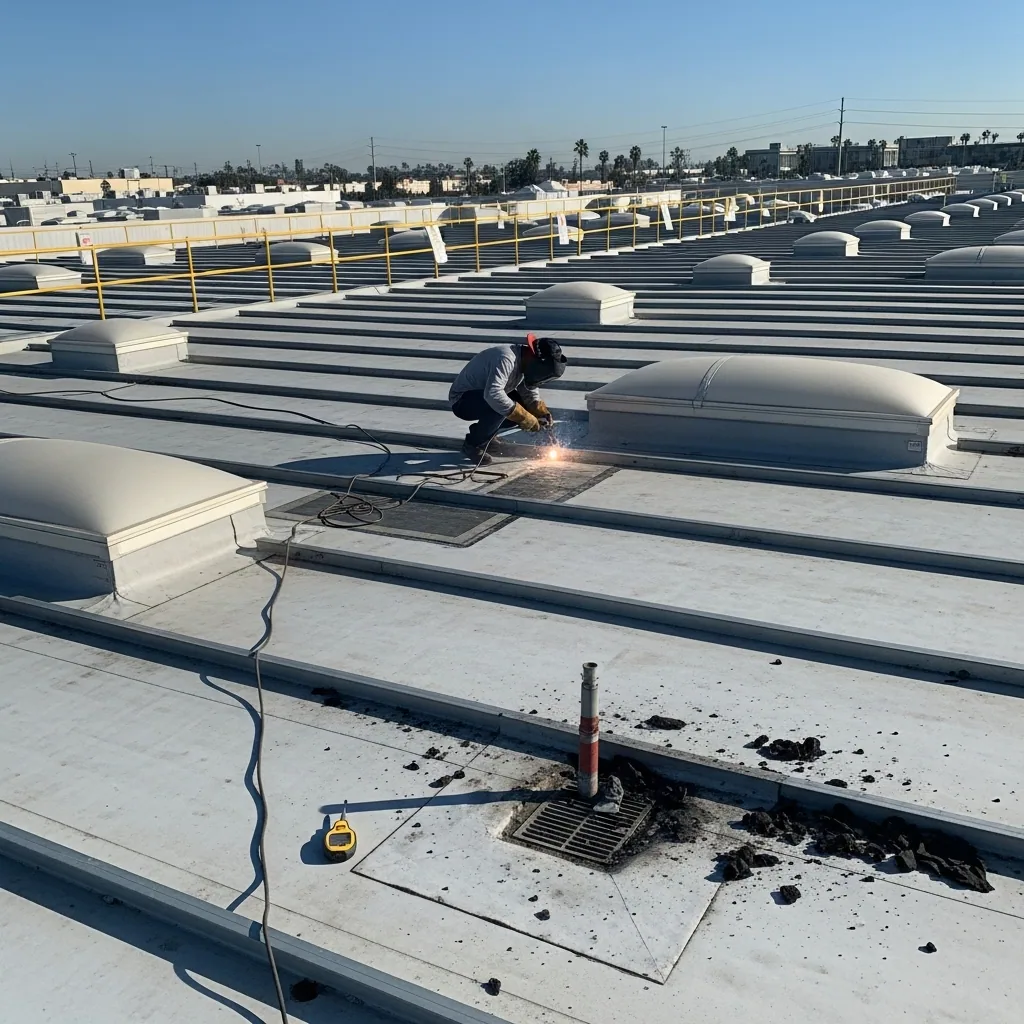
A leak over a dining room or sales floor gets traced fast. The manager marks the spot inside on a plan, and the search runs outward from there through drains, curbs, seams and wall joints. A moisture scan traces the wet layer, a few cores confirm it, and a temporary seal goes over the opening that day.
The written trail pairs the room below, the opening above and the path that links them, with dates and weather attached. The manager forwards it to the brand's facilities office, which can check whether the same unit type or detail has failed at other sites, and a leak repair guided by it closes the opening instead of masking the stain.
Drains matter at a store. Windblown trash and leaves choke store drains, and the pond that results finds any seam stiffened by summer heat. Strainers get lifted and lines flushed, and a photo of the water line after the next rain shows how quickly each drain fills.
Retail corridors around Franklin
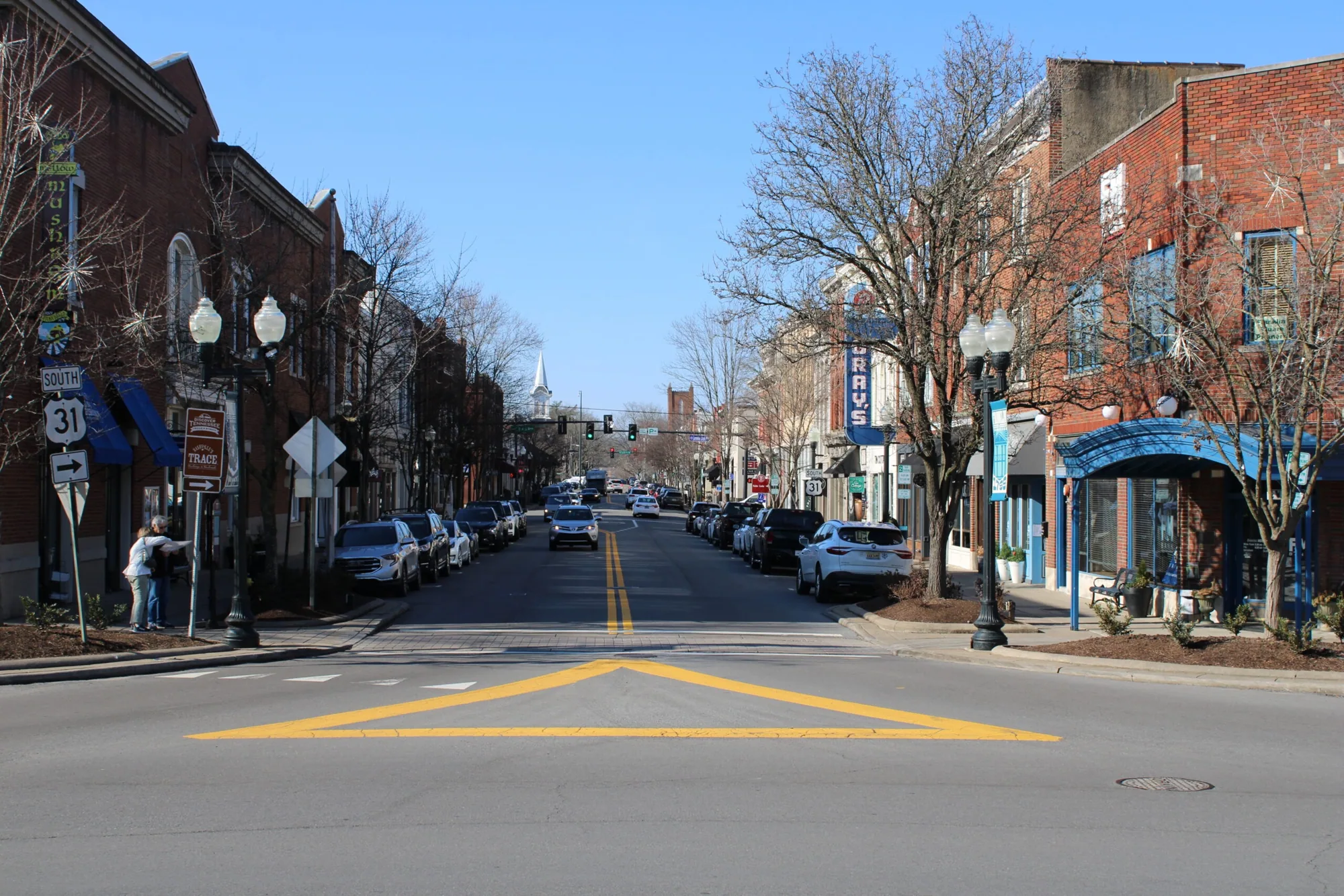
CoolSprings Galleria, at the I-65 and Moores Lane interchange, sits at the center of a regional retail district of about 150 stores. Mallory Lane and Royal Oaks Boulevard run as four-lane divided roads with frequent driveways and heavy traffic at peak hours, while the Murfreesboro Road corridor mixes auto repair and sales, banks, groceries, restaurants and pharmacies.
A brand with sites in Cool Springs, on Mallory Lane and Royal Oaks Boulevard and along the Murfreesboro Road corridor can use one inspection format for every roof. The same format fits a restaurant, a shopping center tenant or a grocery store.
A small restaurant and a large-format store call for different amounts of work, but each gets the same trail, scaled to the building. The photographs and ratings let a brand compare a small roof with a large one on one scale.
Storm lines and quick reopening
A store that cannot open loses a day of sales. Brentwood next door lies in the Dixie Alley tornado zone, and when an EF0 crossed Franklin in August 2023, some Highway 96 businesses reported minor roof and wall damage. In July 2026 the thunderstorm warning for the northeastern county mentioned hail up to about three-quarters of an inch, with gusts near 60 mph.
Once a storm passes, perimeters and rooftop equipment get walked, every finding is photographed with a date and the summary comes back organized by site. It backs up insurance claim documentation and shows the facilities office which stores need crews first. Any opening can be dried in the same day, whatever the hour.
Opening hours shape the repair. A dining room can lose a night's service to a leak, so we schedule storm follow-up for the morning, before lunch crowds, and keep the crew off the front entrance. The manager receives a text or a call when the roof is dry and the interior protection is down.
Repair, recover or replace
One failure on a sound roof means a repair. Wet insulation over a wide area, or repairs that keep appearing in new places, means replacement. Between them sits a recover, which can spare a store the tear-off and disruption when the base is dry and code allows. All three options arrive with scan images, core photographs and a yearly repair count.
For a brand, timing is part of the answer. A reroof planned for a slow season, in sections that close the same day, costs less in lost sales than an emergency after a ceiling falls. Cost drivers in the summary run from roof area and access to phasing, interior protection, deck condition and membrane choice. A facilities office can compare sites and decide where the next dollar goes.
One program for many sites
A brand with many sites needs one roof program. Each site gets a file: plan, section ages, warranty, rating, repairs and photographs. The ratings use one scale, so the list sorts by condition. A multi-site roof program sets the inspection calendar and the repair standard, and the capital plan decides where reroofing money goes first.
Hospitality groups and logistics operators keep the same kind of file. A landlord and a tenant both read the file, so it states the cause and location of each repair without taking sides.
Commercial Roofing Questions
Can a leak be fixed without closing the store?
Usually. The opening is closed from the roof side while the area below is covered, and a repair that needs a quiet window gets one scheduled with the manager.
Does kitchen exhaust damage the roof?
It can. Grease and heat soften some membranes. We check the area around each fan and recommend protection where needed.
Who pays, the brand or the landlord?
That is a lease question. The roof file records cause and location, which gives both sides the same facts to read the lease against.
How do we compare roofs across sites?
Rate every roof on the same scale and keep the same photo positions. The list then sorts by condition.
How often should store roofs be walked?
A spring walk and a fall walk, plus one after any hard storm. A roof with repeat repairs earns extra visits.