School Roofing in Franklin, TN
Often a bucket in a gym is the first sign on a school roof. It appears on a Monday after a weekend storm, and by the time the principal calls, a section of floor is closed and a practice has moved. The bucket is where the water stopped. From the bucket we move backward through the ceiling, the deck and the membrane to the entry point.
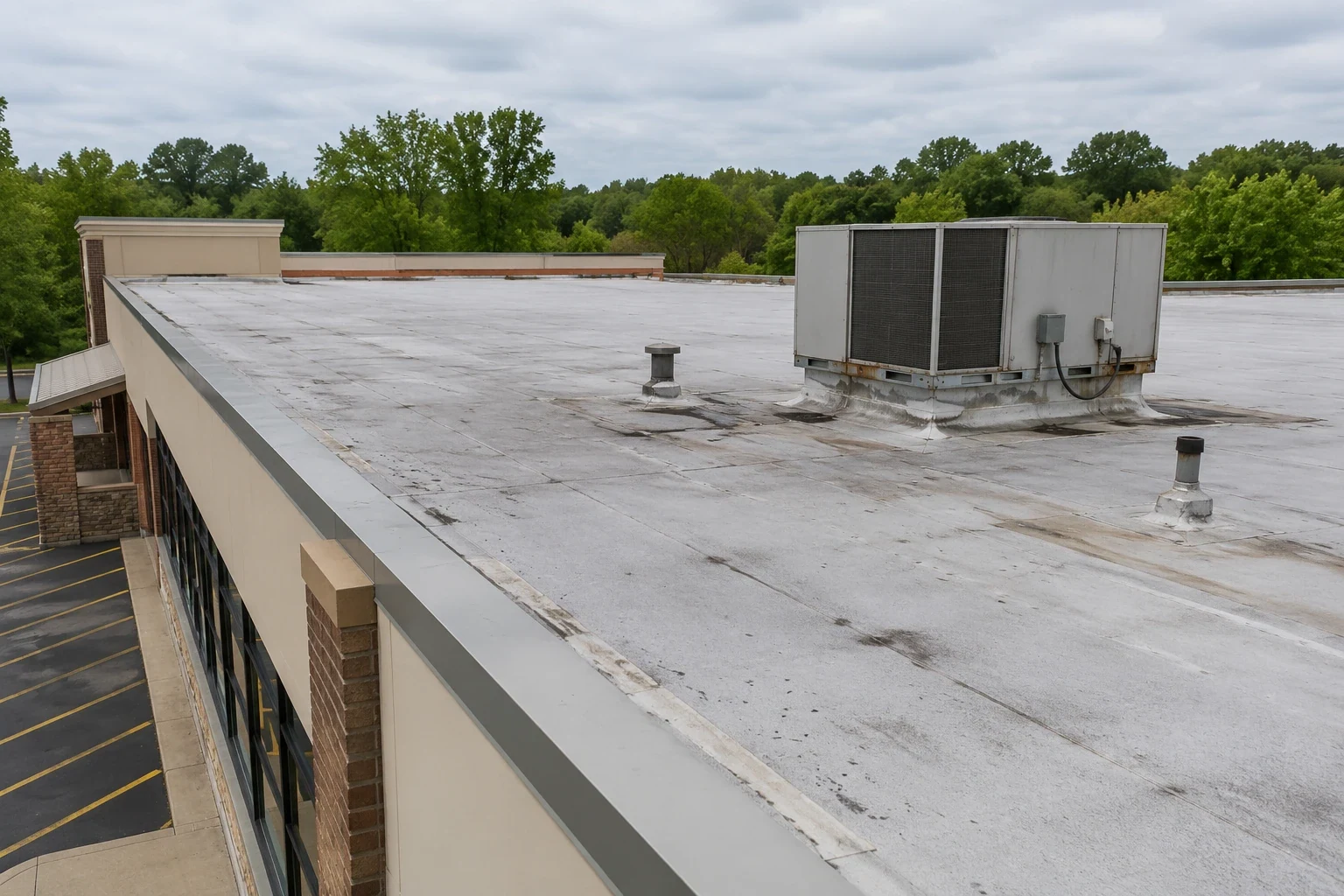
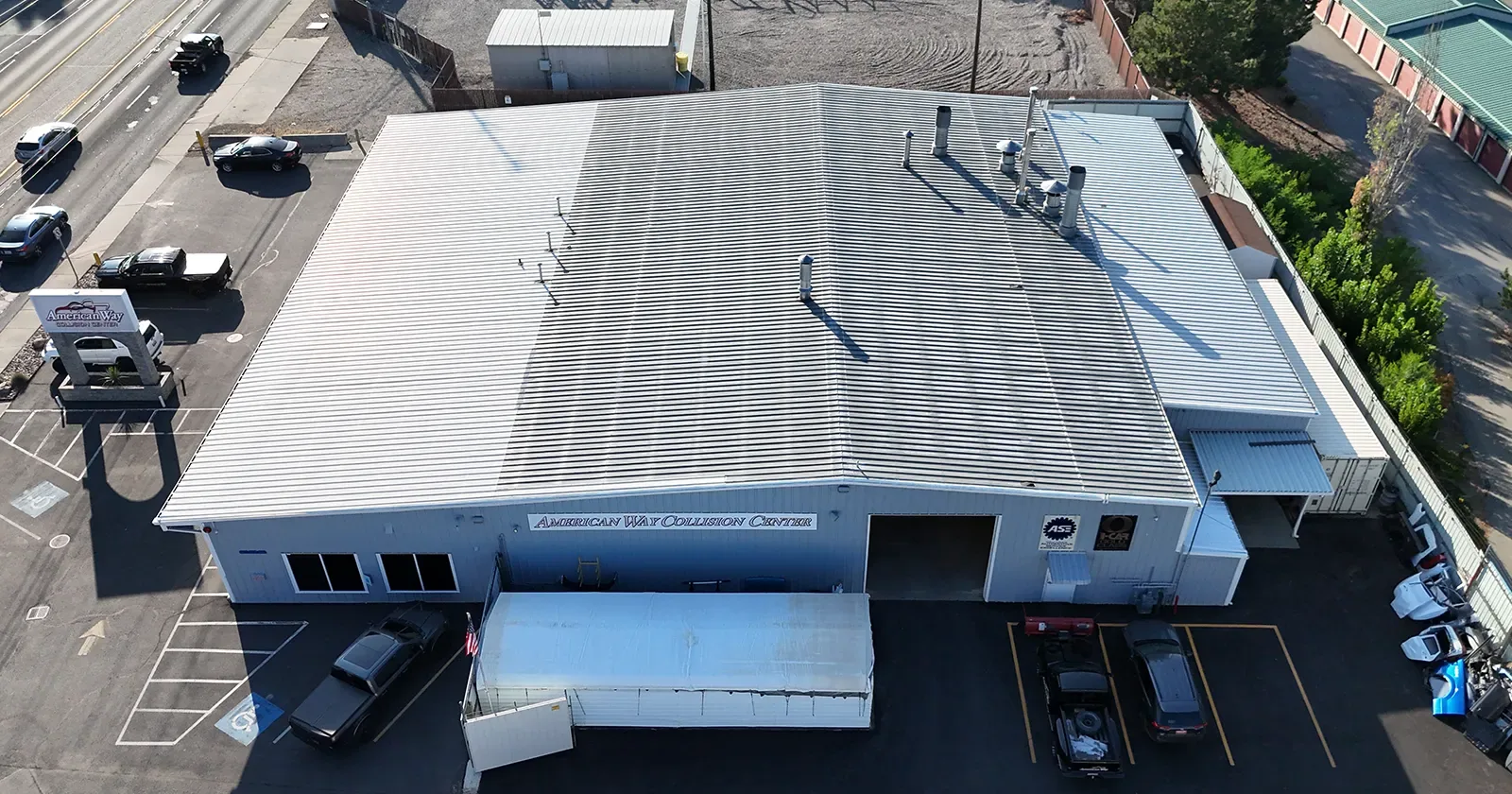
K-12 schools in Franklin, TN have low-slope and metal roofs that we repair, recover and replace on the school calendar. We trace the water path through the building, mark the cause and send the front office a short written summary with photos. Each plan follows the school calendar, since summer is short and rain does not wait. A leak during the year gets an answer at any hour.
The first sign
Schools announce roof trouble through the building. A stained tile in a classroom, a warped panel in a hallway, a wet corner in a locker room or a smell in a music room are the usual signals. Teachers notice first, and the custodian often keeps the only log. The log is requested first and laid over the roof plan.
A school is not one roof. A main wing, a gym, a cafeteria, a library addition and a band room each have their own membrane, age and drainage. Reports from one wing point to that wing. A scatter points to shared details such as drains and curbs. After that we climb and photograph what sits above the rooms that reported trouble.
Gym and cafeteria roofs get a closer look. They span long distances, often stand taller than the classroom wings around them and carry kitchen exhaust or large air handlers. A long span can flex under wind, and a tall wall meets a lower roof at a flashing that takes runoff from above. We rate that junction on every walk, because water from a tall wall piles onto the lower roof and wears the membrane at the foot.
What is happening underneath
Water that enters a school roof moves along the deck and the insulation joints before it drops. A stain in a classroom may be many feet from the entry. A wet layer weighs more, insulates less and can grow mold in a closed ceiling, which matters in a building full of children.
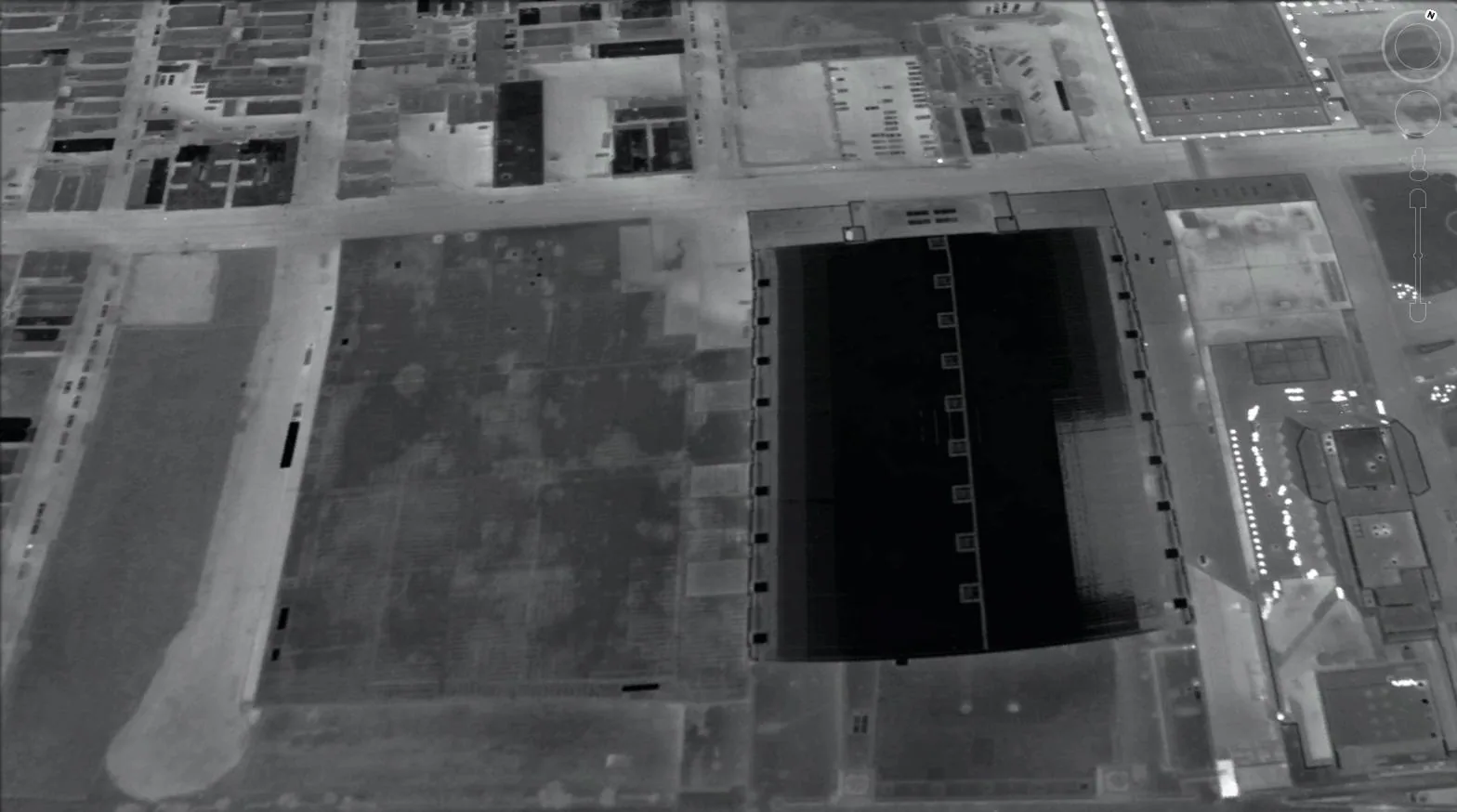
That is why the wet layer is verified first. An infrared moisture survey finds wet insulation from above, and cores show whether it is damp or saturated. The map shows how much of the roof needs work and how much is sound. It also helps the district decide between a repair this summer and a replacement next year.
Fasteners and plates are a quiet source of trouble on older school roofs. A fastener that backs out pushes a bump up under the membrane, and foot traffic wears the bump through. We probe for bumps, photograph them and reseat or patch before they leak. A pattern of bumps across a wing tells us whether the attachment is failing and whether a recover is wise.
Working around bells and breaks
School roofs have a calendar. Summer break is the main window, and it is short. Material orders, crew starts and weather delays all have to be planned early so the roof is closed before students return. Winter and spring breaks allow smaller repairs. Emergency leaks cannot wait for any of them.
During the school year, noise, dust and truck traffic are scheduled away from classes, testing and pickup lines. Entrances are protected, and walkways stay clear. With classes in session, a job on an occupied building runs in phased sections under one named contact in the front office. We give the principal a daily note on what was done and what is next.
Safety rules for work near children are part of the plan, much as they are for any public building with visitors. Gates, signs, fencing, secured ladders and locked lifts keep curious visitors away from tools. Crews wear identification and check in at the office. Roof hatches are locked at the end of each day, and every tool is accounted for before the crew leaves.
Weather and school roofs
Franklin's weather brings rain that totals around 54 inches a year, summer afternoons near 91 degrees and a recorded range of minus 22 to 108. Heat moves membranes through the summer, and freezes stiffen sealants in winter. A school roof with many penetrations, such as kitchen exhaust and rooftop units, has many places for that movement to open a joint.
Storms test edges and drains. Some Highway 96 businesses took minor roof damage from the August 2023 EF0 tornado, and a July 2026 warning for the northeastern county cited gusts near 60 mph and hail reaching three-quarters of an inch. Once a storm line has passed, a roof walk gives the answer.
Schools in the wider area
The area has many institutional roofs. Nashville's Oak Hill area holds Father Ryan High School and Franklin Road Academy among its schools, Forest Hills counts Percy Priest Elementary among its institutional properties, and private schools such as Harpeth Hall and The Ensworth School stand near the perimeter of Belle Meade.
Nearer to Franklin, the Berrys Chapel and Hillsboro Road area mixes commercial and institutional pockets such as the Williamson County Recreation Center. A first walk records what each roof actually is.
Repair or replace
Cause before cure. Commercial roof repair is the first answer when one spot has failed and the insulation is dry. A worn membrane over broadly wet insulation means replacement in phases, often across two summers. A college campus faces the same question with more buildings and longer breaks.
Budget requests need a clear list. We sort findings into three groups: items that stop active water, items that prevent the next leak and items that extend roof life. The first group is a work order this month. The second is a request for this summer. The third goes into the multi-year plan, backed by preventive maintenance between projects, with a target year, a rough scope and the cost drivers named, such as wet insulation, access and penetrations.
Commercial Roofing Questions
Can a school roof be replaced in one summer?
Many can, if materials are ordered early and the scope fits the window. Larger campuses are phased over two summers so the work is neither rushed nor left open when classes resume.
What do you do about a leak during the school year?
We respond at any hour, stop the water and protect the room. The permanent repair is scheduled for a break, with temporary protection recorded as temporary in the file.
Does a hailstorm warning mean our roofs are damaged?
No. A warning means conditions were right. We walk the roof after a storm line, look for bruises and loose edges and report what is there, not what might be.
How do you keep students safe near a roof project?
We mark work zones, keep entrances and pickup lines clear, secure materials each day and schedule noisy steps away from classes. The plan is shared with the principal before the first day.
What should a business office send?
Share the roof ages for each building, the custodian's leak log, a campus map and earlier repair invoices. We trace the failure on the roof and send the business office a short summary in writing.