Commercial Roofing in Carnton and Lewisburg Pike, Franklin, TN
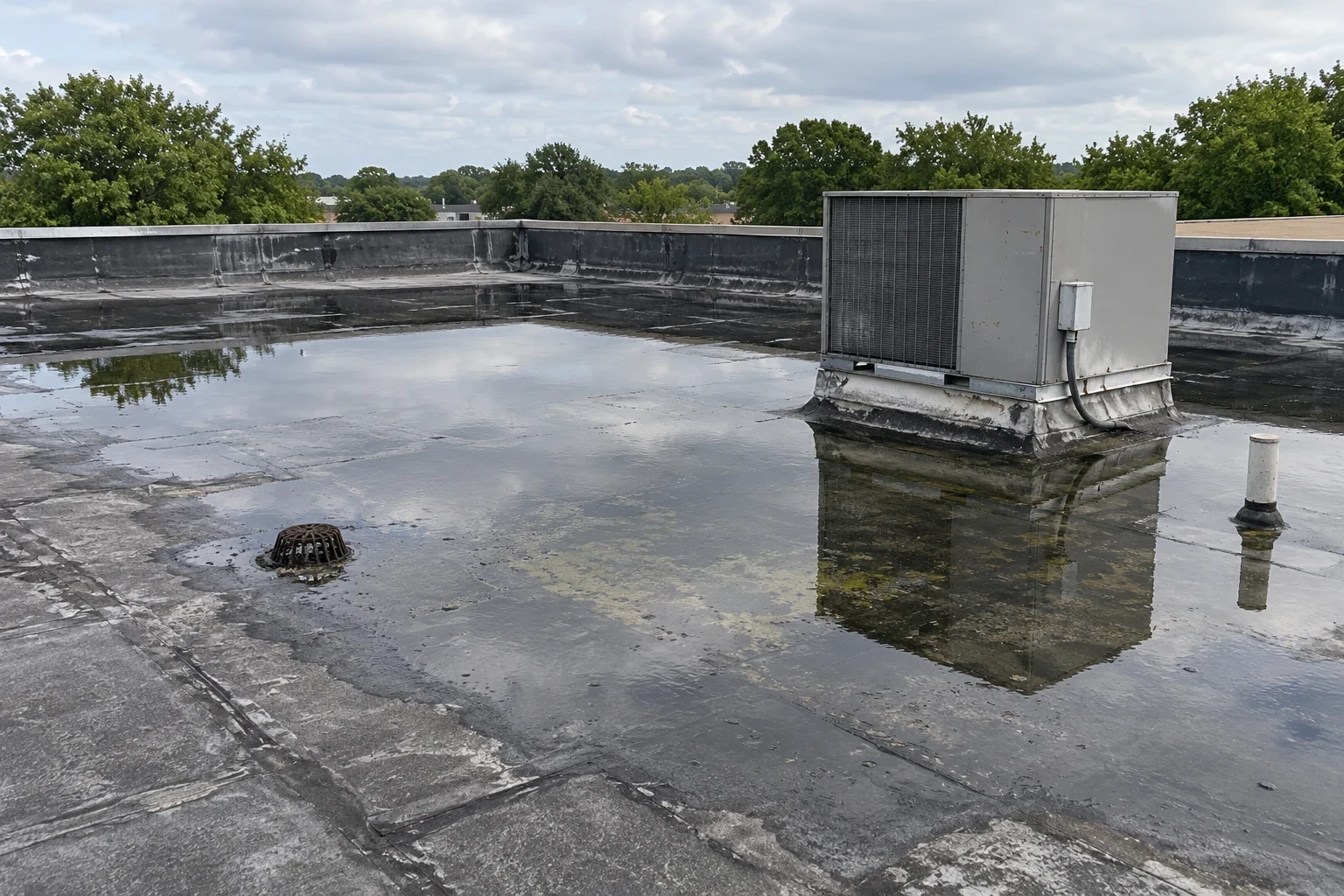
The morning after the rain has stopped, a standing-water line on a roof is the first sign of trouble. It is a pale ring on the membrane, and it tells a property manager that water sat there long enough to leave a mark. In the Carnton area of Franklin, TN, the city's plan describes a district of under 1,590 acres that is about half residential, with the rest a mix of industrial, office and recreation uses and room for more light industrial, warehouse or office space. Wherever a building of that kind has a low-slope roof, the ring is the place to start, and we walk it backward to the cause.
The trail runs from the ring to the drain, from the drain to the strainer, and from the strainer to the photograph that proves what was there.
Read the ring before the stain
A ceiling stain is the last sign, not the first. Before water reaches a tile it has usually stood on the roof, found a seam and run along a deck flute. The ring on the surface shows where the standing water was, and the ring's edge shows how deep.
We photograph each ring with a tape for scale and mark it on the plan. Then we check the nearest drain. A strainer packed with leaves or a drain set slightly above the surrounding membrane explains most rings. If the drain is clear and the ring is still there, the slope is wrong, and that is a different repair, closer to ponding water repair.
The ring also gives a timeline. A ring with a sharp edge and clean membrane inside it is recent. A ring with a dark, dirty edge and algae at the waterline has been there for months, and the seam beneath it has had that long to take in water. We record the difference, because it tells us how far to open the roof when we cut.
Mixed buildings, mixed roofs
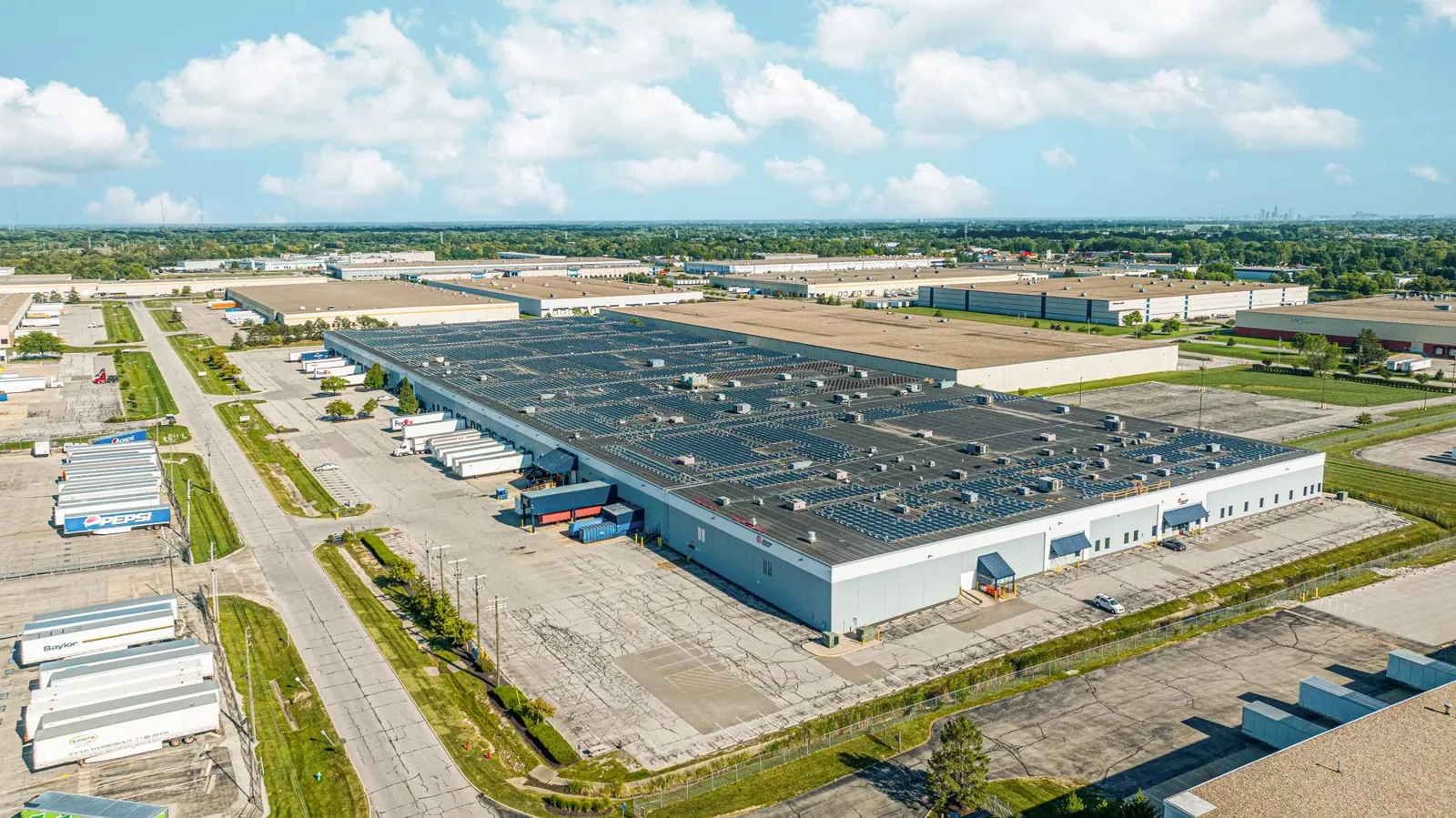
A district that holds industrial, office and recreation uses side by side has roofs of different ages and different jobs. A light industrial building, like the flex industrial space the city's plan allows for, needs a roof that handles rooftop traffic from service crews. An office needs one that keeps water off a ceiling grid. A recreation building can have tall interior volumes where a leak is hard to reach.
The first walk identifies the membrane, counts the layers at a core cut and notes the age of each addition. That record is what the repair plan is built on, and it keeps a patch from being matched to the wrong sheet.
Where the water stopped
The Harpeth River floodplain and adjacent wetlands along the northern boundary of the Carnton area are kept as open space. The river is a reminder of the May 2010 flood, when it crested at 35.32 feet in downtown Franklin. A flood is not a roof event, but it teaches a lesson about drainage: water goes where the ground and the pipes let it, and a roof drain that ties into a storm line that has backed up cannot empty.
Across town, the same habit applies in historic downtown Franklin and in Cool Springs. On a first walk we check where roof drains discharge, whether scuppers have clear outlets and whether downspouts end in a place that can take the flow. Roughly 54 inches of rain fall on Franklin each year, so these checks matter in every season.
Heat movement and the wind that follows
Summer in Franklin averages highs near 90.8 degrees in July, the all-time high is 108 and the all-time low is minus 22. A membrane moves through that whole range. In heat it expands against its fasteners and flashings, and in a hard freeze it contracts and pulls at every corner. A seam that was tight in May can open a hair by January, and rain finds the opening.
Storm lines add wind. An EF0 tornado with estimated 75 mph winds came down near Highway 96 in Franklin on August 12, 2023, along a path of roughly 1.9 miles, and some businesses on that highway took minor roof and exterior damage. After any storm like that, we check edge metal, coping and the first row of fasteners before we look at the field.
Heat has a second effect on rooftop equipment. Units sitting on curbs shed condensate, and a clogged condensate line drips onto the same spot every afternoon. That spot wears faster than the rest of the roof, and we look for it by following any trail of discoloration back to a unit.
Repair, recover or replace
The choice follows the wet layer. If the insulation is dry and the damage is local, a repair is enough. If the insulation is dry and the membrane is worn across the section, a roof recover may fit. If the insulation is wet in several places, the plan moves toward a replacement.
An infrared moisture survey shows which layer is wet before anyone cuts. A core confirms it. The cost follows the answer: dry-layer repairs are small, wet-layer repairs grow with every square foot of insulation that must come out, and a replacement adds tear-off, disposal and any insulation the code requires. State code moved to the 2021 international editions on August 17, 2025, and each city may adopt newer ones, so the scope states the edition the Franklin building department confirms.
The roof walk ends with a ranked list, not a single number. Each item names the section, the finding, the repair and what happens if it waits through the next heavy rain. A property manager can approve the urgent items and hold the others for the budget year.
Room for new light industrial space
The city's plan leaves room in this district for added light industrial, warehouse or office space, and Lewisburg Avenue, a two-lane road, is recommended for widening to three lanes from the railroad tracks to Mack Hatcher Parkway, which will change how trucks and lifts reach roofs along it. New buildings bring new roofs next to old ones, and the joint between them is where flashing has to bridge two eras.
We check those joints on any property where an addition has been made: counterflashing at the old wall, sealant at the transition and the drainage path from the older section into the newer one. A written condition report records each joint with a photograph, so the next owner can see what was found and when.
Commercial Roofing Questions
What does a standing-water ring tell me?
That water stayed on the roof long enough to mark it. We trace the ring to the nearest drain, check the strainer and measure whether the slope carries water away.
Can I patch a ponding area myself?
A patch seals a hole, but it does not remove the pond. If water still stands after a patch, the drain or slope needs work.
How soon after a storm should the roof be checked?
Within a few days. Edge metal and flashings show damage first, and early photographs help any later claim.
Do you work on occupied warehouses and offices?
Yes. We plan access, staging and hoisting around operations and close the roof at the end of each shift.
What will I receive after the roof walk?
A short written summary with dated photographs, findings in order of urgency and a recommended next step.