Roof Insulation and Cover Board in Franklin, TN
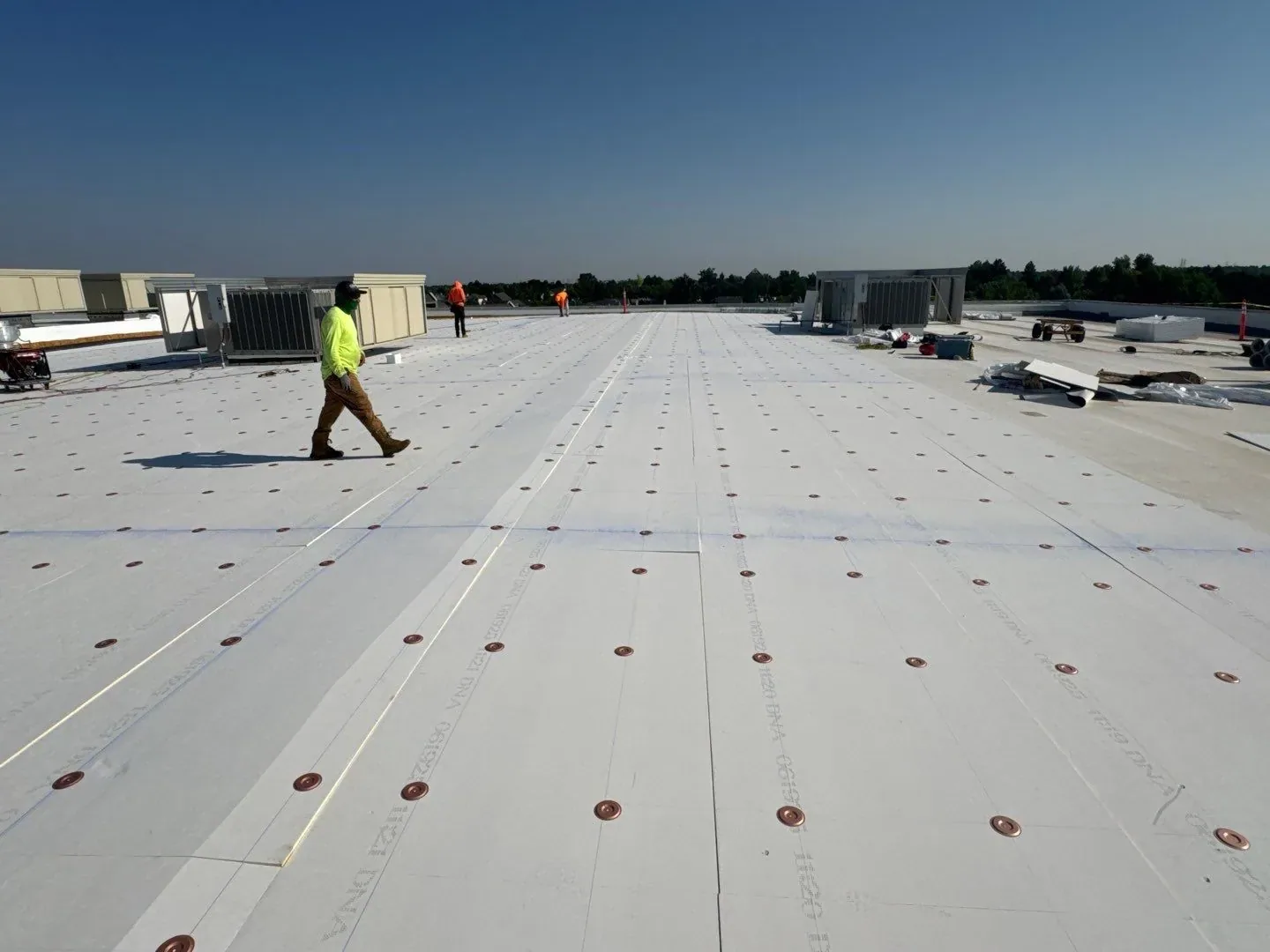
A spot on the roof that gives underfoot like a wet sponge is the first sign of failed insulation, and the membrane above it may look perfect. The cause sits underneath: water entered somewhere, soaked the boards and stayed. Insulation, tapered systems and cover board sit between the deck and the membrane, and they decide how a roof drains, how it holds heat and how well it takes a hit. In Franklin, TN, where about 53.79 inches of rain falls in a year, the layers beneath the membrane do real work.
We trace a soft spot backward through the layers to the opening that let the water in, then decide what to remove and what to keep.
The Layers Under the Membrane
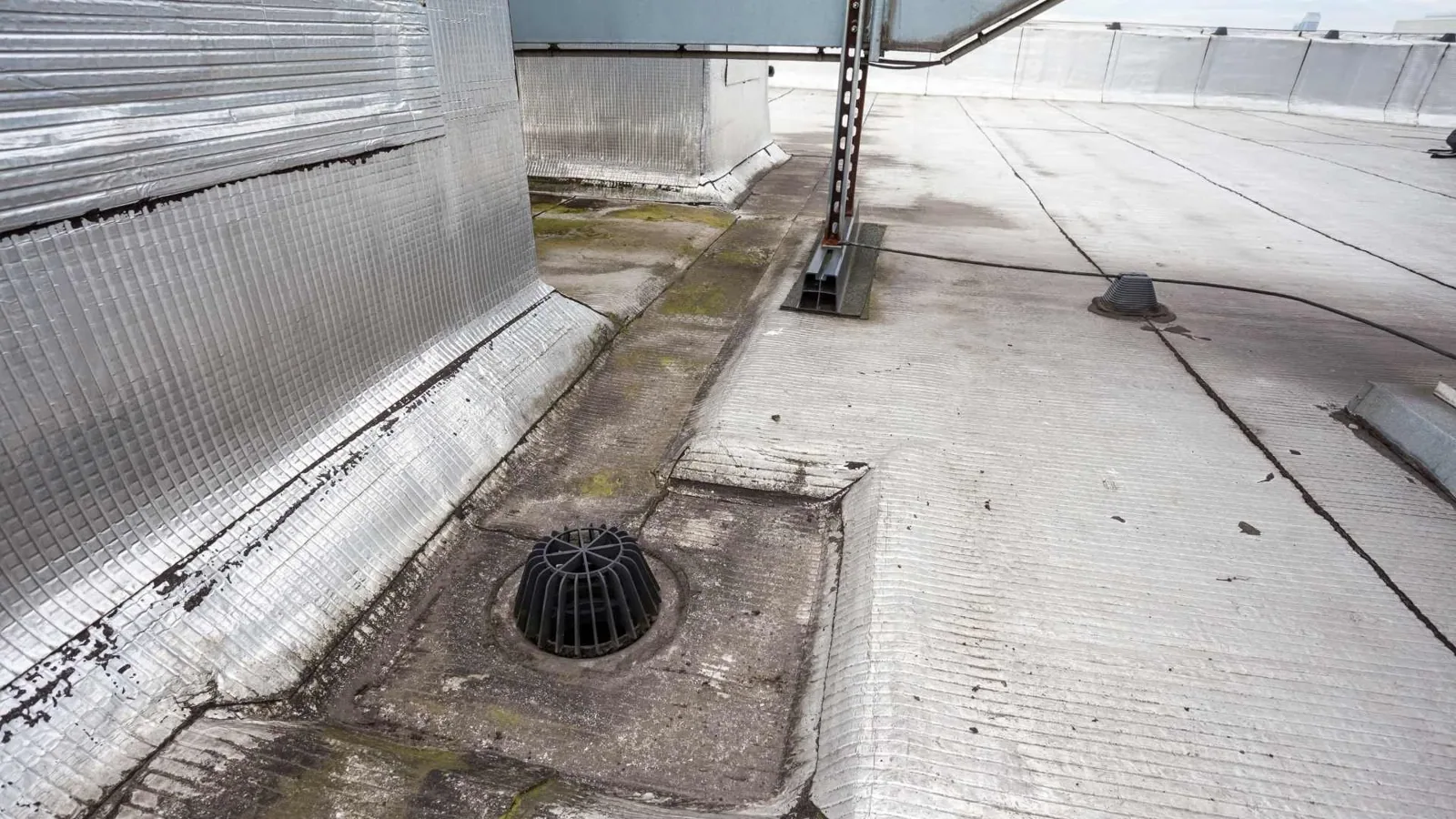
A typical low-slope assembly stacks four parts. The deck carries the load. Insulation boards add thermal resistance. A cover board protects the insulation and gives the membrane a firm surface. The membrane sheds water. Each layer depends on the one below it.
When water reaches the insulation, it changes the whole stack. Wet boards lose insulating value, swell and lose strength. The membrane above them loses its support and begins to flex under foot traffic. That is why we find the wet layer before we plan any repair.
The membrane is the visible part of the roof, and it takes the blame. A leak is often declared a membrane failure when the real failure is a flashing, a seam or a drain that let water into the layers beneath. Repairing the membrane alone leaves the wet layer in place, and the leak returns.
Finding the Wet Layer
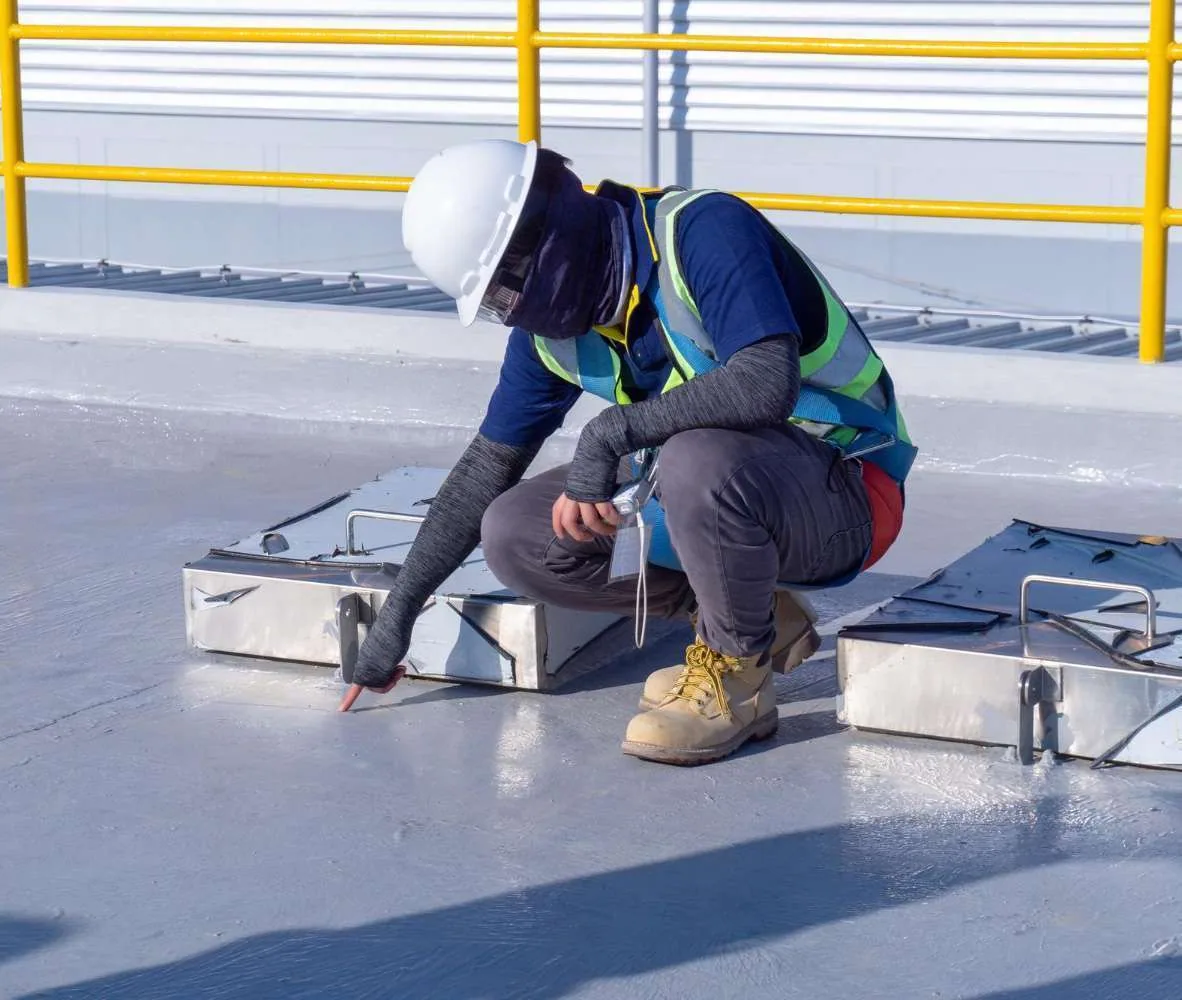
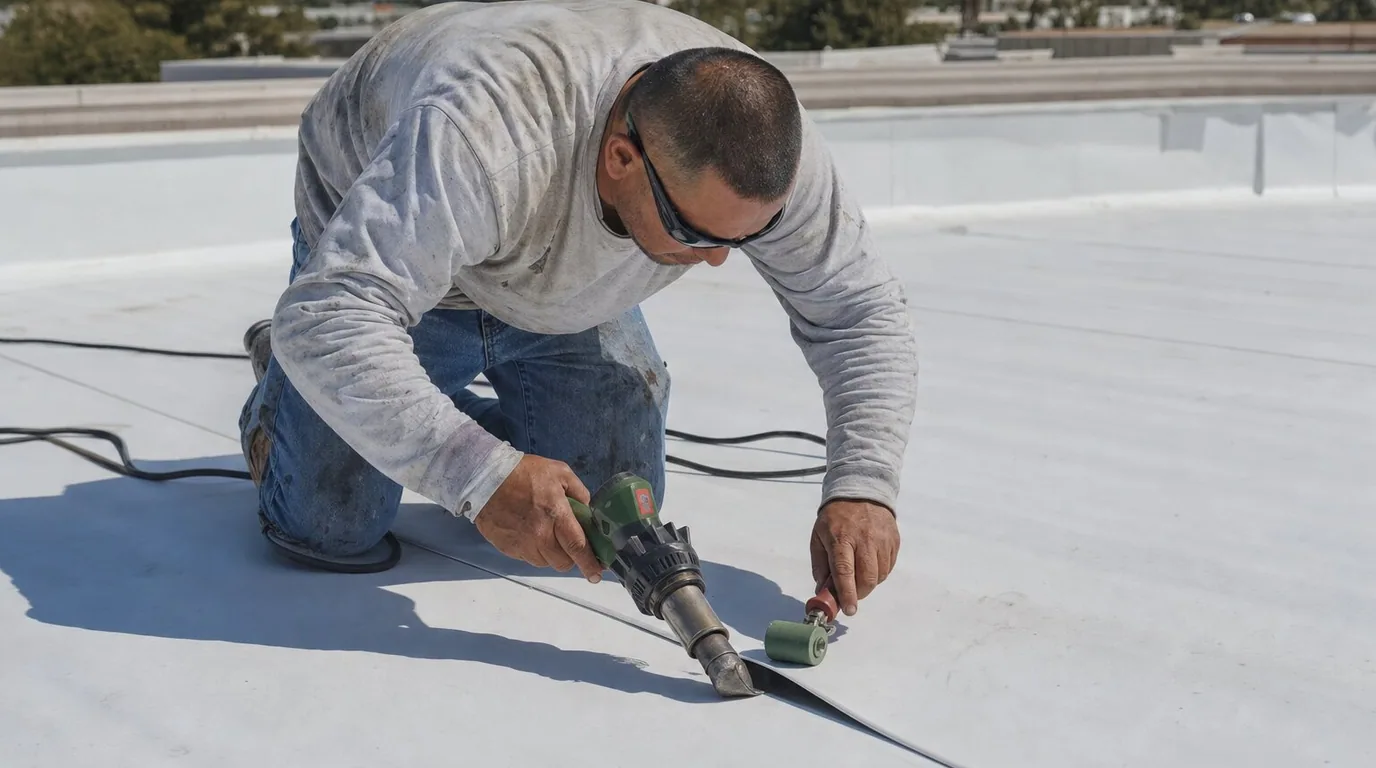
A walk shows soft spots and stains. A moisture scan shows where the insulation holds water. A core cut confirms it: we remove a small plug, read the layers and test the boards. Dry, firm insulation can stay. Wet or crumbling insulation comes out, and each core hole is patched the same day with matching layers and sealed so the test does not become a new leak.
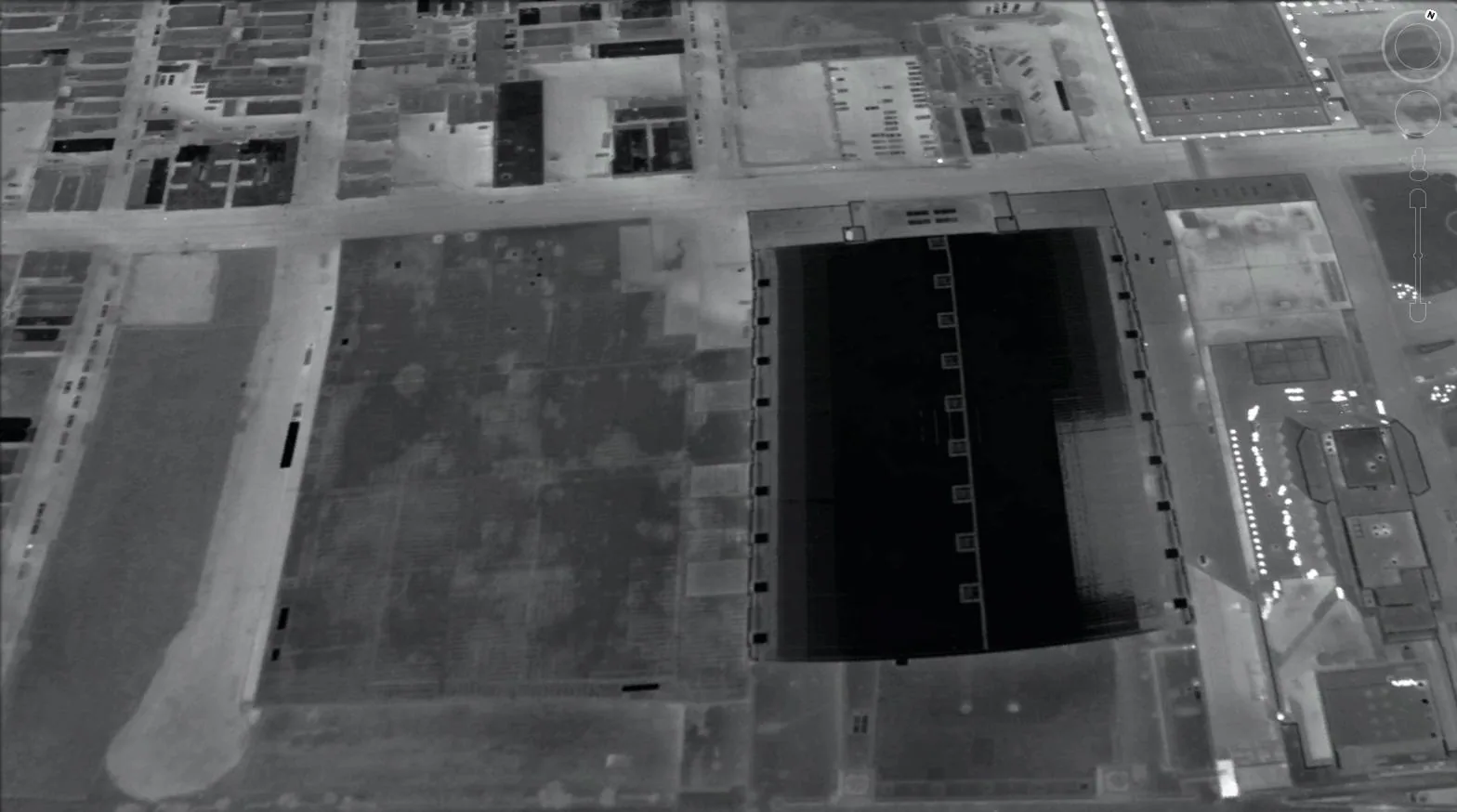
We map the wet area on the sketch with dimensions. The boundary matters, because replacing only the wet boards saves money, and replacing too little leaves a wet edge that spreads. An infrared moisture survey helps on large roofs, where a walk cannot cover every foot.
Moisture readings are compared with the weather and the time of day. A cool, clear evening after a warm day gives the clearest picture, since wet insulation holds heat longer than dry. We read the roof, mark the readings and cut cores at the points that matter most.
What Cover Board Does
Cover board is a rigid panel laid over the insulation, under the membrane. It protects soft insulation from foot traffic, resists impact and gives adhesives a better bond. A July 2026 warning for northeastern Williamson County mentioned hail near three-quarters of an inch, and a firm cover board helps a membrane survive impact over soft insulation.
Cover board also gives flashing a flat, firm surface at curbs and walls. It adds cost and thickness, and the report states both, so the owner can decide with the numbers in hand.
It also protects during repairs. A roof that is walked often, such as one with many rooftop units, wears through to the insulation without it. We recommend cover board where traffic is heavy, where hail is a concern and where the insulation type is soft.
Tapered Insulation and Drainage
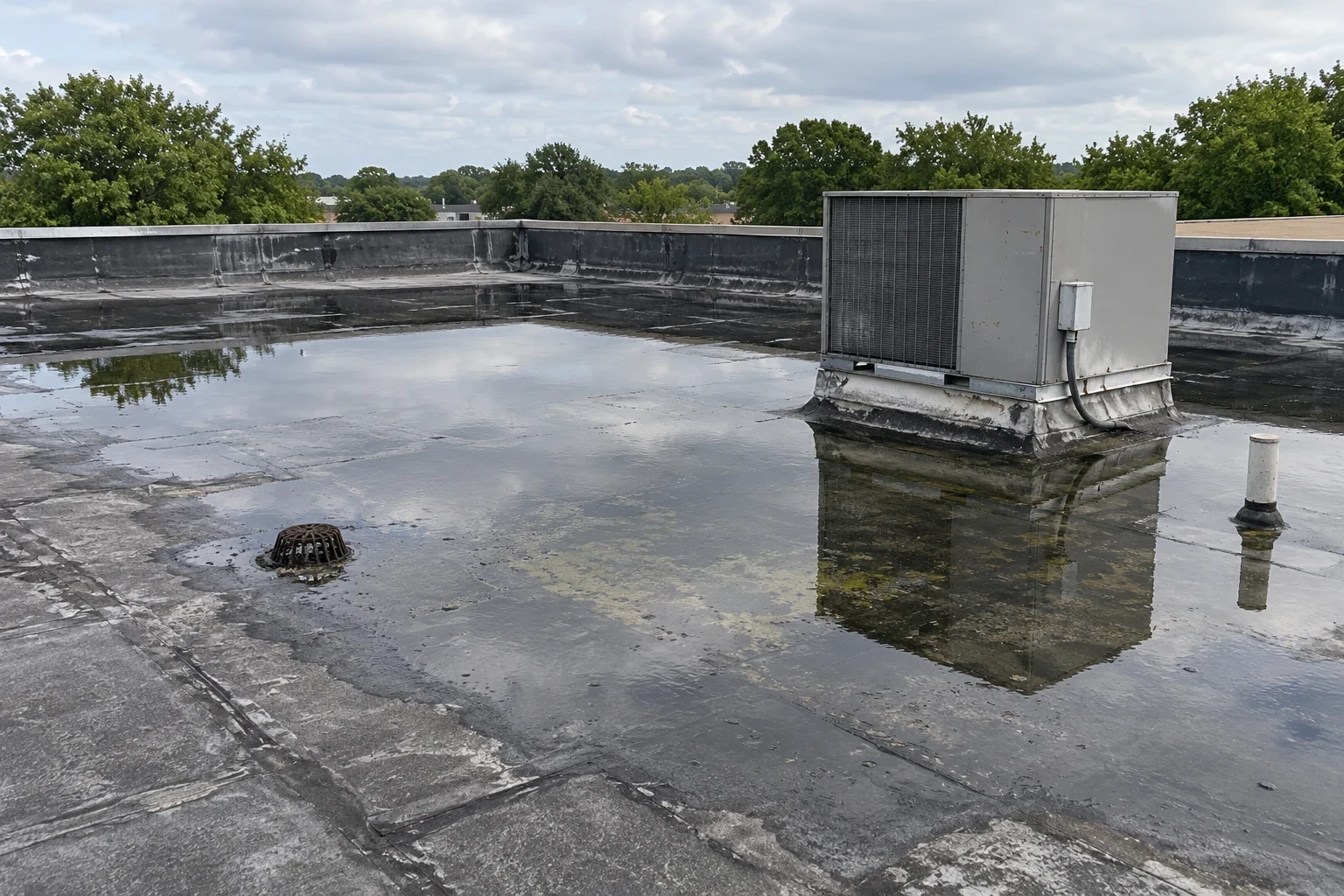
Tapered insulation is cut in wedges so that a flat deck slopes toward a drain. It is the cure for ponding when the deck itself is flat, and it is part of every good replacement. A cricket is a small tapered ridge that turns water around a curb or a wall.
We design the taper from a survey of the roof: drain locations, low spots and the available height at walls and doors. The slope is small, often a quarter inch per foot, and it is enough. Our ponding water repair work uses taper where the deck gives no other option, and the roof drains and scuppers are laid out to match.
Taper adds height at the high points, so we check flashing heights at walls and doors before the plan is final. A roof that gains four inches at a ridge needs taller base flashing there. Our roof condition reports record those heights so the design matches what is on the roof.
Thickness, Code and Energy
Insulation thickness is set by the energy code and by the building's needs. The 2021 editions of most international codes became Tennessee's standard on August 17, 2025, and a city can adopt newer editions as long as they are at least as strict as the state versions. No city is obliged to adopt a building code in Tennessee, so the local rule matters, and we confirm it before the scope is written.
A replacement scope states the insulation type, the thickness, the number of layers and the attachment. A commercial roof replacement that skips these lines leaves the owner guessing at the price. A recover that adds height at walls and doors needs a check on flashing heights too.
The scope also names the vapor and fire requirements that apply to the assembly. Those lines are short, and they prevent a failed inspection and a stalled job. We keep copies of product data with the file.
Attachment and Wind
Insulation is held down by adhesive or fasteners, and the pattern matters in wind. Dixie Alley brings its highest tornado risk between November and May, and an EF0 near Highway 96 in August 2023 caused minor roof damage at some businesses. Boards that are loosely attached lift, and the membrane lifts with them.
Loose boards squeak and shift underfoot, and a scan with a pull gauge shows how many fasteners hold. We record the attachment pattern in the field and compare it with the plan. Fastener pull tests on a sample confirm holding power. The finding goes into the file, along with photographs of the core cut. Warehouse-style buildings on the west side of the CoolSprings Galleria and in Southall get the same checks, and a recover is possible only over dry, well-attached insulation. A warehouse roof in Columbia Avenue and Southall gets the same core cut as a small shop.
Commercial Roofing Questions
How do I know the insulation is wet?
A soft spot underfoot, a stain below or a reading on a moisture scan. A core cut confirms it.
Can wet insulation dry in place?
Rarely. Water trapped between the deck and the membrane stays. The wet boards are removed and replaced.
Is cover board worth the cost?
On roofs with heavy traffic, hail exposure or soft insulation, yes. It protects the layer that the membrane depends on.
Does tapered insulation fix ponding?
When the deck is flat and the pond is caused by slope, yes. If the cause is a clogged drain or a sagging deck, the fix differs.
Can new insulation be added over the old without tear-off?
Only if the old insulation is dry, flat and well attached, and the structure and wall heights can take the added layer. A core cut and a moisture scan decide.
What should I send to start?
A roof plan and the roof's age, plus whatever you know about leaks. The roof walk traces each soft spot to its layer, and a short written summary follows.