Solar-Ready Roofing in Franklin, TN
A solar array that has to be unbolted and lifted so a roofer can fix a leak is the failure that costs the most. The first sign is usually a stain under the array, and the cause is almost always a roof that was never ready for it: a membrane near the end of its life, a mount that cut through the sheet, or a drain buried under panel rails. Solar-ready roofing is the work done before the array goes up so that the roof outlasts the equipment above it.
Commercial Roofing Franklin prepares low-slope roofs in Franklin, TN for arrays and repairs roofs that already carry them. The method is to walk the failure backward: find out what the roof can carry, how long it has left, and where the water will go once panels cover part of it.
Match the roof to the array
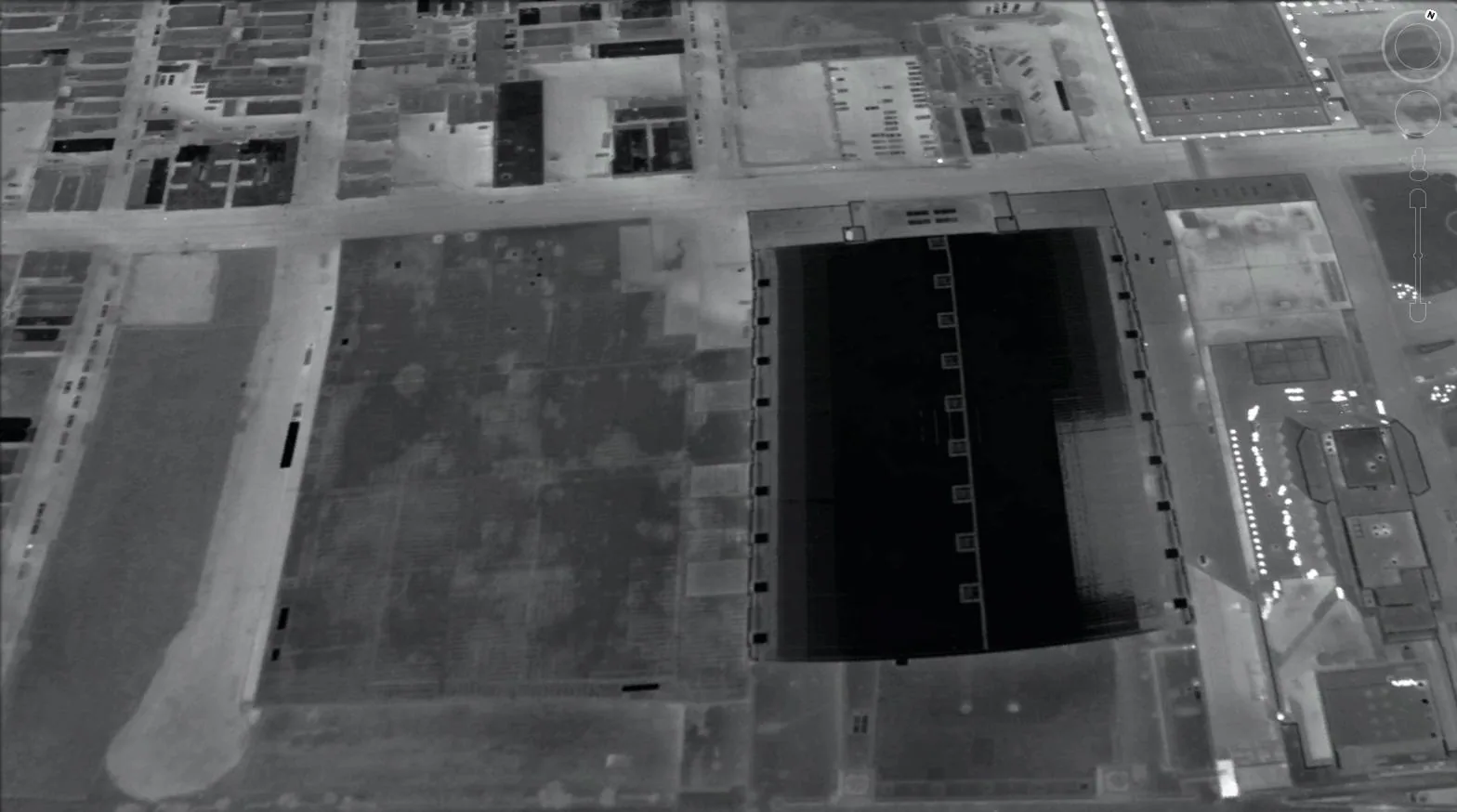
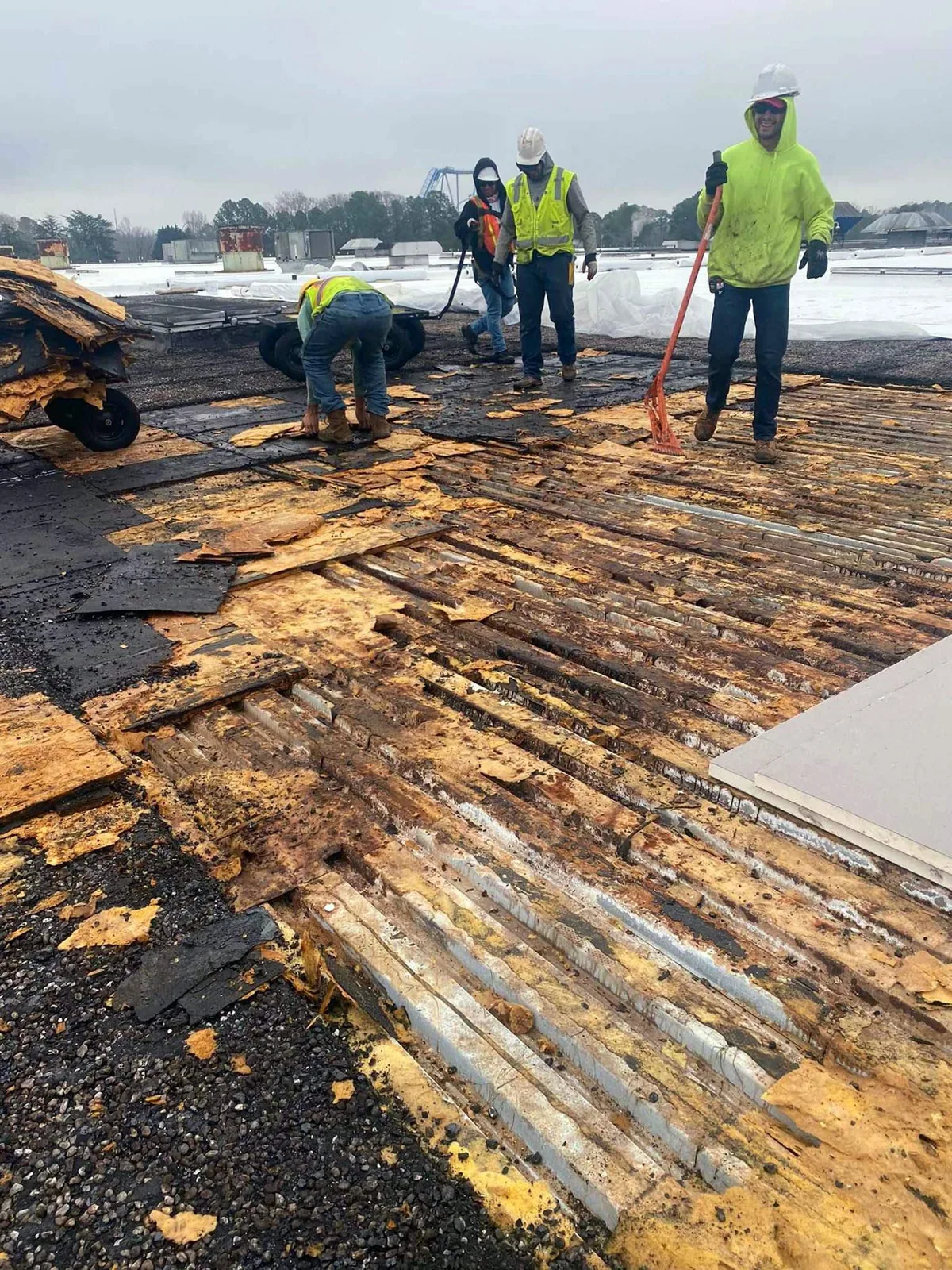
An array can stay on a roof for a long time, so the roof beneath should have comparable life. A membrane with only a few years left will need replacement while the panels are still earning, and replacing a roof under an array means removing and resetting every panel. We begin with a core cut and an infrared moisture scan to learn what the roof is made of and how wet it is. If the answer is a tired roof, the better plan is a full replacement first, then the array on a fresh surface. If the roof is sound, we mark where mounts and trays can go and where they cannot, such as over seams, drains, and wet insulation. That map goes to the solar contractor before the layout is drawn, which saves a redesign later.
How the array is held down
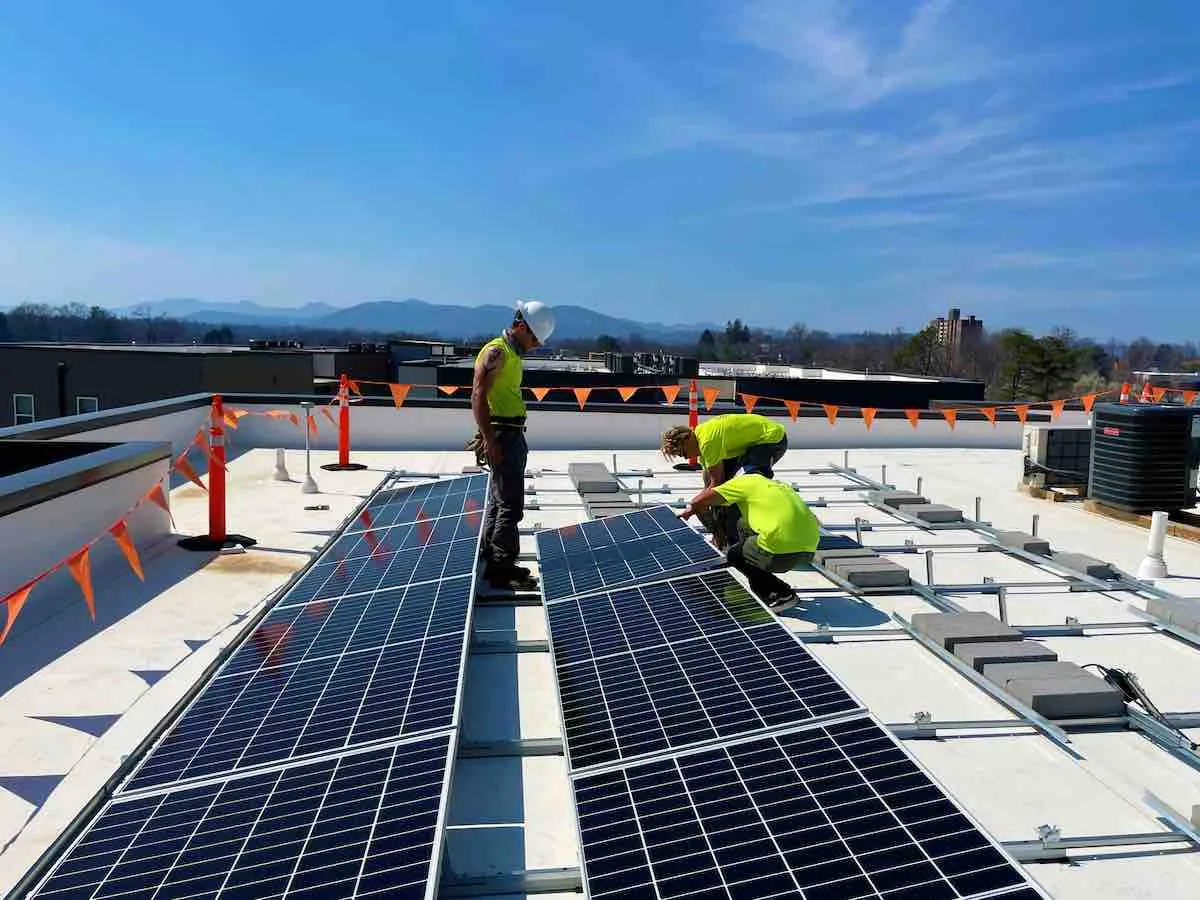
Arrays are held in two ways. Ballasted systems rest on the roof and use weight, usually blocks, to resist wind. Attached systems use mounts fastened through the membrane into the deck or structure, with flashing at each mount. Ballast adds load and moves, so the roof needs to carry the weight and the membrane needs protection pads under the trays. Attached mounts add penetrations, and every mount is a place to flash correctly. We review the plan with the solar contractor so the method fits the roof. Either way, the membrane under a tray or mount is a wear point. Protection pads, extra flashing layers, and a clear note of each mount location go into the roof record, and the standing-water line is checked at the mounts after the first heavy rain.
Wind and storms in Middle Tennessee
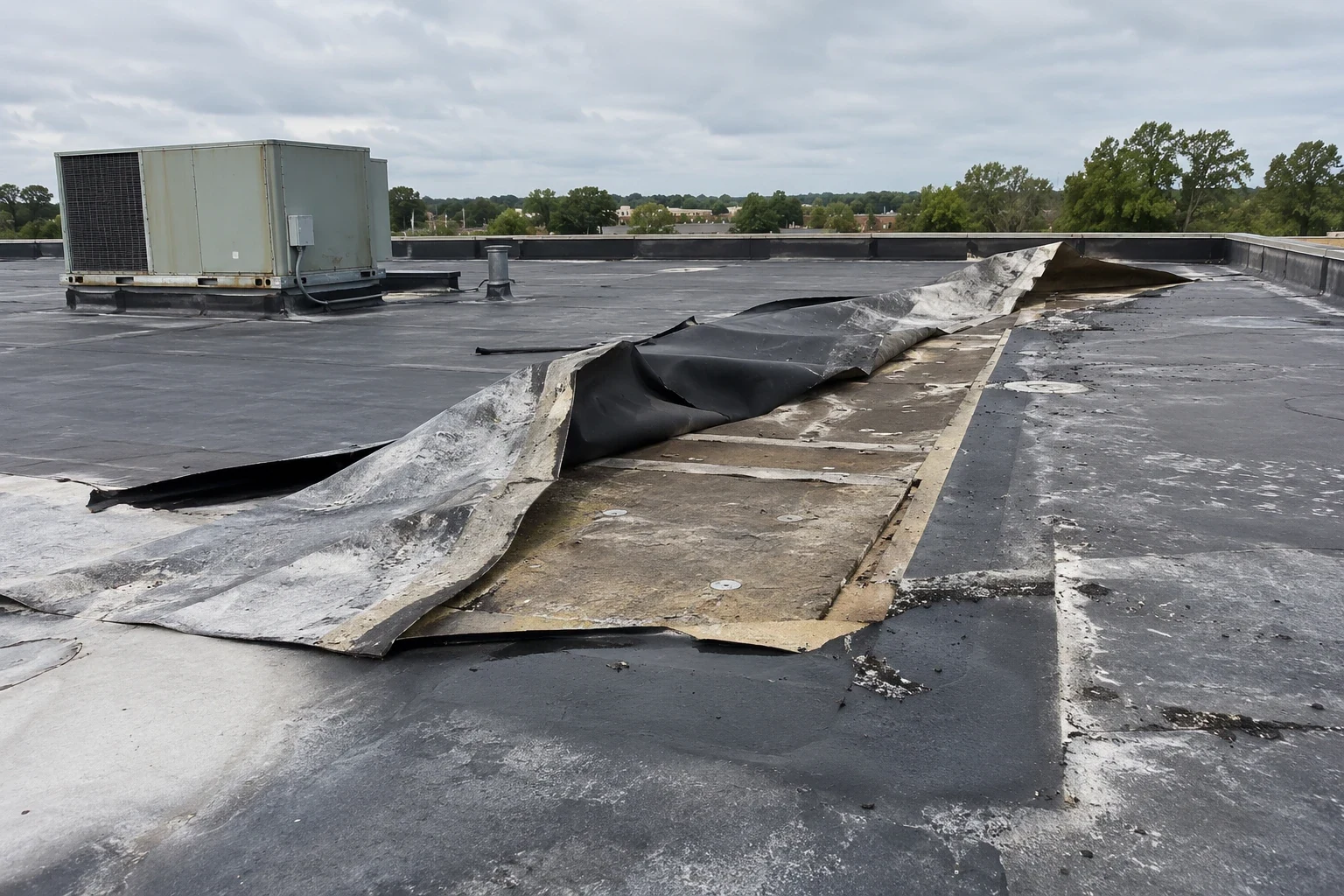
Franklin's EF0 tornado of August 2023 and the July 2026 thunderstorm warning that named Franklin, Brentwood and Nolensville, with gusts near 60 mph and hail to about three-quarters of an inch, show the wind and impact an array has to ride out. Arrays catch wind like sails. After a storm, we check the edges around the array, the mounts, and the membrane near the rails. A wind-damaged roof beneath panels can hide lifted edges and loose flashing that only show when the panels are moved, so the plan includes an access route, and hail bruising is hidden in the same way.
Keep the drains clear
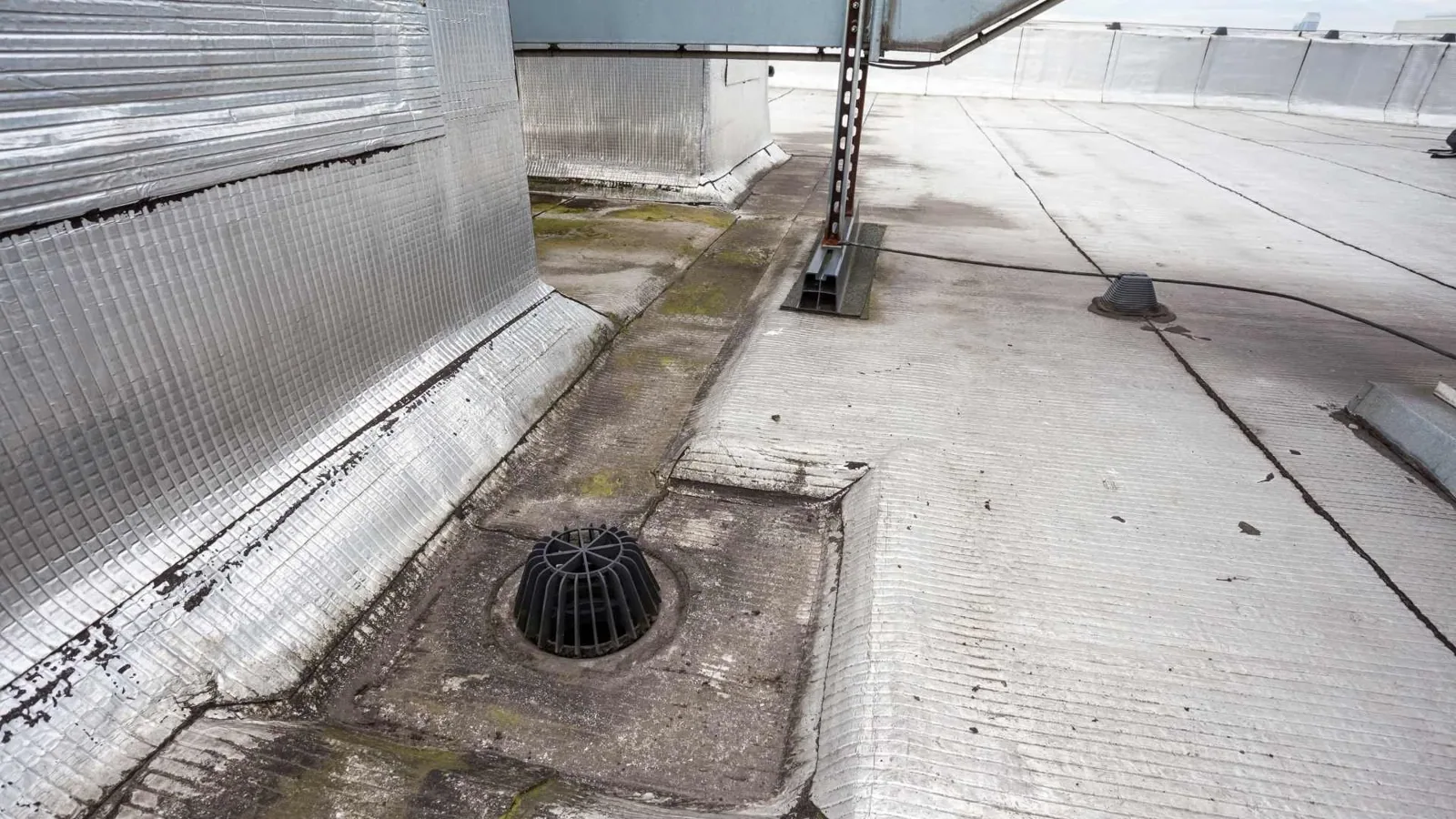
Franklin gets about 54 inches of rain a year. Panels shed that water in concentrated lines, and rails, trays, and conduit can trap debris against a drain. We map the drain locations before the array is laid out, and we ask that a clear path be kept around each one. The solar contractor's final layout drawing is compared with the drain map before the first rail goes down, because a drain found under a tray after the fact means moving panels. Standing water under panels ages the membrane faster and shades the surface, so the standing-water line after rain is a check we repeat. A drain and scupper inspection belongs in the yearly visit for any roof carrying an array.
Working around panels
Some roofs already have arrays. When they leak, the repair has to work around the panels without breaking the electrical circuits or the solar contractor's warranty. We coordinate with the system owner, photograph the area before and after, agree on lockout and disconnect steps in writing, and use temporary protection for sections that stay open overnight. Where a repair needs panels removed, the plan lists who disconnects the circuit, who lifts the panels, and who resets them. A commercial roof repair under an array is slower than one in the open, so the schedule allows for it. Wiring and conduit run across the roof add to the work. Each run rests on blocks or hangers, and each block sits on the membrane, so we inspect the pads for wear and add protection under any that have started to cut. A lifted conduit run is also a trip hazard, which matters when a crew has to cross it with material.
What solar-ready means in practice
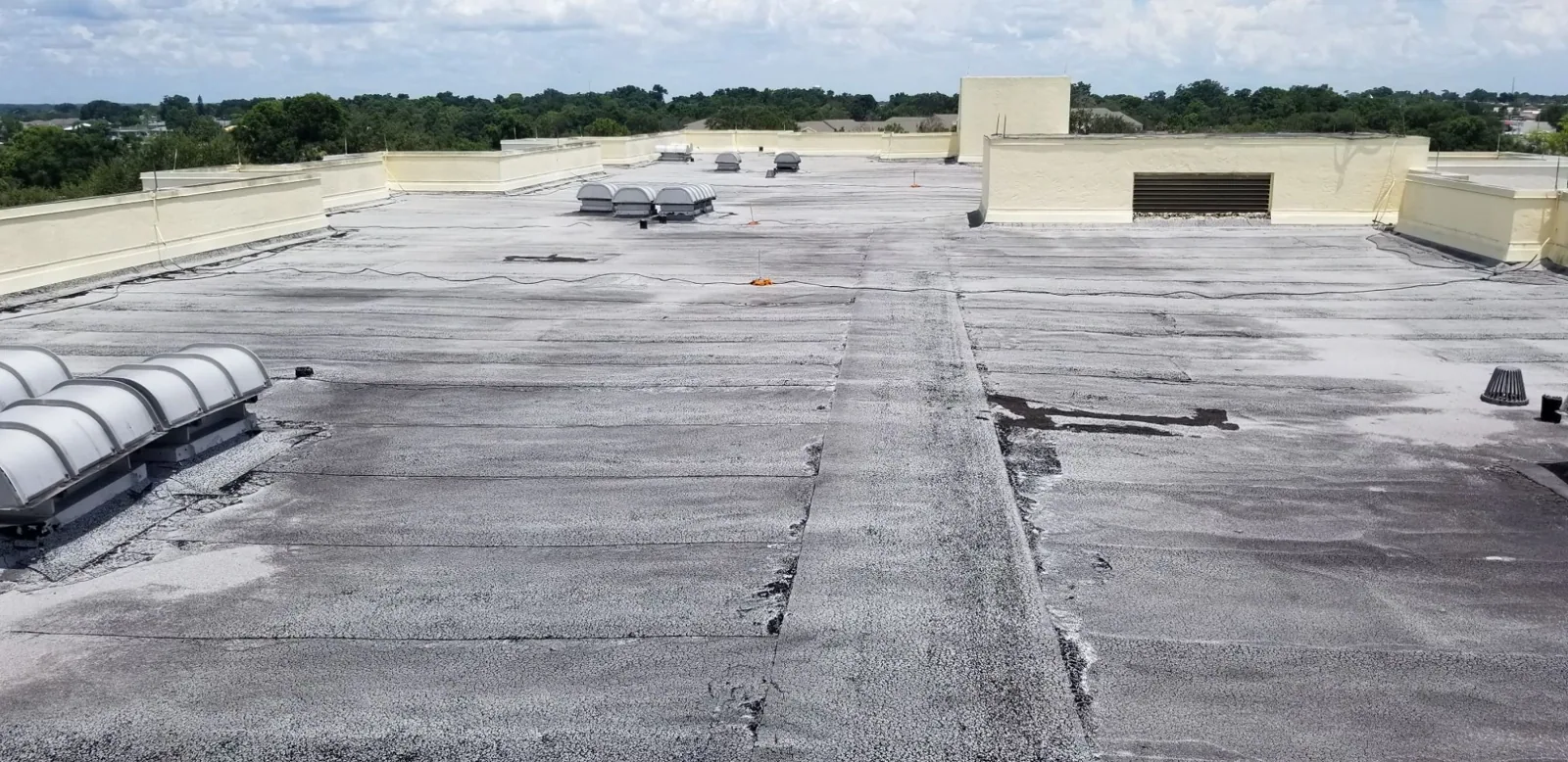
A solar-ready roof has a sound membrane, dry insulation, working drains, flashed penetrations, and a clear plan for where equipment and walkways go. It has protection pads where panels or trays will rest, and a record of the roof's construction. It also has a written note about the structure: what loads it was designed to carry, who confirmed that, and what the solar installer needs to verify. The local building official sets the requirements that apply to the permit, under the 2021 code editions the state adopted in August 2025. We keep the record simple: a roof plan, a list of mounts and pads, the membrane type, the date of the last moisture scan, and photographs. A property manager can hand that file to a solar contractor, an insurer, or a buyer and answer most questions without a new roof visit.
Where this work shows up
Large, low-slope roofs on warehouse and office buildings are the usual candidates. Industrial use is concentrated in Southall along Columbia Avenue, and Carothers Parkway, the main employment corridor of the McEwen area, runs near Cool Springs. We walk each roof before an owner signs a solar contract, because the roof decides what the array can do.
Commercial Roofing Questions
Should the roof be replaced before solar?
If the roof has fewer years left than the array will operate, yes. Replacing under panels means removing and resetting all of them, which costs far more than doing it first.
Do mounts void the roof warranty?
They can, if installed without the manufacturer's approval. We check the warranty terms and coordinate flashing details before any mount goes in. Many manufacturer warranties name the approved mount types and the people allowed to install them, so the paperwork is read before the layout is final, not after the first leak.
Can I find a leak under panels?
Yes. An infrared scan can map the wet layer from the surface, and we trace the stain back from the interior. Some repairs still require lifting a row of panels.
What does ballast do to the roof?
It adds weight and can move in wind. Protection pads under each tray keep the membrane from wearing, and the structure has to be confirmed for the load.
How do you keep drains clear?
We map drains first, keep clear zones around them in the layout, and add them to the maintenance visit. A strainer check after storms finds debris early, and a photograph of each drain before and after the array goes up shows what changed.