Cool Roof Installation in Franklin, TN
A top-floor suite that runs warm every July afternoon, while the thermostat reads normal, is the first sign of a roof that is soaking up heat. The roof surface is the first place the sun lands, and a dark membrane can run far hotter than the air above it. The job walks that problem backward: where the heat enters, how a reflective surface changes it, and what a cool roof cannot fix.
In Franklin, TN, July highs run near 91 F and the record high is 108 F, so a flat roof spends a lot of days absorbing heat that the building then has to remove. Commercial Roofing Franklin installs reflective membranes and coatings on low-slope roofs, and we begin with the heat path through the roof before choosing a surface.
What a cool roof is
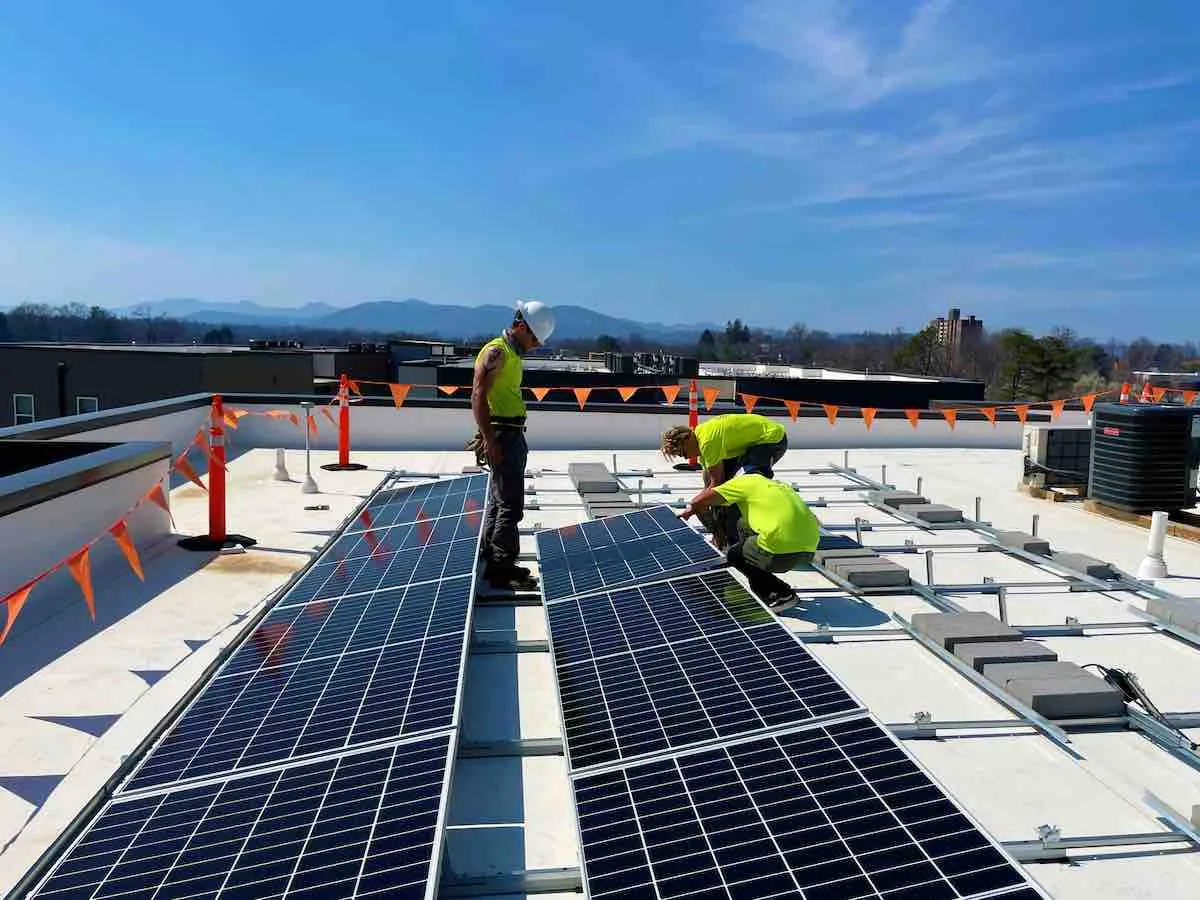
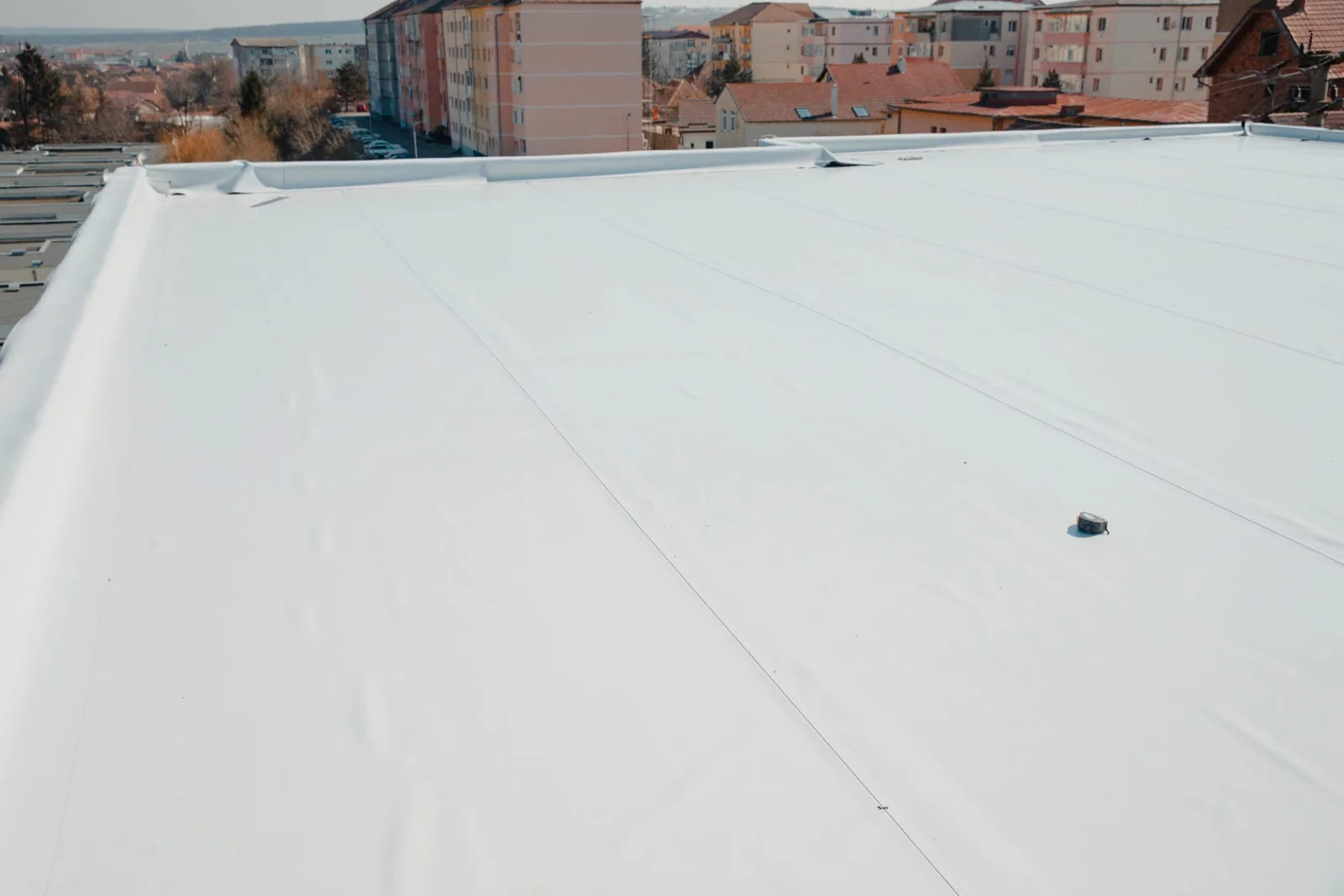
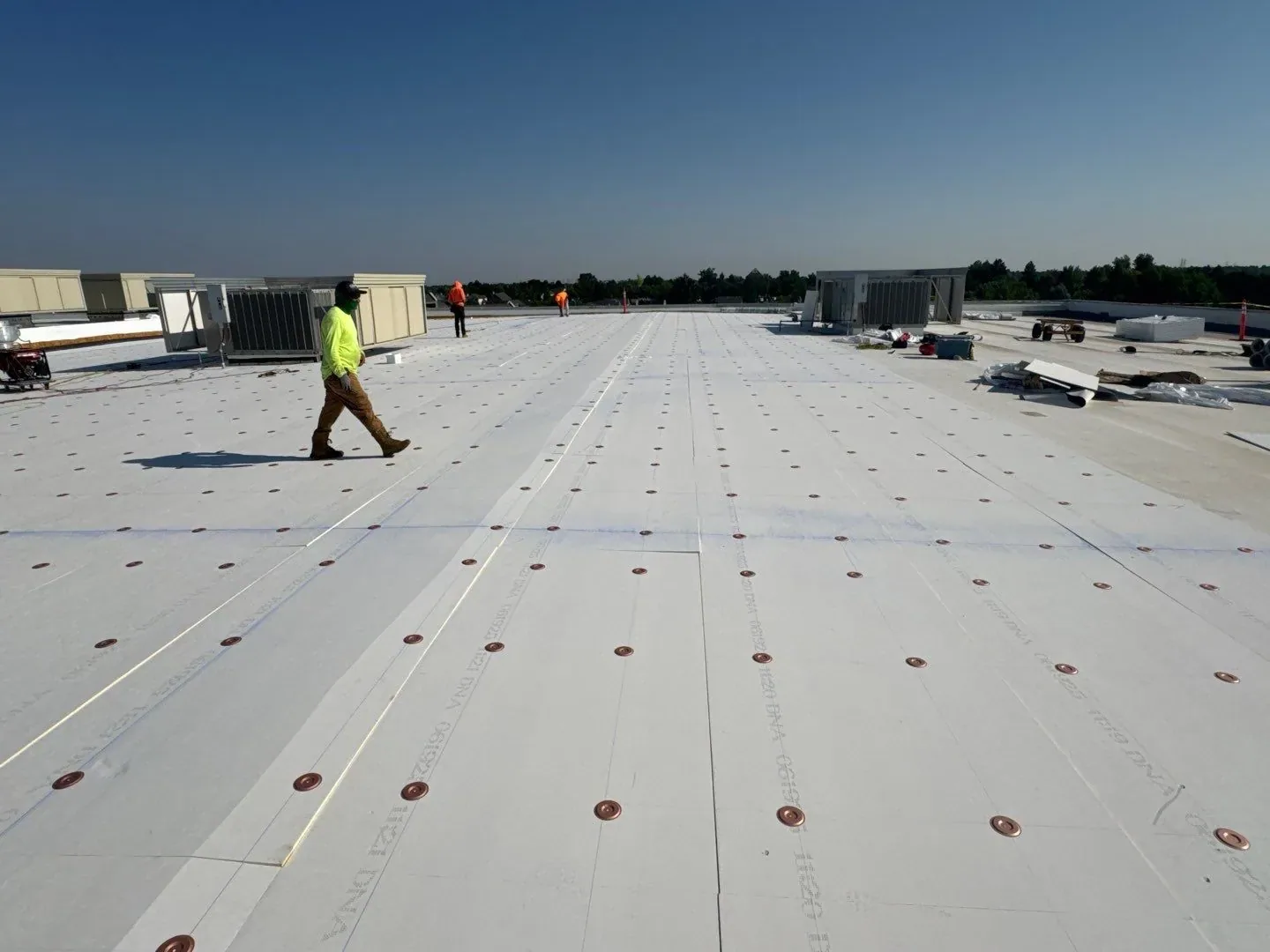
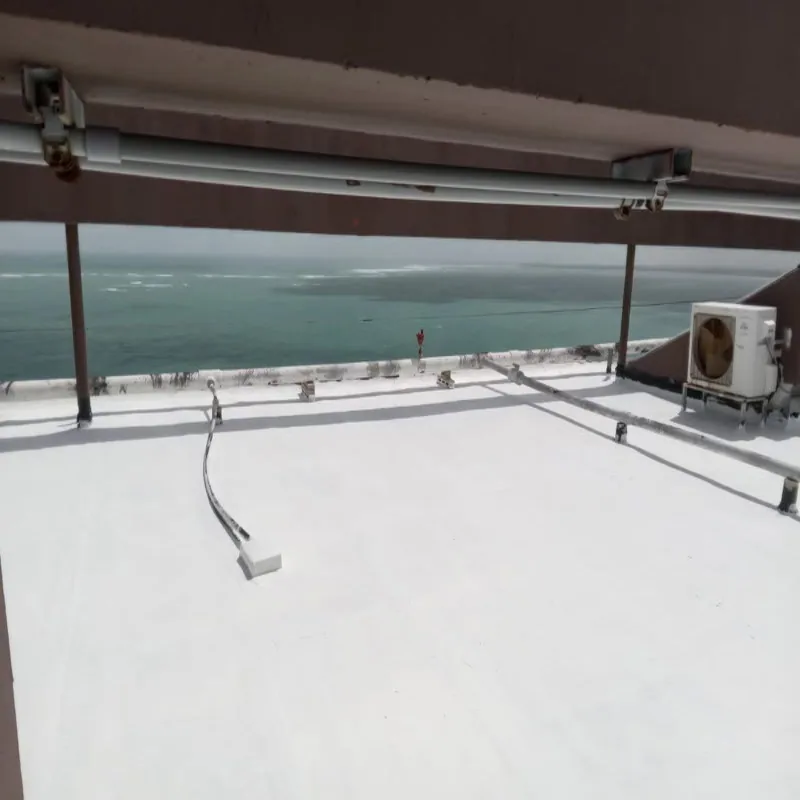
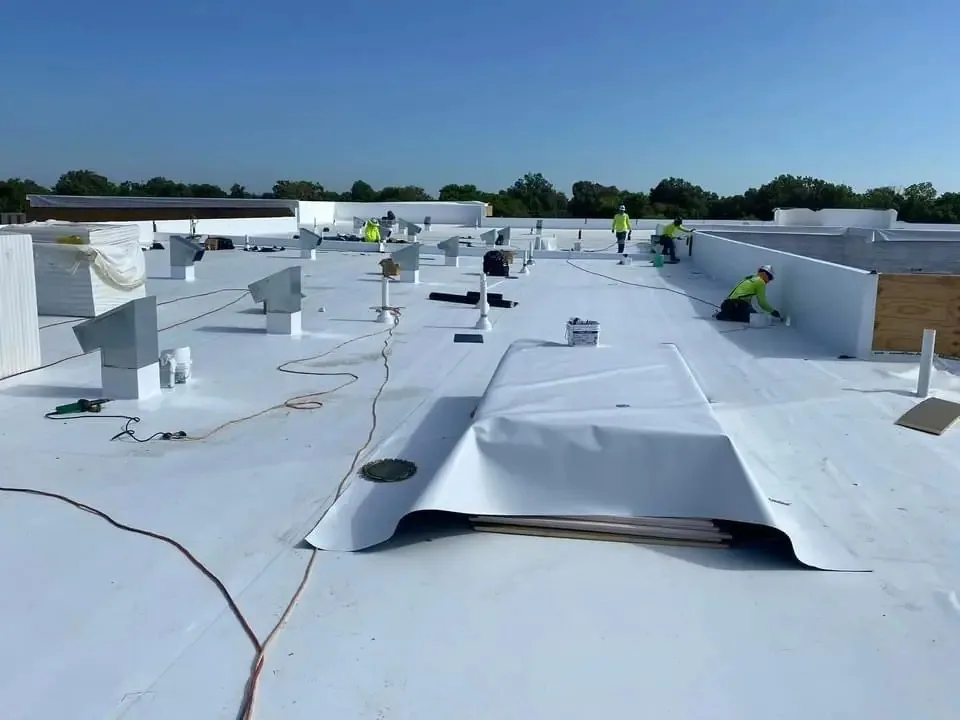
A cool roof is a roof with a light, reflective surface that sends more sunlight back into the sky than it absorbs. White single-ply membranes, such as TPO and PVC, are common reflective choices, and a white coating can give an existing roof a reflective skin. Two numbers describe a surface: how much sun it reflects when new, and how well it sheds the heat it does absorb. Both fall over time as dirt, algae, and wear change the surface.
Where the heat goes
Sun heats the membrane. The membrane heats the insulation. The insulation slows the heat, but never stops it, and what gets through lands on the ceiling and the air handlers below. A reflective surface lowers the first step, so less heat is in the chain from the start. Think of the roof as a lid on a hot pot: the lighter the lid, the less heat the pot has to deal with. That one analogy is all the physics most managers need to read a proposal. The effect is greatest on buildings with large roofs relative to their height and on top floors with little insulation. Large low-slope roofs across Franklin's McEwen area collect a great deal of sun in the course of a summer.
What a cool roof does not do
A cool roof does not fix a roof that leaks, replace insulation, or stop a unit from cycling in August. It lowers surface temperature, and that can reduce the cooling load, but the size of the effect depends on the insulation, the roof color it replaces, and the building's use. In winter, a reflective roof gives up a little of the free heat a dark roof would collect. Franklin has hard freezes, with a record low of minus 22 F, so we ask what the building spends in each season before suggesting a surface. Insulation matters as much as color. A roof with thin or wet insulation will leak heat in both directions, and a better surface on top of poor insulation gives a smaller return than the same surface over a dry, well-built insulation and cover board layer. If the walk shows the insulation is the weak link, we say so before a new surface is priced.
Membrane or coating
For a roof near the end of its life, a new white membrane gives the building both a reflective surface and a fresh roof. For a roof with years left, a reflective coating, such as acrylic or silicone, can add reflectivity without a tear-off. A coating needs a dry roof, so we run a moisture scan first and cut test samples. If insulation under the roof is wet, the coating is not the answer, because it would seal moisture in. A coating restoration works best on a sound roof with minor wear. The coating is applied in coats at a specified thickness, and we check the thickness as the crew works, because a thin coat reflects less and wears out sooner. Seams, fasteners, and flashings are repaired first, since a coating bridges a hairline crack but not an open seam. Roofs differ in how much of the work is surface and how much is structure. If the walk shows that most of the roof drains well and the insulation is dry, the surface choice is the main decision. If it shows ponds and soft spots, the drainage fix comes first and the reflective surface follows.
Dirt, algae, and aging
Franklin's 54 inches of annual rain washes a roof, but it also feeds algae and carries pollen and dust into low spots. A white roof that holds water turns gray where it ponds, and a gray patch absorbs more heat than the white around it. We look at the standing-water line after rain, and we fix drainage first. A roof that drains well stays cleaner, and a gentle wash once a year keeps the reflective surface working. The photo trail from each wash shows how the surface is holding up. Drains and scuppers need a look each spring and fall, and a preventive maintenance visit covers that, along with the sealant at curbs and walls. A clean drain strainer keeps water moving, and moving water keeps the white surface white.
Code, rebates, and paperwork
A replacement can trigger energy-code insulation and reflectivity requirements, and because cities may adopt editions newer than the state's 2021 base, the local building official is asked what applies to the scope. Some utilities and programs offer incentives for qualifying roofs, and owners should confirm those before signing, since they often depend on product ratings and documentation. We keep product data, installation records, and photographs so an owner can show what went on the roof. That file also helps at resale or refinancing, when a buyer's inspector asks what the surface is, when it went on, and what rating it carries. A property manager who can hand over one folder with the answers saves a lot of back-and-forth.
Where it fits in Franklin
Cool roofs suit large, low-slope roofs with a lot of rooftop equipment, such as the office buildings and retail centers along Carothers Parkway and in Cool Springs. They also fit the warehouse-style buildings in Southall along Columbia Avenue, where industrial and commercial uses share larger buildings. Each building is walked first, because a roof with failed flashings or standing water needs those repairs before any new surface goes on. The walk also checks the roof's edge metal, penetrations, and drain locations, since a reflective surface is only as good as the details around it. The written summary lists those items in the order we would fix them.
Commercial Roofing Questions
Will a cool roof lower my cooling bill?
Often by some amount, depending on the insulation and the old roof color. It works best on large, poorly insulated roofs. We explain what to expect before recommending it, and we say plainly when the savings would be small.
Does a white roof cost more?
The membrane itself is usually comparable. Costs differ with insulation, tear-off, and drainage work. We price those items separately so you can compare.
Can I coat my existing roof white?
If it is dry and sound, yes. A moisture scan and test cuts decide it, because a coating over wet insulation traps the water.
How long does the reflective surface last?
Reflectivity falls as dirt and wear build up. Regular washing and a quick check after storms keep it near its rating for longer. Heavy foot traffic and rooftop debris also scuff the surface, so walk pads at service paths protect it.
Does it matter in winter?
A reflective roof gives up some solar heat in cold months. In a climate with hot summers the summer savings usually outweigh the winter loss, but we look at both seasons.