Roofing for Property Management Companies in Franklin, TN
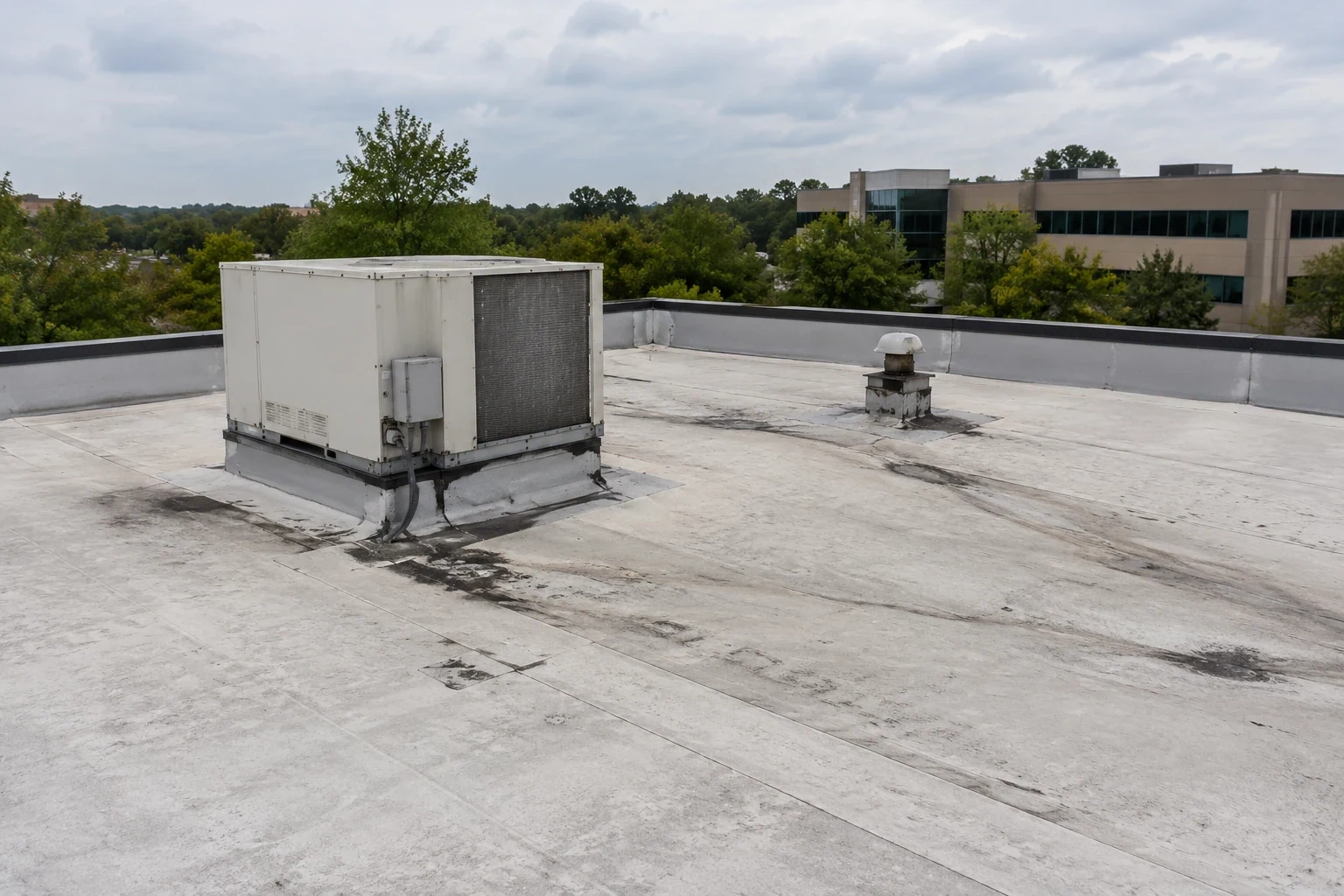
A tenant's email with a photo of a brown ring on a ceiling tile is the first sign most property managers see, and it can arrive with a rain forecast behind it. The ring shows where the water ended up. Working back from it to the cause is the job, so the repair fixes the opening and not just the stain. A manager in Franklin, TN can hold several roofs at once, each with a different age, a different tenant mix and a different lease clause about who pays. A written trail of each failure, kept in one format, lets a manager answer the tenant, the owner and the insurer from the same file.
The email, the photo and the first call
The first call decides how fast the cause is found. Useful information is simple: when the stain appeared, whether it followed rain, wind or a thaw, where in the unit it shows and what is above it. We use those answers to narrow the search before anyone climbs a ladder.
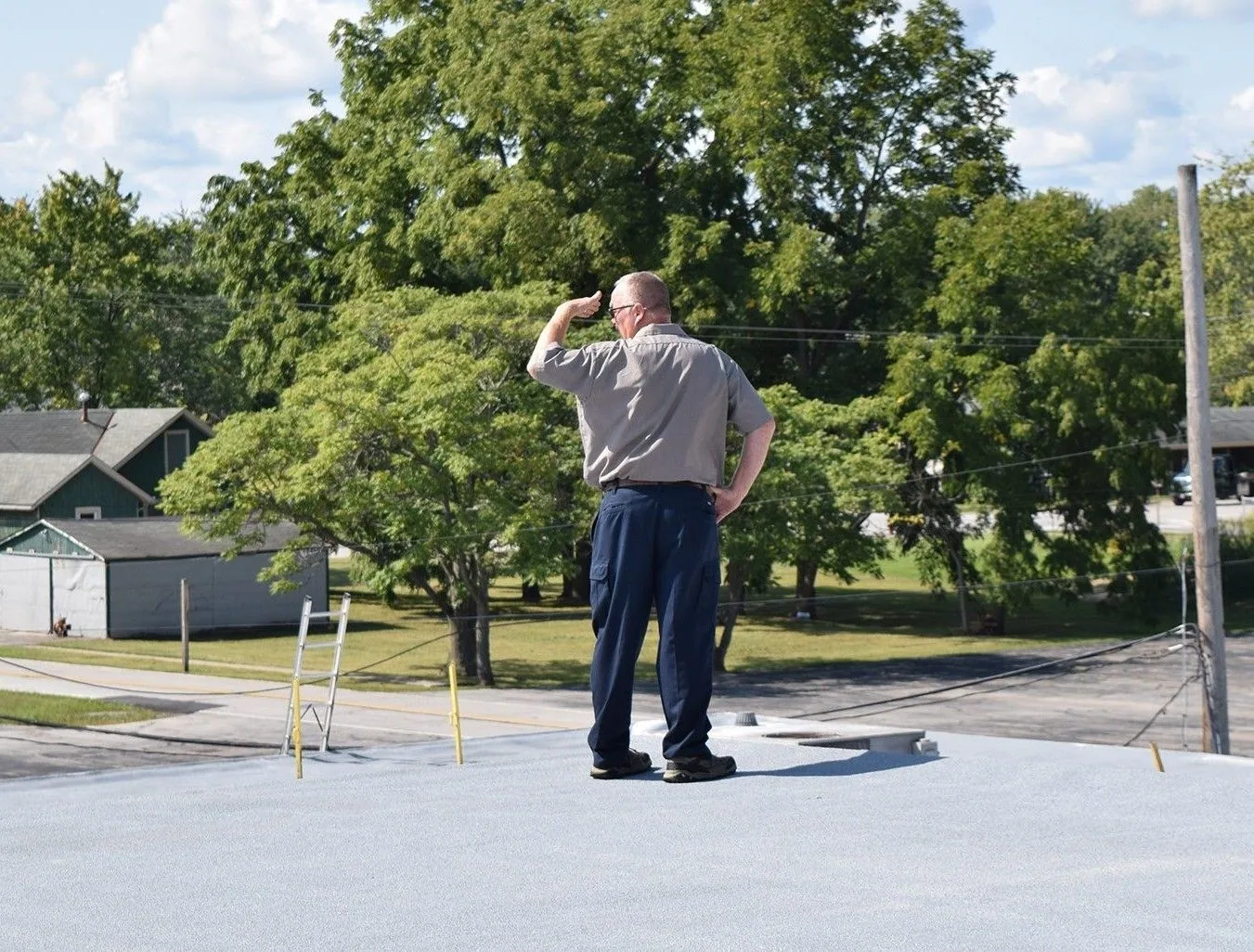
On the roof we start above the room where the stain showed, mark it on a plan, and fan out across drains, curbs, seams and wall joints. A scan shows where the layer is wet, and a few core cuts verify it. The write-up names the room, the roof opening and the path between them. A manager can forward that page to the tenant and the owner without translating it.
Two more details help the first visit. A photo of the ceiling from a few feet back shows the stain's shape, and a list of any rooftop units above that tenant tells us which curbs to check. Managers who log these facts at the front desk save a visit.
The pattern behind a stained tile
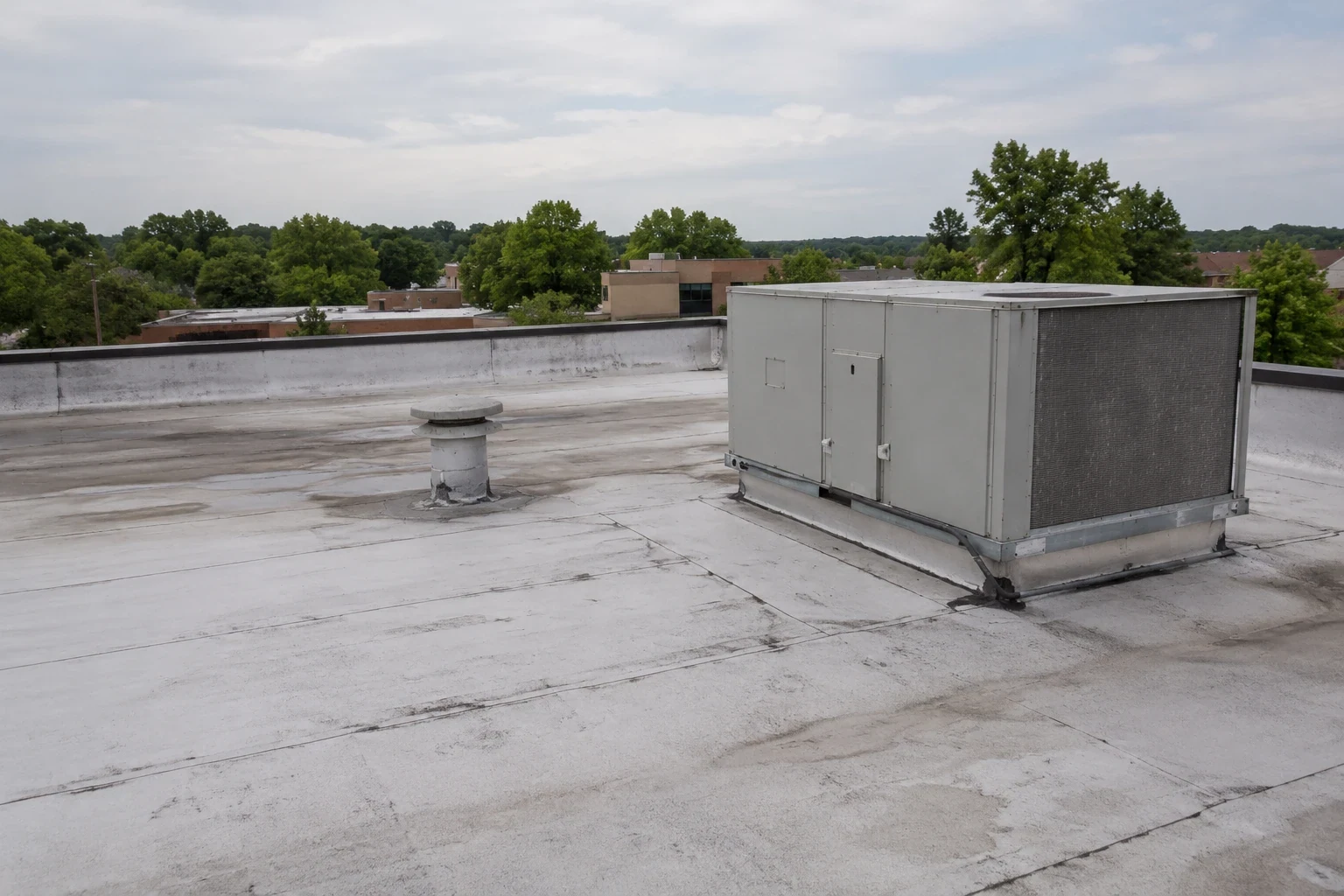
Franklin sees roughly 54 inches of rain in a normal year, and the roof endures a record range from 108 F down to minus 22 F. A flat roof works through every degree of that. Sealants harden in the heat, seams stiffen and lift, and a clogged strainer holds water that finds the weak point.
The sequence repeats: heat movement, a hairline, a wet layer, then the stain. Because it repeats, two roof walks a year catch it at the early stage, while it is still a maintenance item. The maintenance visit clears drains, checks details and logs what changed. Without it, the first sign is usually the tenant email.
Lease terms should sit beside the roof file. Which party handles roof repairs, which handles replacement and how costs are passed through are facts that change who needs to see each finding. We keep the roof facts separate from the lease facts and let the manager join them.
One format for every building
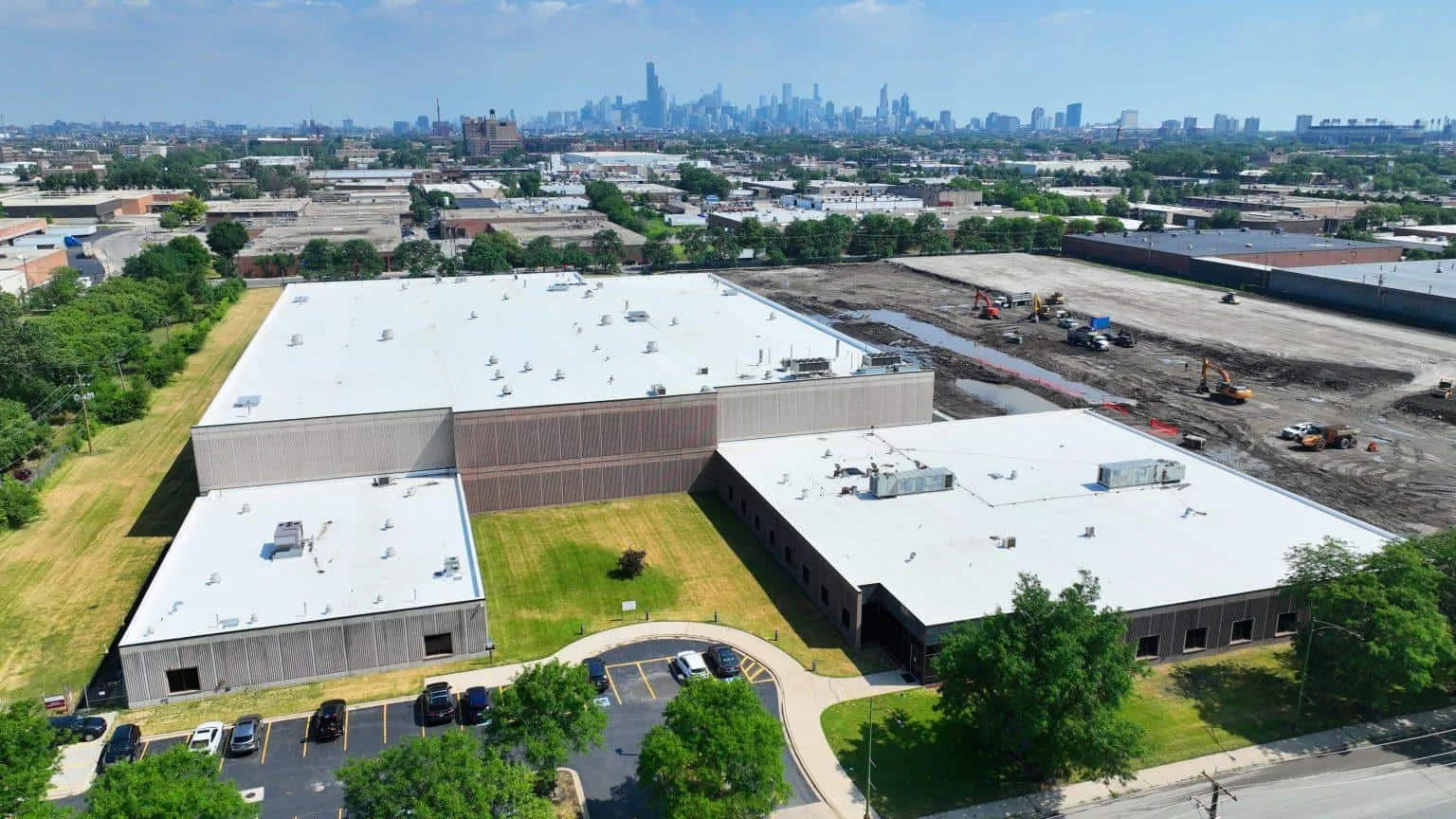
A portfolio of roofs is easier to manage when every roof is described the same way. The file for each building holds a roof plan, the age of each section, the warranty, a dated photo set, a condition rating and a repair history. The ratings use the same scale everywhere, so a manager can sort the list and see which roofs need money first.
That one file is what roof asset management comes down to. It also feeds the capital plan, which matches repairs now against replacements later. Managers working in Cool Springs, along the Carothers Parkway corridor and in Brentwood can hold all of those buildings in one list. Owners such as real estate investors and REITs ask for the same view, and managers who also work with general contractors on tenant improvements need the roof record before anyone cuts a new opening.
Reserve planning follows. When a roof is rated, the rating, the repair count and the remaining-life range move straight into the reserve schedule, with a date for the next walk. A manager presenting to an owner can show the evidence behind each line item.
Tenants, access and quiet hours
Roof work above occupied space is planned around the people below. We agree on dates and hours with the manager, tell tenants in writing and set up interior protection under the work area. Noisy tasks move to quiet windows, and the crew works in sections it can close before leaving.
Medical tenants, the kind served by healthcare systems, add rules for dust, noise and air intakes. Access is part of the plan. We confirm the roof hatch, who holds the key, which rooftop units must stay on and where materials can be staged. For larger jobs, the manager gets a daily log each evening, the same one that runs on an occupied building reroofing job. If a tenant reports water, the time and the response go in the log.
Contractors for other trades walk roofs too. HVAC technicians, sign installers and cable crews cut, drill and step on the membrane, and a manager can reduce damage by posting a roof access rule and logging each visit. A short sign-in sheet at the hatch lets the manager match a new puncture to the day it happened.
After a storm line
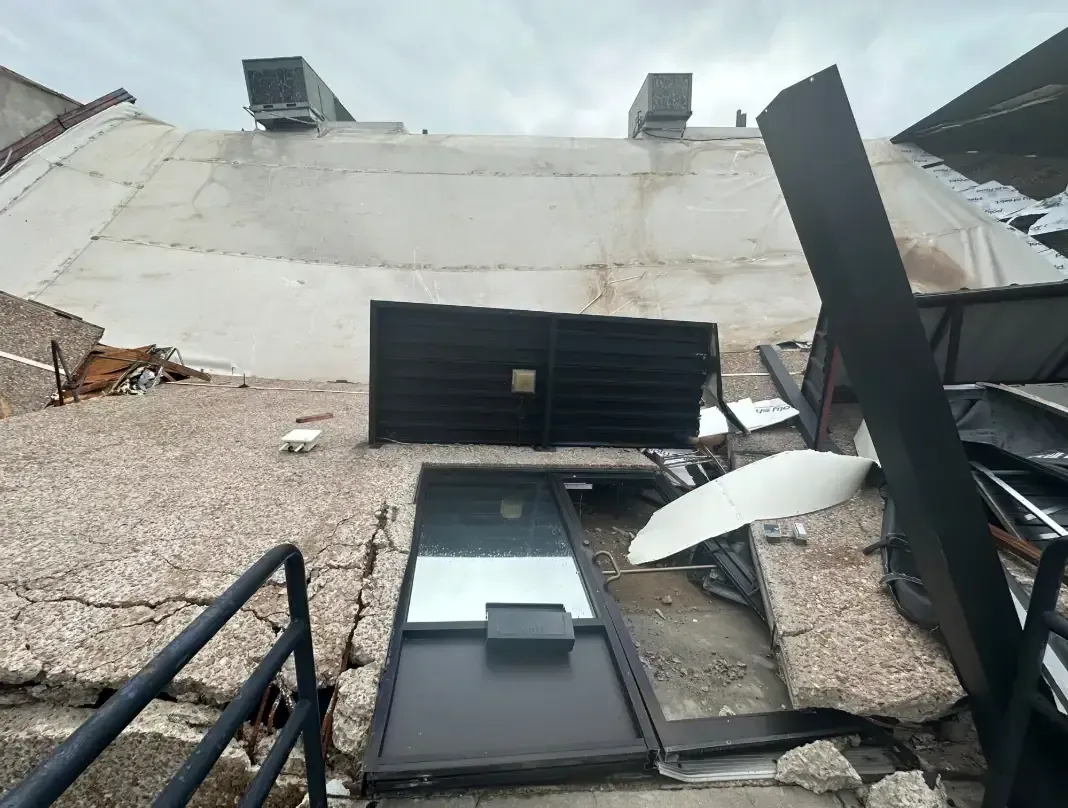
Franklin's EF0 tornado in August 2023 did minor roof and exterior damage at some businesses along Highway 96. After any severe storm, a manager needs to know quickly which roofs lost edge metal or equipment covers.
On each building we walk the perimeter and the rooftop equipment, date-stamp every photograph and return a short summary sorted by building. That summary supports insurance claim documentation and tells the manager where to send crews first. A walk after a storm costs little compared with a missed lifted edge.
Hail is the quieter risk. The July 2026 warning for northeastern Williamson County, which named Franklin, Brentwood and Nolensville, included hail as large as three-quarters of an inch, plus gusts near 60 mph. Hail that size tends to leave bruises instead of tears, so after a storm the walk includes pressing suspect spots and photographing them with dates.
Repair or replace, with a number of repairs
The repair-or-replace question gets easier with a count. If the same roof has needed six repairs in three years, in new places each time, the roof is wearing out. If it has needed one repair at one corner, the roof is sound. The file shows which case applies.
We lay out both choices with scan images, core photographs and the repair history. Cost drivers are listed plainly: roof area, access, phasing, interior protection and deck condition. The manager can take the summary to the owner and argue for a repair or a replacement from the same facts.
Timing counts as well. A replacement planned for a mild season, with phasing and tenant notice, costs less in disruption than one forced by a failed roof in January. The repair count in the file gives the manager the date to start planning, and the summary is short enough for the owner to read between meetings.
Commercial Roofing Questions
Can one inspection cover several buildings?
Yes. We walk each roof and report each in the same format, so the list can be sorted by condition.
Who pays for a leak, owner or tenant?
The lease answers that. The file shows where the water entered and what caused it, so the manager can read the lease against the same facts.
How do we handle a leak after hours?
Call as the water appears, whatever the hour. The area is dried in first, then the source is traced and the permanent repair planned.
What records should a manager keep?
Hold on to the roof plan, the warranty papers, repair invoices and dated photographs. Insurance, budgeting and the next inspection all draw on them.
How often should each roof be walked?
A spring and a fall walk is a sound starting rhythm, with another after any severe storm for older roofs.