Roofing for Cities, Counties and Public Agencies in Franklin, TN
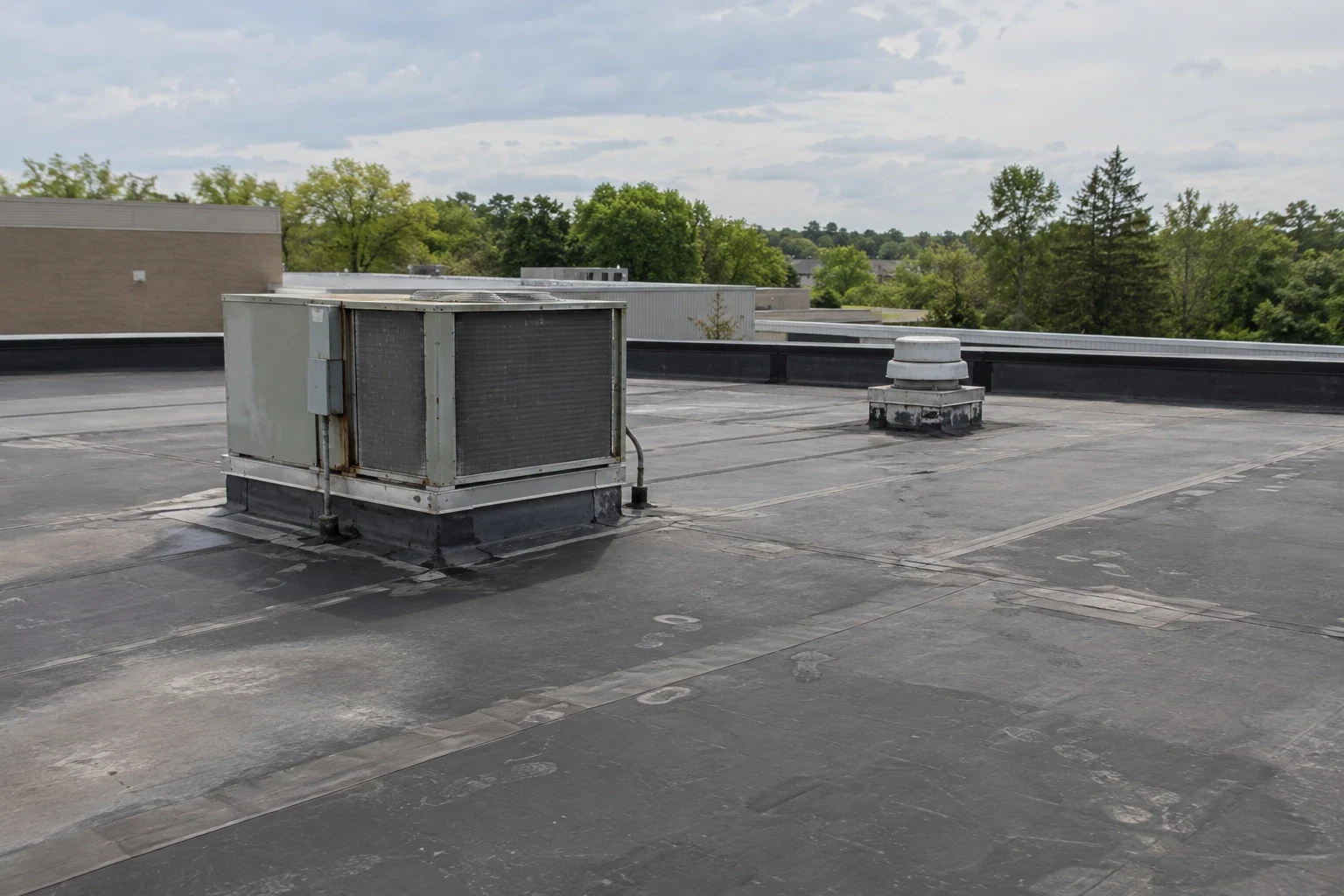
A public works supervisor opens a utility building on a Monday morning and finds a wet floor under a single stained panel. That stain is the first sign, and the question that follows is how to describe it to a department head who controls the budget. Where did the water stop, which layer is wet and what will it cost to stop it? We answer in that order. For cities, counties and agencies near Franklin, TN, a roof repair is a public expense, and the record behind it has to make sense to a reader who has never been on the roof. The failure trail is written for that reader.
A varied stock of public buildings
A public agency can hold a mixed set of roofs: offices, maintenance garages, fire stations, community centers, libraries and storage buildings. Ages, materials and slopes differ, and so do the people who use them. A single inspection format lets an agency compare them on one scale.
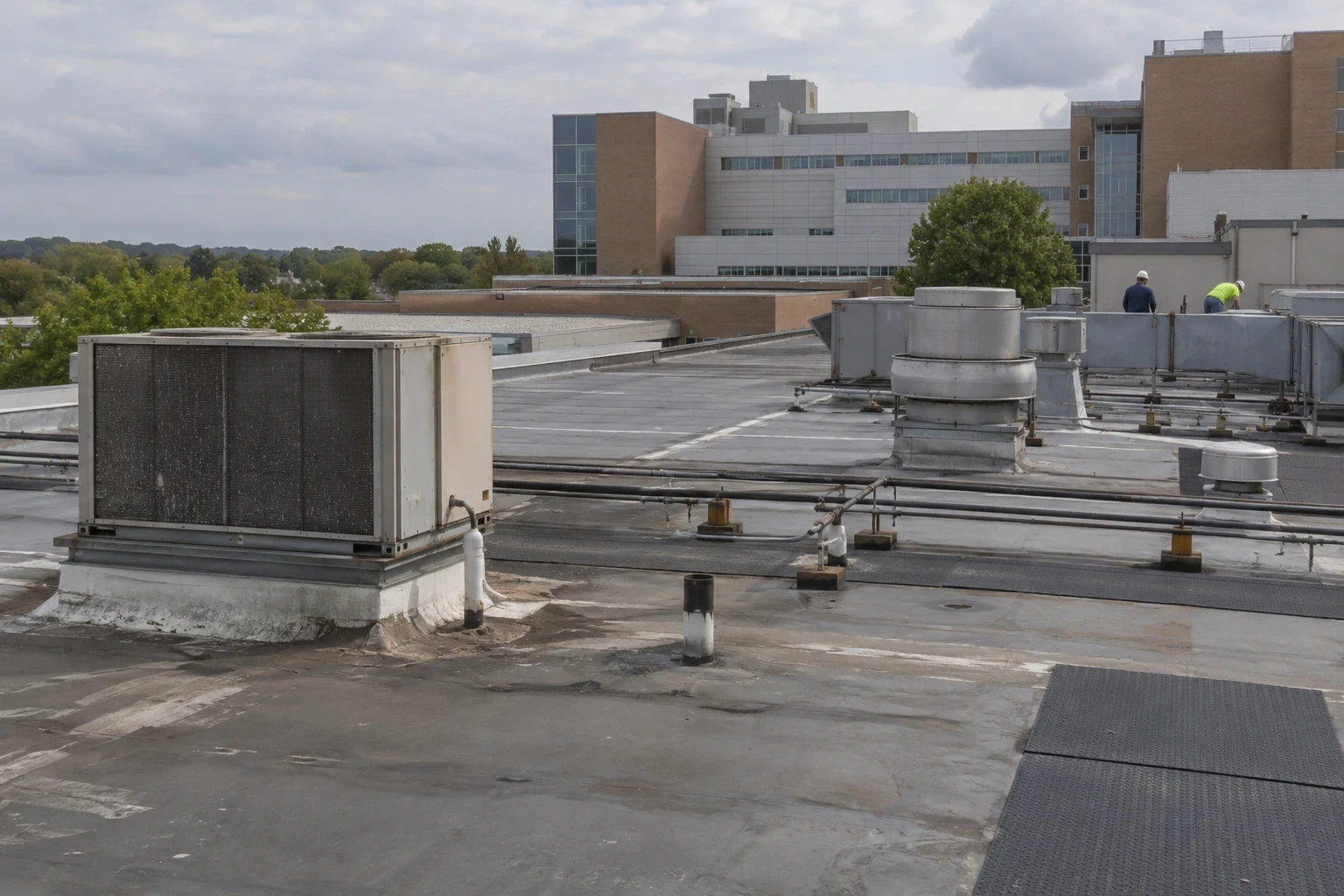
Each roof is walked with a plan in hand: drains, curbs and penetrations are marked, seams are probed and a moisture scan covers the field. The file for each building gets a rating, a repair list and a photo set. The result is a list that can be sorted by condition, which is how an agency chooses where the next dollar goes.
Custodians and maintenance staff see the first signs. A simple log kept at the facilities desk, with room, date and weather beside each report, makes a pattern out of scattered complaints. We ask for the log before the first visit, since three stains along one wall after the same kind of rain tell us where to begin.
The failure trail as a public record
A public decision benefits from a plain account. The written trail connects three things: the room where the stain appeared, the opening in the roof and the route the water took between them, each dated and tied to that day's weather. It also lists what was scanned, what was cut and what was found, so an auditor or a council member can follow the repair back to the stain unaided.
The same trail supports a work order, an insurance report and a budget request. When a roof is repaired, the file shows the cause, the material and the result. When it is replaced, the file shows why. With roughly 54 inches of rain a year, a roof that is wet has usually been wet for a while, and the trail dates the problem as far as the evidence allows.
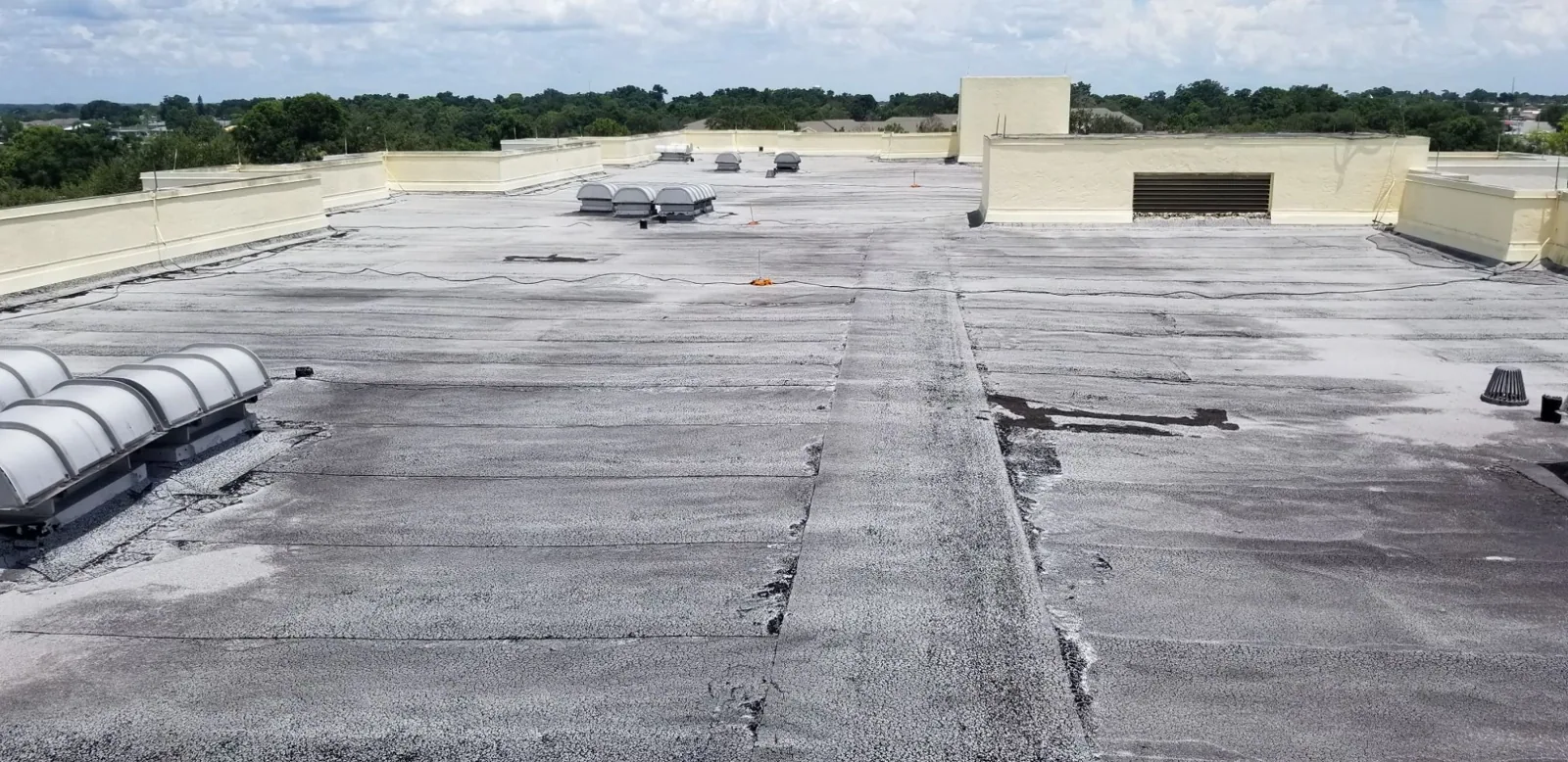
Drains are the first check on every public roof. A strainer packed with leaves keeps water on the membrane, and that water finds any seam already stiffened by summer, when a Franklin afternoon averages near 91 F. Strainers are cleared and photographed, and the time they take to empty goes in the file.
Storm response and flood memory
Public agencies are asked to stay open when others close. The Dixie Alley tornado zone takes in Brentwood, and Franklin's own EF0 in August 2023, with estimated winds of 75 mph, left minor roof damage on some Highway 96 businesses. That storm system also brought trees down near Fairview and shut both lanes of Highway 100 there.
In the flood of early May 2010 the Harpeth crested downtown at 35.32 feet, just above the 1948 mark, and about 1,500 residential and commercial structures in Williamson County were damaged. Public buildings that serve as shelters or response centers need roofs that hold up and records that show it. After a severe storm, we walk the listed roofs and send a dated summary sorted by building. Emergency roof repair is available at any hour.
Which code edition applies
Tennessee does not require a city to adopt a building code. A city that does can adopt the international codes by reference, in an edition no more than seven years behind the latest, which keeps 2024, 2021 and 2018 all available. The state itself moved to the 2021 editions of most international codes on August 17, 2025, and a city may go newer or stricter.
For an agency, the practical step is to confirm the edition with the local building office before a roof project is priced. We record the answer along with the date and who gave it. Insulation level, wind uplift and fire rating all follow from the edition, and a scope drafted without it can price the wrong insulation or the wrong fire rating.
Budgets, phasing and the capital cycle
Public budgets run on annual cycles, and roofs wear on their own calendar. A rated inspection shows which roofs can wait and which cannot, and the capital plan places them in the right years. Phasing helps, because a large roof can be replaced in sections across two budget years.
Cost drivers go in the summary in plain terms: how much roof there is, how crews reach it, how the work is phased, what protects the rooms below, what shape the deck is in and which membrane is chosen. An agency can compare a repair with a replacement using the same facts. Where several departments share a building, the file shows which part of the roof serves which user, so costs can be split fairly. Schools and hospitals run on similar cycles, which is why school districts and healthcare systems keep the same kind of file.
Repair or replace, with the evidence
A failure confined to one spot on an otherwise sound roof is a repair. Repairs that keep surfacing in new places, moisture that has spread through the insulation or a membrane past its useful life all make the case for replacement. Both options reach the department head or the council with scan images, core photographs and a repair count for each year.
The risk of waiting belongs in the summary. A leak over a records room, a dispatch center or a shelter can cost more than the repair that would have prevented it. A commercial roof inspection sets the baseline, and the written summary lists the options in plain words, with the cost drivers beside each one.
Franklin, Brentwood and the county
Williamson County, home to Franklin, is described as one of the wealthiest counties in Tennessee. Downtown Franklin's historic core is a 16-block National Register district, and the old Dortch Stove Works and Magic Chef factory inside it now holds offices, shops, restaurants and event space after a late-1990s restoration. For a public building in or near Historic Downtown Franklin, it pays to confirm any approval requirements with the city before staging begins.
An agency with buildings in Brentwood, Nolensville and Spring Hill can rate every site on the same scale. A government building and a National Guard armory are rated the same way.
Commercial Roofing Questions
Can you provide documentation for public bids?
We can write the scope, attach the photographs and list the cost drivers in whatever form your procurement process asks for. The bidding rules themselves belong to your agency.
What if our building is in the historic district?
Confirm approvals with the city early. We plan staging, noise and materials to fit what the city requires.
How do we prioritize many roofs?
Rate each one on the same scale. Sort by condition, repair count and risk, and fund the top of the list first.
What if a storm damages several buildings?
We walk each roof, photograph the damage and send a summary sorted by building so crews go where they are needed.
How often should public roofs be walked?
Two walks a year, spring and fall, and one more after any severe storm. Roofs with a repair history may need extra visits.