Roofing for School Districts in Franklin, TN
A bucket in a classroom corner on the first rainy morning of the term is the first sign, and the teacher's photo of it is usually in the facilities inbox before the first bell. The bucket only marks where the water landed. Tracing the failure upward through the ceiling, the insulation and the membrane to the opening is what lets the repair fix the cause and lets the board see what was found. School districts around Franklin, TN care for buildings of many ages, each with its own roof, and every leak competes with the calendar. A written trail turns each leak into a clear item that a district can budget and schedule.
From the bucket to the roof plan
A teacher or custodian reports the stain, and the first useful step is to record where it is, when it appeared and what the weather did. The stain goes onto a roof plan, and the search spreads from it toward the nearest drains, penetrations, seams and wall joints. A scan locates the wet layer, and cores settle it.
The write-up names the classroom, the roof opening and the path between them. A facilities director can forward it to a principal and a board member without explaining roofing. If the leak is above a gym, a kitchen or a library, the same trail shows what else lies under the wet layer and what should be checked.
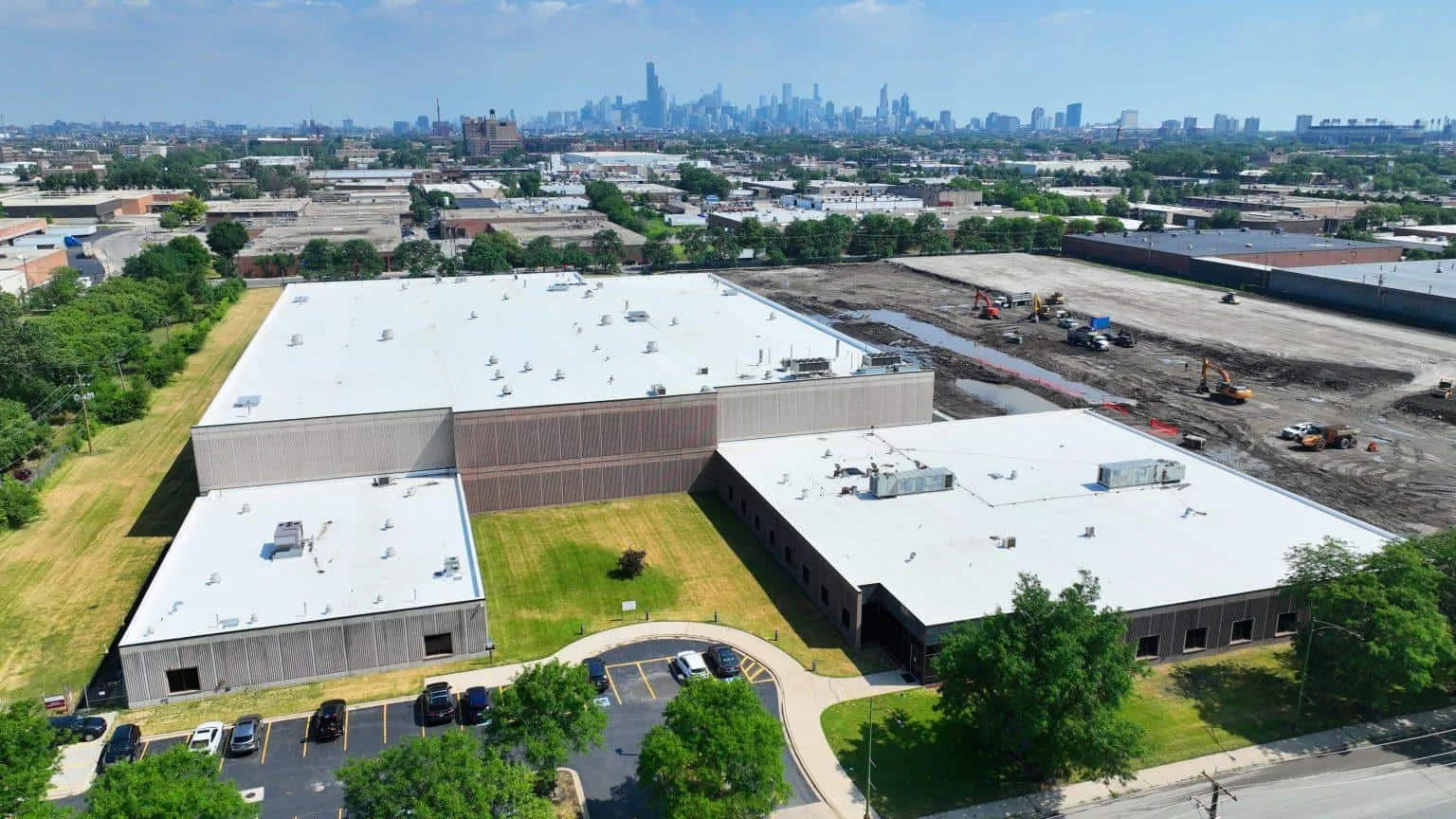
Gyms, cafeterias and auditoriums have their own roofs. They can be taller and broader than the classroom wings, with long spans and rooftop kitchen exhaust. Each gets a separate line on the plan, since a leak above a gym floor or a kitchen carries consequences a classroom leak does not.
Why summer is the stress and the window
The roof is hottest when the building is empty. A July afternoon in Franklin averages near 91 F, and the membrane expands and contracts all summer with no one underneath. Seams stiffen, sealants harden and a hairline opens. When the autumn rains arrive, part of roughly 54 inches a year, that hairline lets water in.
Summer is also the repair window. Classrooms are empty, noise is not a problem and crews can open large areas. The key is to start early. A spring roof walk finds the failures that summer work can fix, and it leaves time to order materials and schedule crews before the first day of school.
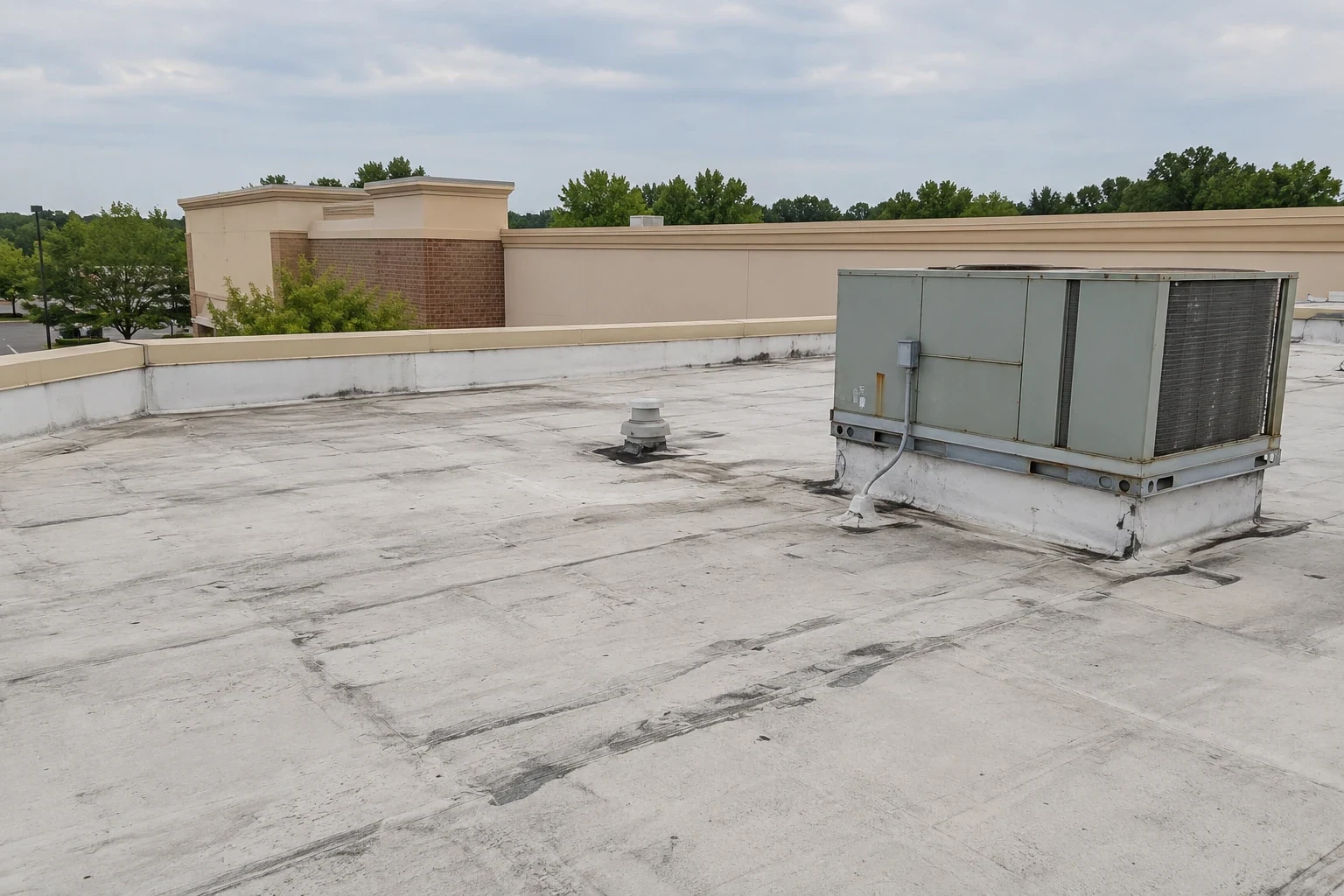
Drains deserve a spring check on every school roof. Leaves, balls and playground debris end up in strainers, and a packed drain leaves a pond sitting over a classroom for days. Clearing and photographing the strainers takes little time and keeps the autumn rains from finding a weak seam.
Working inside the school calendar
The school calendar sets every roof schedule. Big projects belong in the summer break, with tear-off and dry-in finished before classes start. Smaller repairs can happen on weekends and during breaks. We agree on dates with the facilities director, list the areas under the work and confirm who can approve changes.
When a leak cannot wait for summer, we dry in the area during the term and plan the permanent repair for the break. Interior protection goes up under any open area, and work near classrooms in session is kept quiet. A larger job runs like any occupied building reroofing project, with a daily log for the facilities office.
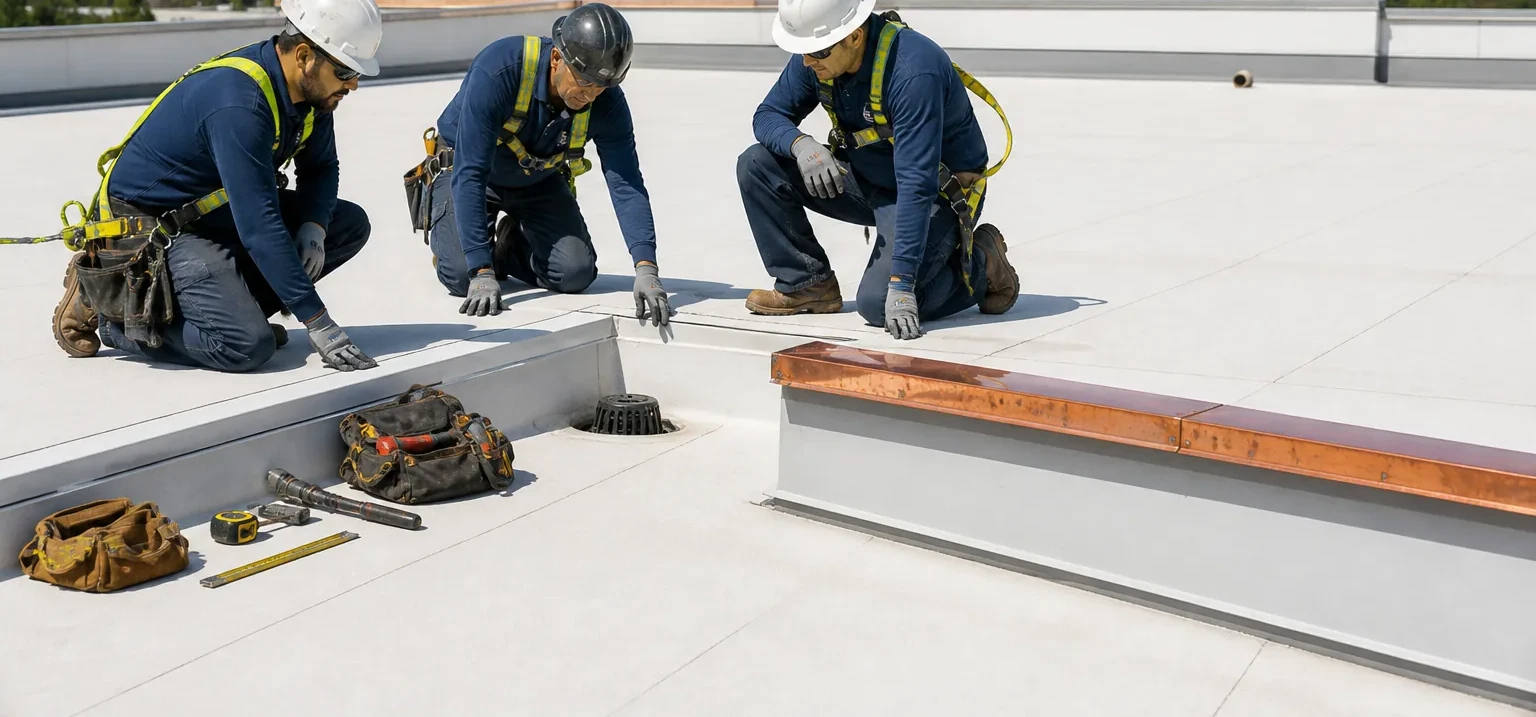
Safety matters near students. Barriers and signs go up around staging areas and lifts, deliveries avoid drop-off times and the crew keeps tools and debris away from play areas. The facilities contact receives the daily log and can pause the work if a school event needs the space.
Storm lines and school safety
The Dixie Alley tornado zone includes nearby Brentwood, and its heightened risk from November through May overlaps the school year. The August 12, 2023 EF0 tornado near Highway 96 at Royal Oaks Boulevard, and the storm system that downed trees near Fairview, are reminders that a storm line can pass in minutes. After a severe storm, a district needs to know quickly which roofs lost edge metal, equipment covers or ballast.
Each roof on the district's list gets a walk, with dated photographs of every finding and a summary organized by building so the facilities team can send crews to the worst roofs first. The photographs also back up insurance claim documentation, and an opening can be dried in the same day.
Repair or replace before the vote
A board votes on a number, and the number needs evidence. A leak on an otherwise sound roof is a repair. Wet insulation across a wide area, or repairs that keep turning up in new places, point toward replacement. Either case comes with scan images, core photographs and a year-by-year repair count.
The summary lists the cost drivers in plain words: roof area, access, phasing, the condition of the deck and the membrane chosen. It also states the risk of waiting, such as a leak in a gym or lab that would force an emergency repair. A district can then choose a repair now or plan a replacement for the next summer break from the same facts.
One file for every building
A district with many buildings needs one format. The roof file for each school holds a plan with every drain, curb and penetration marked, the age of each section, warranty papers, a dated photo set, a rating and a repair history. The ratings use one scale, so the list can be sorted by condition.
That file feeds the capital plan, which weighs repairs this year against replacements later, and the history it holds also helps a general contractor bidding a district's capital project. A board reading the plan can see why one school's roof is at the top of the list and another can wait. The same view helps public agencies that run many buildings.
Hail is the quieter storm item. A July 2026 warning covering northeastern Williamson County named Franklin, Brentwood and Nolensville and expected hail up to about three-quarters of an inch plus 60 mph gusts. A stone that size can leave a bruise instead of a tear, so a school roof gets a press test on suspect spots after a storm, photographed with dates.
Schools across the county
Williamson County's communities include Franklin, Brentwood, Nolensville, Fairview and Thompson's Station, and a district or private school group with campuses in several of them can compare roofs on one scale. A school campus and a college or university campus follow the same file.
Neighboring areas such as Nolensville and Spring Hill are rated the same way, and the walk, not the age of the building, shows a roof's type and condition. The written summary lists the findings, the options and the cost drivers, so the board decides from facts.
Commercial Roofing Questions
When should school roof projects be scheduled?
Large projects belong in the summer break. Start planning in the spring so materials and crews are ready.
Can repairs happen while classes are in session?
Small repairs can, with quiet work and interior protection. Larger jobs wait for a break.
How do we show the board why a roof needs money?
A rated inspection with photographs, moisture findings and a repair count gives the board a clear case.
What if a leak happens during exams?
Call right away. We dry in the area and plan the permanent repair for the break.
How often should school roofs be inspected?
A spring walk and an autumn walk, with an added visit after any severe storm.