Roofing for Logistics and 3PL Operators in Franklin, TN
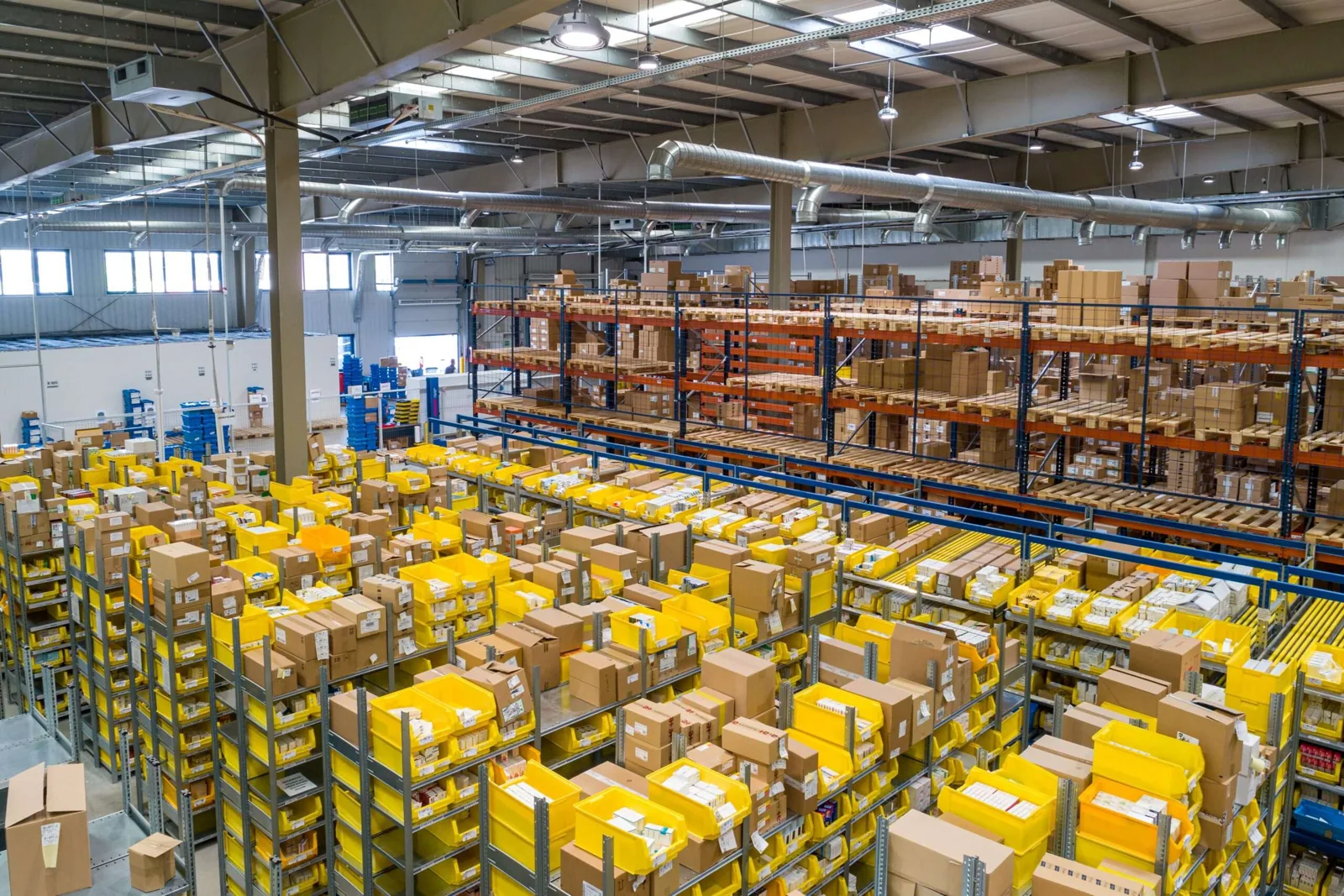
A wet pallet at the end of an aisle, with a dark ring on the floor beneath it, is the first sign, and in a distribution building it is also a claim waiting to be written. The ring marks where the water ended up. Following it back through the racking, the ceiling and the insulation to the opening in the roof has to happen before the next rain reaches more inventory. Logistics and third-party operators near Franklin, TN run big roofs over fast-moving freight. The failure trail has to be quick, specific and written down, because the customer who owns the pallet will ask for it.
Big roofs, few drains, long edges
A distribution roof covers a lot of area with a small number of drains and long runs of edge. Water travels a long way across the surface to reach an outlet, so a single clogged drain can hold a large pond. Parapets, scuppers and gutters at the dock side carry heavy loads from forklift traffic, truck vibration and wind.
We map the drains and overflows on a roof plan, check each strainer and watch how fast water leaves after a rain. A pond that stays for two days is a finding. A drain without an open overflow is another. The trail shows which outlets carry the load and which are at risk, so the repair starts where the exposure is greatest.
Overflow scuppers are the second line of defense. If the main drain clogs, the overflow keeps water from loading the roof, so a building without working overflows is at risk in a heavy rain. Each overflow is checked for height, clearance and an open outlet, then photographed. The written trail records the roof's drainage capacity in plain words.
Heat, rain and the seam
A warehouse deck in Franklin works between a July high near 91 F and a record low of minus 22 F, with more than fifty inches of rain in between. A large flat roof expands in the afternoon and shrinks overnight, and the seams and wall joints take the movement. A sealant that was flexible hardens, and a hairline opens.
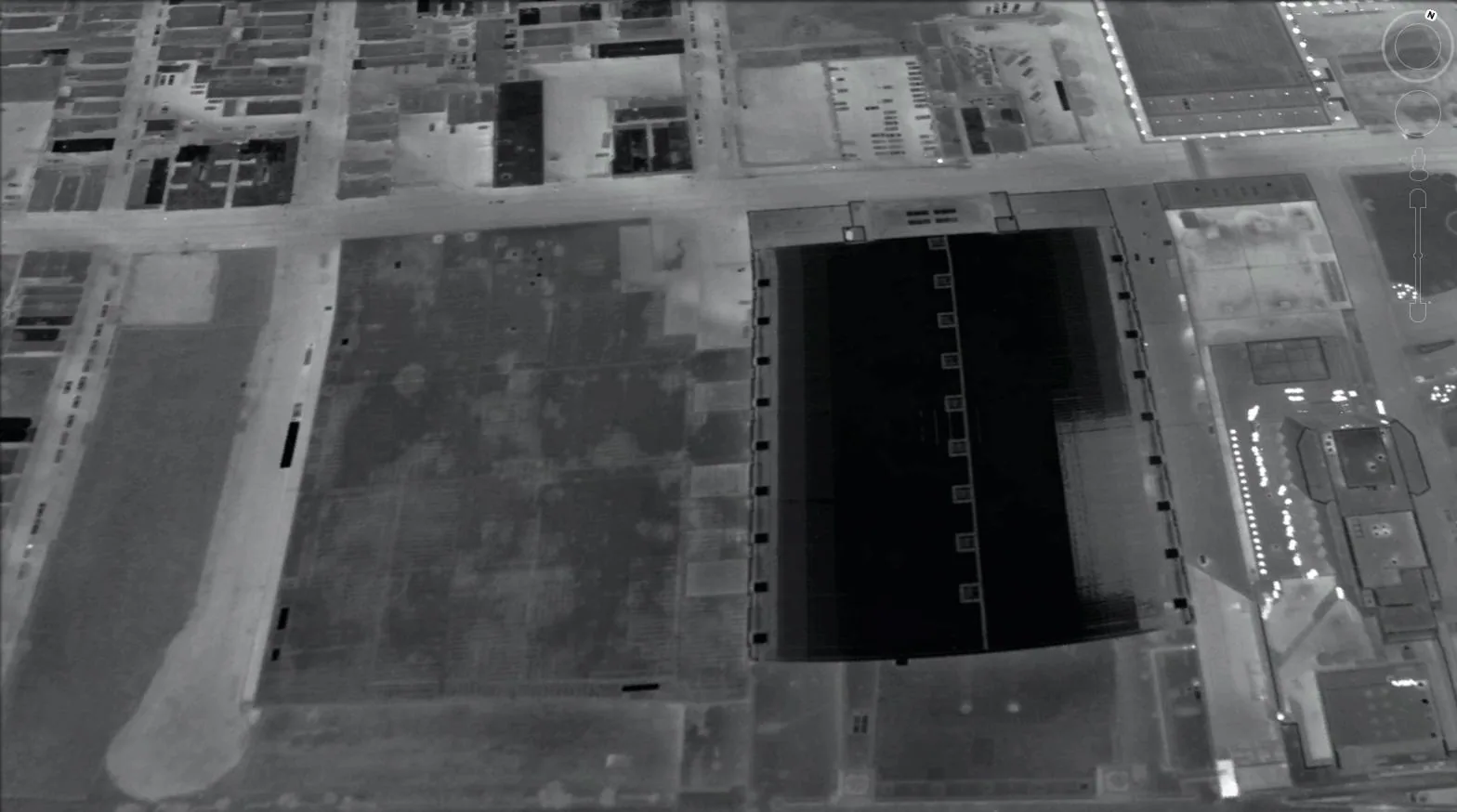
Heat movement opens a hairline, rain wets the layer below it, and on a distribution roof the stain lands on freight. We probe seams, check the termination at walls and docks, and scan for the wet layer. A moisture survey across the full roof shows whether other areas have taken on water that has not yet appeared below.
Because inventory sits on racks and floors that cannot be moved quickly, the trail also records where the roof is weakest relative to what lies below. A map that overlays stored goods on known leak risks lets an operator move the most sensitive stock before the rainy week, and it lets us schedule repairs over the aisles that matter most.
Dock side and rooftop equipment
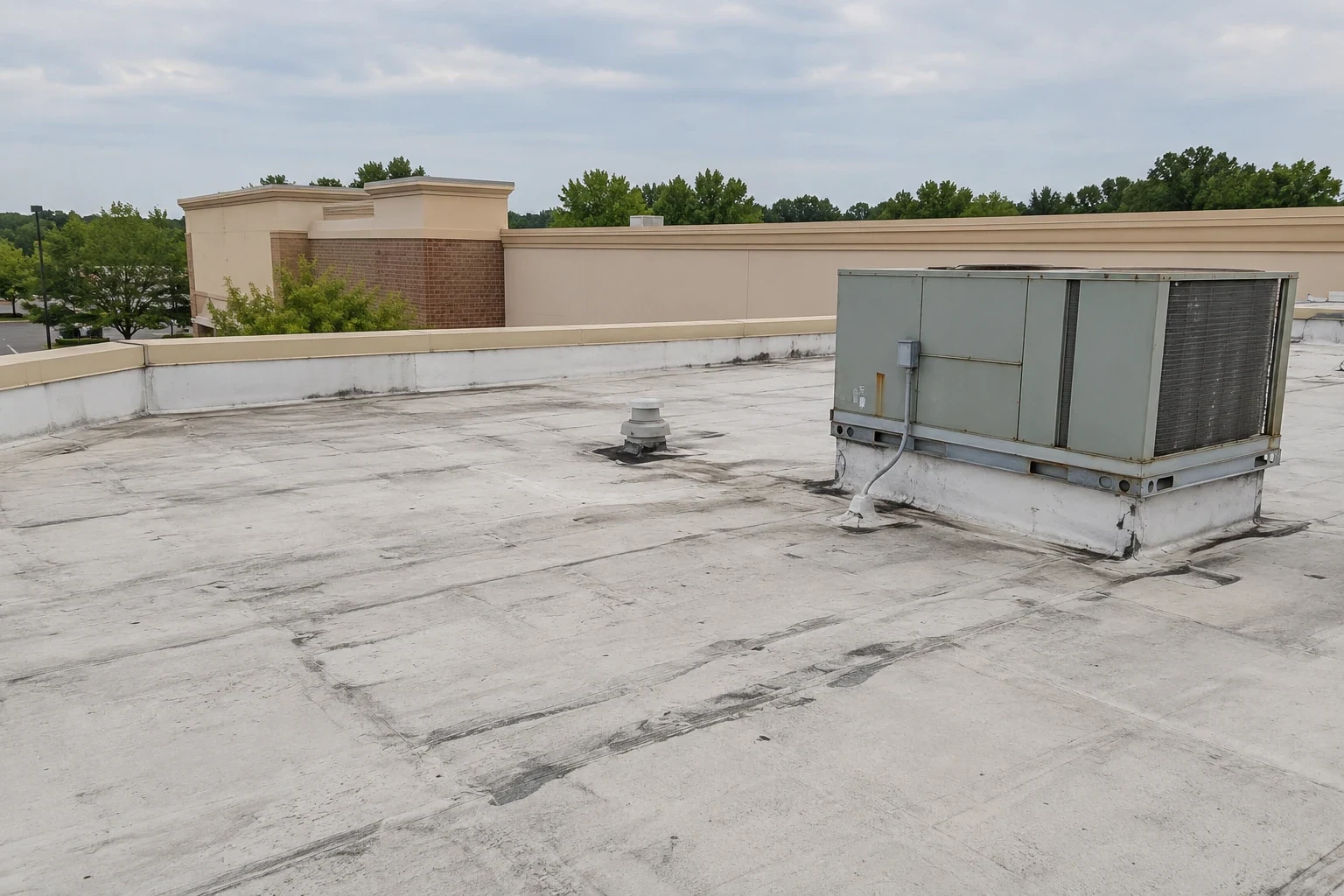
Dock doors, canopies and heaters add details to the roof edge. Each dock door header needs flashing that sheds water away from the opening. Dock canopies catch wind. Rooftop heaters, exhaust fans and make-up air units sit on curbs, and each curb is a cut in the membrane.
We check the edge metal, the canopy attachments and the curb flashing on each unit. A coping and edge metal repair is a small job when found early. A lifted edge left alone gives the next storm a place to start peeling the membrane. The photo trail kept at each visit shows how fast an edge is loosening, so the work can be scheduled before a storm forces it.
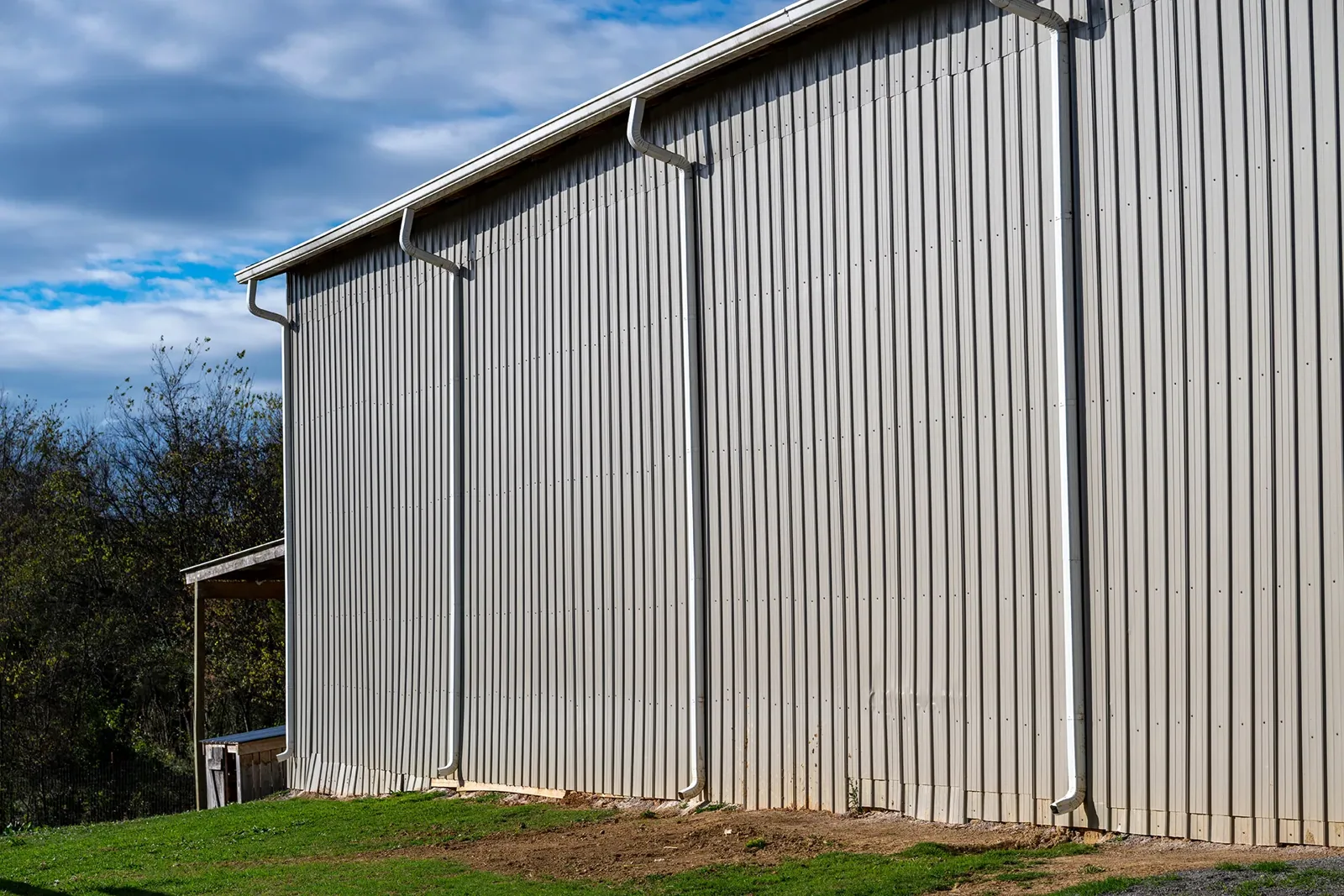
Trucks and forklifts shake the building. Vibration works fasteners loose and moves rooftop equipment on its supports, so we check tie-downs, attachment to the structure and the seals at the base of each unit. Gutters and downspouts at the dock side are checked for dents from vehicles and for open joints that spill water onto the apron.
Distribution areas around Franklin
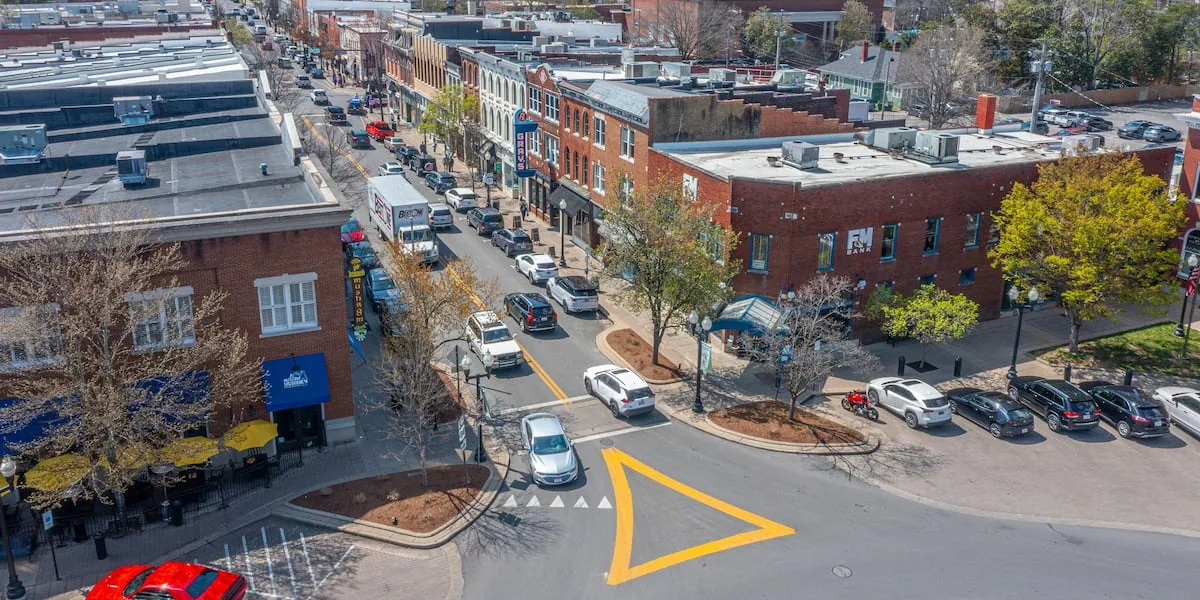
Industrial use clusters in Southall, along Columbia Avenue south of Downs Boulevard, while the Goose Creek Bypass interchange on I-65 marks the Berry Farms mixed-use area. In-N-Out Burger has announced a $125.5 million hub and distribution center for Franklin, planned by 2026. Brentwood's 2024 report lists GEODIS among its largest employers, with 733 employees.
Operators with space in Columbia Avenue and Southall, Goose Creek and Berry Farms and the Nashville airport area can use one inspection format for each building. The record lists roof age, drains, repairs and rating, so a 3PL with several customers' buildings can show each owner the same report.
The supply chain around a plant or a chain restaurant brand ends at these roofs. A manufacturer shipping from Franklin and a multi-location retail or restaurant brand restocking from a hub both depend on a dry building, and a roof failure shows up in their numbers.
Storm lines and warehouse roofs
Brentwood, just north of Franklin, sits in the Dixie Alley tornado zone. The March 2020 outbreak across Middle Tennessee produced an EF-3 that damaged large warehouses in Mount Juliet, while Franklin's own EF0 that August, estimated at 75 mph, was far weaker and left minor roof damage at some businesses.
Large, light roofs over open volumes are sensitive to wind. After a severe storm, we walk edges, corners, canopies and equipment covers and send a dated summary. The photographs support an insurance claim, and an operator with customers' goods inside can show what was found and when. Our emergency roof repair response dries in at any hour.
Even small storms matter. The thunderstorm warning for northeastern Williamson County in July 2026 pointed to gusts near 60 mph, enough to lift an edge that was already loose, and to hail of up to about three-quarters of an inch. Stones that size can bruise a membrane without tearing it, so the walk afterward includes a press test.
Keeping freight moving during roof work
A distribution building cannot stop shipping. We agree on an access route and a staging area, keep dock lanes clear and work in sections that can be closed the same day. Racked inventory below the work area is covered or moved before the roof is opened. A named contact on site can stop the crew whenever a trailer is waiting at the dock.
On a commercial roof replacement, a daily log records what was opened and closed each shift. A distribution center or a warehouse follows the same plan, and the summary names the cost drivers so an operator and the building owner can agree on who does what.
Planning for a season helps. Work on membrane and edge details fits best in the milder months, while peak shipping runs in autumn and winter. We build a calendar with the operator that puts big roof tasks outside peak weeks and keeps emergency repair available throughout.
Commercial Roofing Questions
Can we keep shipping during roof work?
Usually yes. We keep dock lanes clear, work in sections and cover inventory below the work.
Who is responsible for a leak, tenant or owner?
Lease language governs it. The roof file records the cause and the location, so both sides read the same facts.
How do we find which drain is clogged?
Watch where water stands after rain, then lift strainers and flush lines. Photographs of the water line show the pond.
What if a storm opens the roof at night?
Call as soon as water shows. A crew can dry in the opening overnight, and the damage is photographed for your insurer.
How often should a distribution roof be inspected?
A distribution roof earns one walk before the autumn peak and another after it, plus a visit after any hard storm.