Church Roofing in Franklin, TN
A pale brown stain on the sanctuary ceiling, just inside the wall where the high roof meets a low one, is the first sign most congregations notice. The stain marks where the water ended up. Our job is to trace it back: from the ceiling to the deck, from the deck to the flashing and from the flashing to the opening that let in the rain. Churches in Franklin, TN can combine steep sections, flat sections and long wall joints in one roof, which gives water many places to enter and many ways to hide. The sequence is the same every time, and once it is traced on the roof itself, the repair becomes a short list.
One building, several roofs
A house of worship is rarely one roof. The sanctuary may have a steep or high-pitched section, the fellowship hall and classroom wings a low-slope roof and the entry a canopy or tower. Each section has its own materials, its own slope and its own age, and the joints between them are where leaks begin.
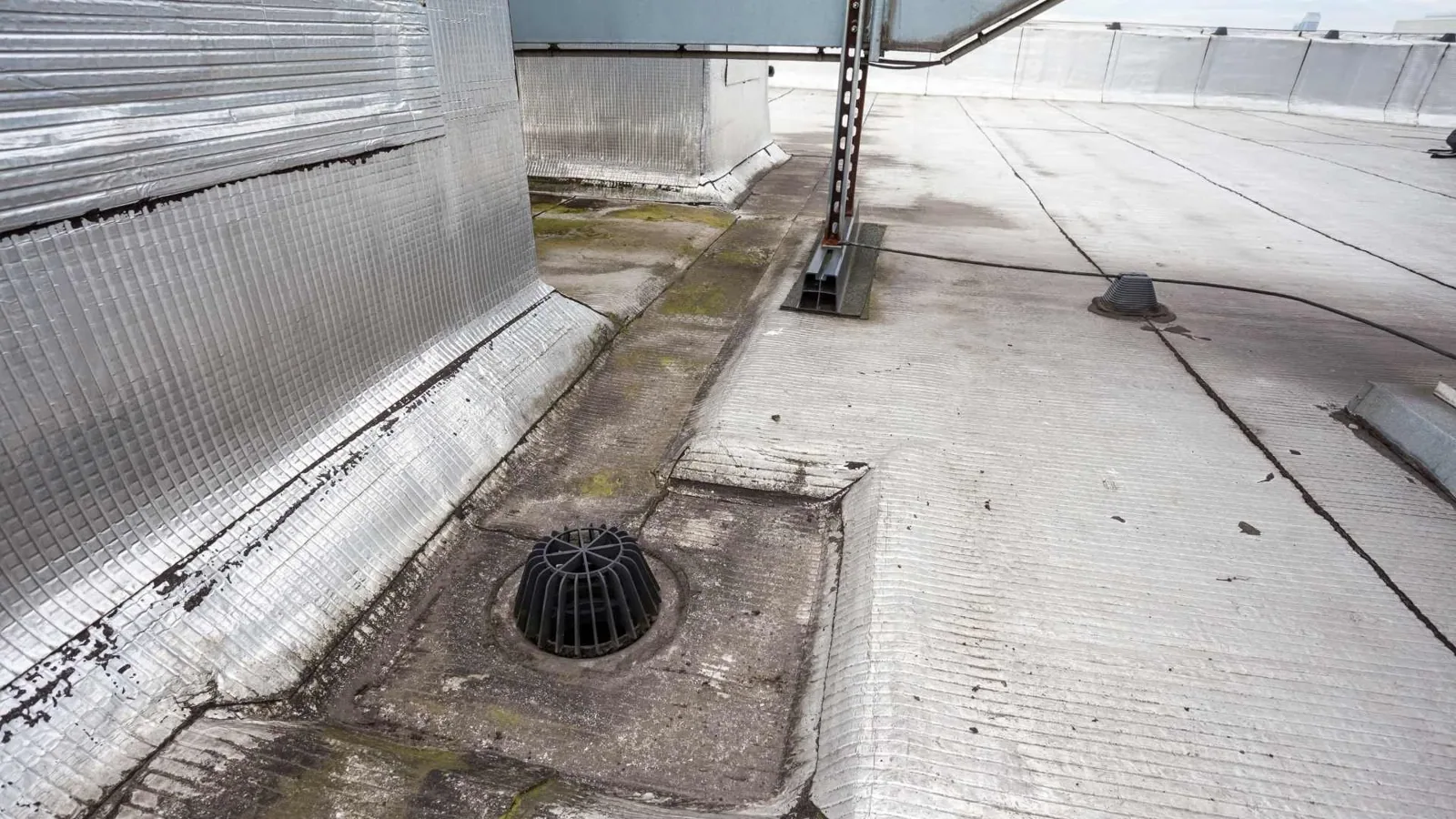
We walk each section separately and record it on a roof plan. The record names the material, the condition and the details that connect it to the next section. A wall flashing where a low roof meets a tall sanctuary wall is a favorite place for water to enter, because the membrane there depends on a termination bar and a bead of sealant that sees full heat and rain.
Gutters and valleys tie the sections together. Water from a high roof drops onto a low one, and the low roof takes a concentrated stream at one spot. That spot wears first. We look for a worn patch of membrane or shingle under every downspout and valley outlet, and we add a splash pad or an extension where it helps.
How heat opens the seam
Franklin summers average near 91 F and have reached 108 F. A flat roof surface in that sun runs far hotter than the air, then cools overnight. The membrane, the flashing metal and the sealant all move by different amounts, and a sealant joint that was flexible when installed hardens and splits along a hairline.
The hairline is easy to miss from a ladder. It matters because a heavy rain needs only a small gap to push water into the insulation. We check by running a hand along the termination, looking for sealant that has lost its grip, and by probing seams with a rounded tool. A seam that lifts under light pressure is the next leak.
Where the water stopped
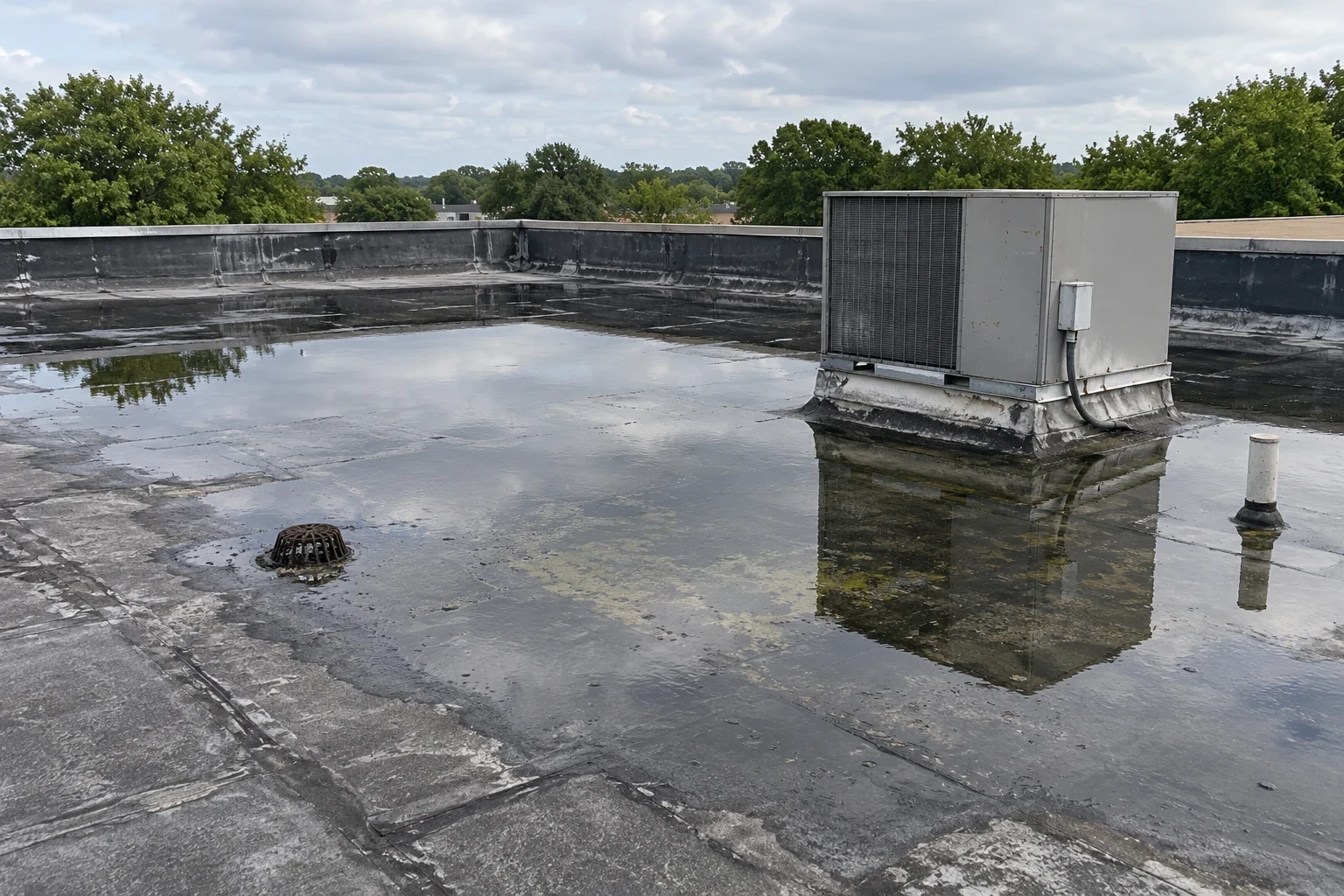
Annual rainfall in Franklin comes to about 54 inches. On a church roof, that water has to be carried off gutters, valleys, scuppers and drains without ponding against a wall. A clogged downspout or a valley full of leaves sends water where the roof was not designed to take it.
We trace the path from the stain upward. A moisture scan shows the wet insulation, and a few core cuts confirm it. The result is a map of the wet layer, with the opening marked. If the leak is a one-time failure, a local repair is enough. If the wet area is large, the map shows how much insulation must come out, and the scope grows to match the evidence.
Drains and valleys deserve their own pass. A clogged drain or scupper turns a rainstorm into a ponding problem, and the ponding water that follows works on the nearest seam. Clearing them twice a year costs little compared with the interior repairs that follow a neglected valley.
Storm lines and tall roofs
Brentwood sits in Dixie Alley, where tornado risk is highest between November and May. In August 2023 Franklin's EF0 tornado, estimated at 75 mph, did minor roof damage at some businesses on Highway 96. Tall sanctuary roofs and steeples catch wind that low roofs miss.
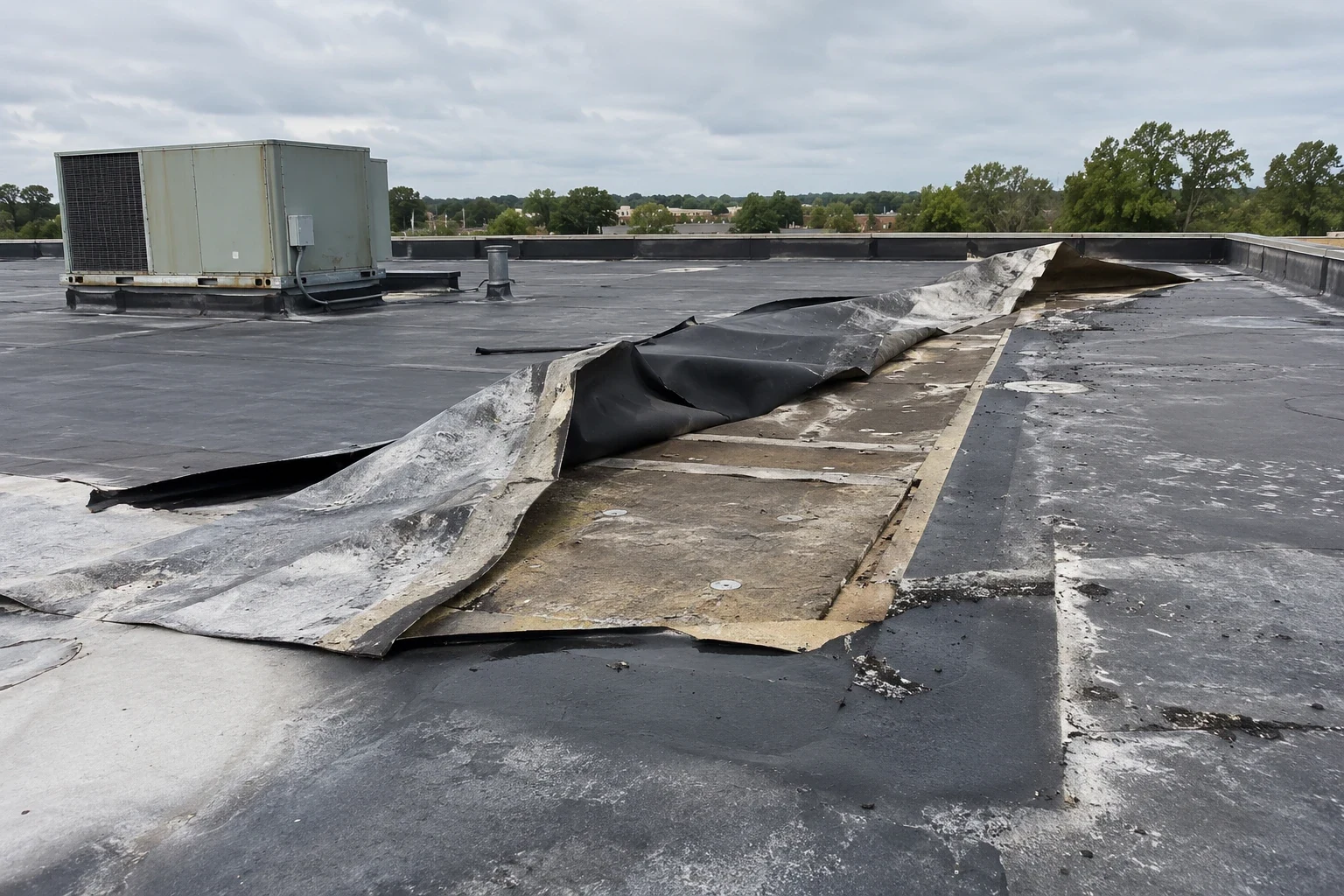
After a storm, we check ridge caps, flashing at the tower base, loose shingles or panels and the edges of the low roofs. Wind damage found early is a small repair. A lifted edge that is ignored gives the next storm a grip on the membrane. The photo trail from a post-storm walk is also the record an insurer will ask for, as with a wind damage repair claim.
Working around services and events
A congregation's calendar sets the work window. Weekly services, weddings, funerals and holiday events limit when noise and activity are acceptable. We agree on days with the church office, keep work away from entrances during services and clean the site before each gathering.
Access can be tricky: tall roofs need lifts or scaffolding, and a steeple may need a specialist. We plan the staging area so that parking and walkways stay open. Interior protection goes up under the work area, and the sanctuary is covered before any roof section above it is opened. If rain threatens, the crew closes the area and stops.
Safety shapes the plan as well. Roofers working above a gathering place need clear barriers, signs and a clean path for visitors. Debris is lowered by chute, tools are secured and the site is swept before each use of the building.
Repair or replace
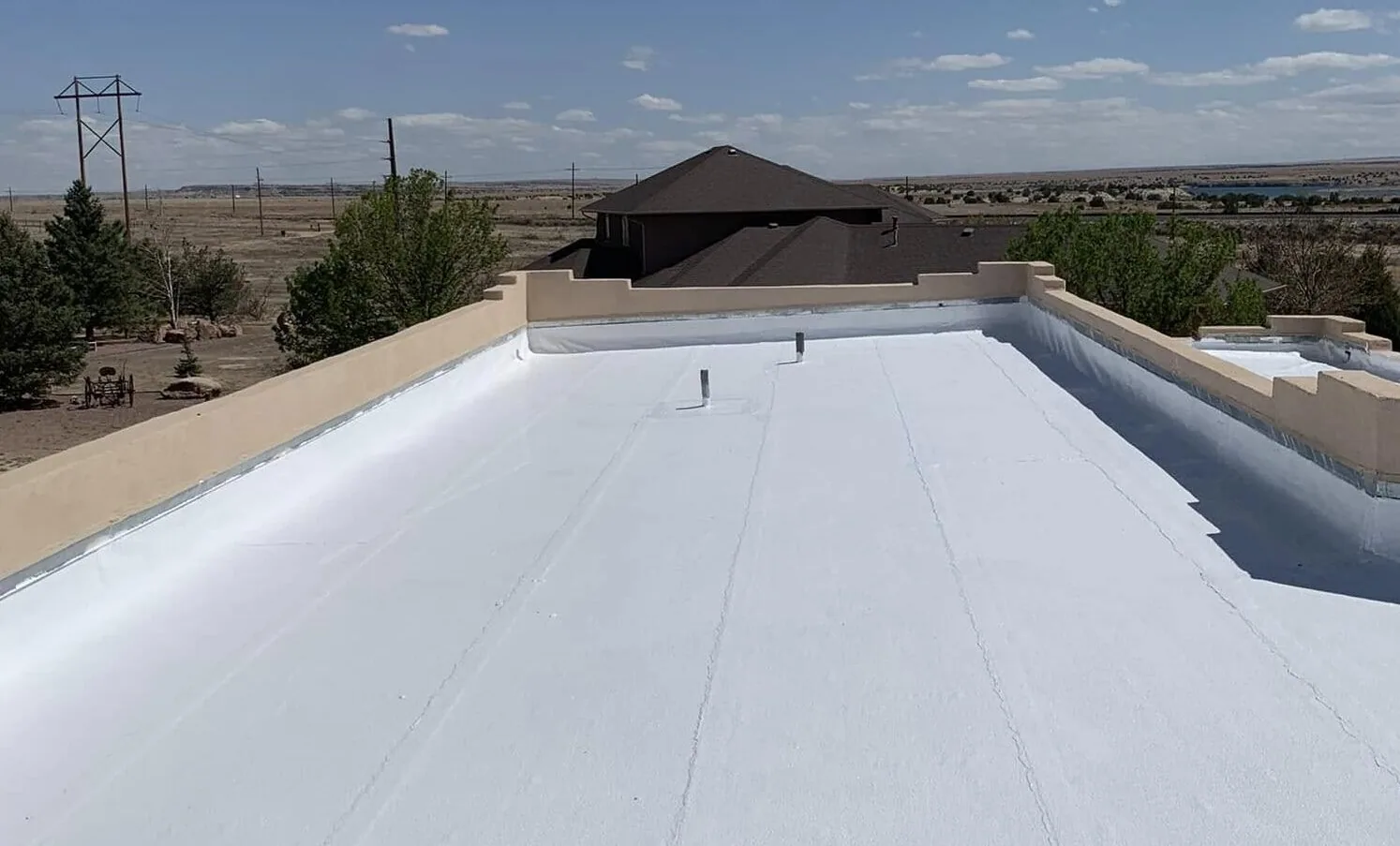
A local failure with a sound roof around it calls for a repair. Repeated leaks in new places, wet insulation over a wide area or a membrane that has hardened and split call for replacement. We present both options with the findings, and we describe what each costs in time and disruption, not just in dollars.
Budgeting matters for congregations. A roof planned for the next fiscal year can be paid from reserves, and one that fails in a storm cannot. A roof inspection gives a rated baseline, and the replacement scope can then be phased or scheduled for a quiet season. A church on the Murfreesboro Road corridor can follow the same plan.
A church board approves spending the way a school board or a government building committee does: public use, scheduled hours and a vote. The summary we send is written for that table, with the findings, the options and the cost drivers laid out plainly.
Downtown, Cool Springs and beyond
Downtown Franklin's core is a 16-block National Register historic district, so a church there is surrounded by old fabric, and we confirm with the city what approvals exterior work needs before ordering materials. In Historic Downtown Franklin the schedule leaves room for that check. Near Cool Springs and Highway 96 West, a congregation may have a flat-roof wing where drains and seams matter more.
Across all of them, the first step is the same: a roof walk. We trace one failure on the actual roof, photograph each step and send a short written summary of what we found. The summary gives the board or the trustees something to act on.
Commercial Roofing Questions
Can a church roof be repaired during the week without disturbing services?
Usually yes. We schedule noisy work on weekdays and keep Sundays and events clear. The church office confirms dates.
What if the steeple or tower leaks?
We trace the water from the interior stain to the tower base, flashing and any louvers. Tall work may need a lift or a specialist.
How do we pay for a roof we cannot afford this year?
Phasing helps. A rated inspection shows which sections are urgent and which can wait. Repairs buy time while a reserve builds.
Who decides what approvals are needed?
The city's building office does, and rules vary by project. Ask early, and leave time in the schedule.
What records should we keep?
A single folder with the roof plan, the warranty, repair invoices and dated photographs. The board will want it at budget time and the insurer will want it after a storm.