Roofing for Manufacturers in Franklin, TN
A drip falling onto a production line, one hour into a shift, is the first sign, and it carries a cost that has nothing to do with roofing. The drip only marks where the water landed. The job is to follow it up past the ceiling tiles, the insulation and the membrane to the opening, then close that opening without halting the line for longer than the repair needs. Manufacturers in and around Franklin, TN run roofs that carry exhaust stacks, make-up air units, process heat and the dust or residue that comes with them. Each of those changes how a roof fails, and the failure trail has to account for them.
What a plant puts on the roof
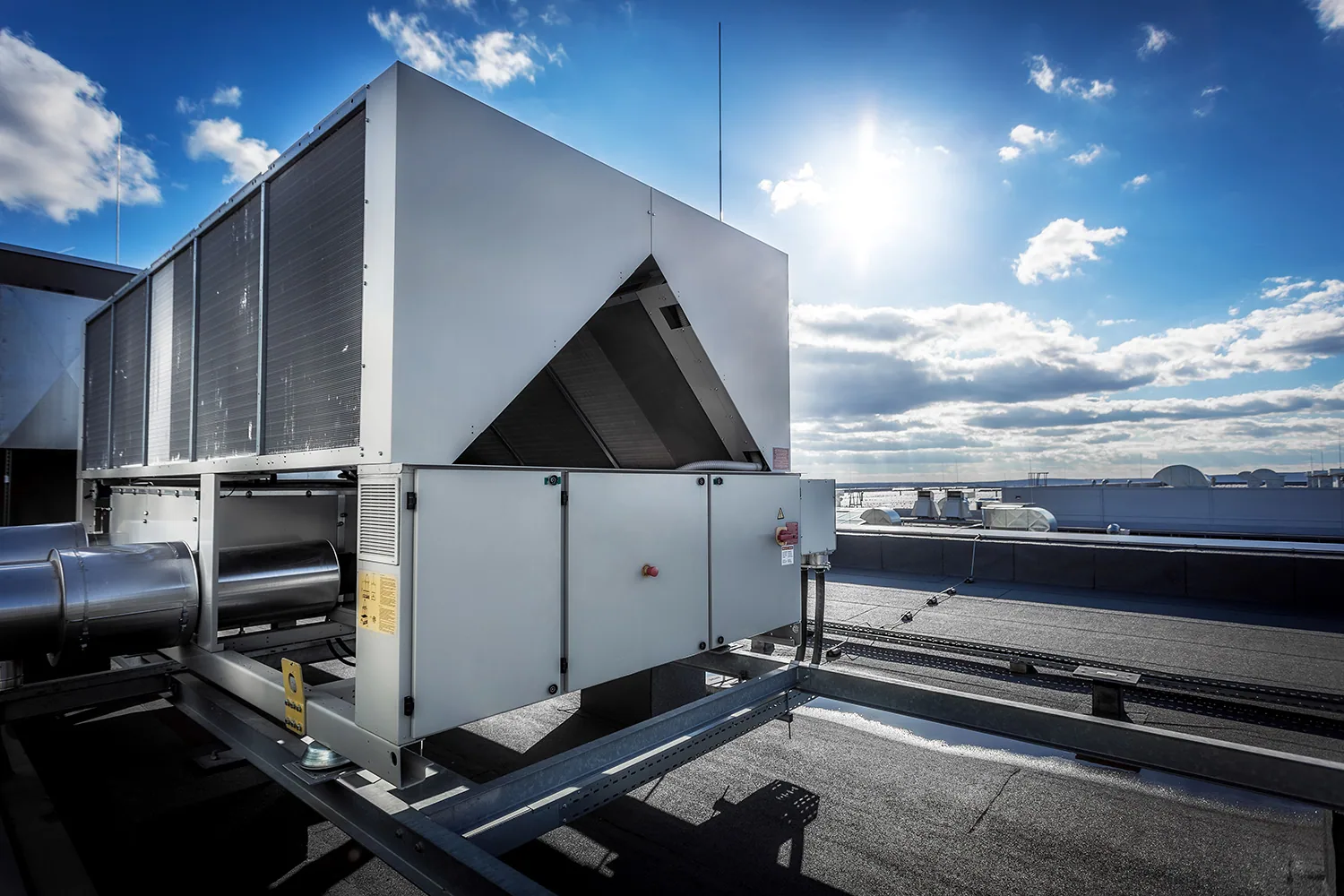
A plant roof is a working surface. Exhaust fans push warm, sometimes oily air through outlets that sit just above the membrane. Dust collectors, make-up air units and cooling towers sit on curbs and rails. Pipes and conduit cross the surface, and service crews walk to all of them.
Each of those adds wear. Residue from exhaust can soften or discolor a membrane near the outlet. Process heat can push the surface hotter than the sun alone would. Foot traffic scuffs and punctures. Our roof walk maps every piece of equipment, rates the membrane around it and logs the condition, so the trail shows where the roof is under extra load.
Walk routes are the cheapest protection a plant roof can have. A marked path from the hatch to each unit, with walk pads along it, keeps technicians off the bare membrane. Where service traffic already wears a path, we log the wear and add pads. The photograph of the worn path, with a date, is how the plant sees the problem growing.
Heat movement and the hairline
Plant roofs in Franklin carry the same swings as every other roof here: summers that average near 91 F, a record low of minus 22 F, and curbs that shift with each change. Sealant at a curb corner hardens, then splits along a hairline, and a heavy rain finds the gap.
With roughly 54 inches of rain a year, the gap gets many chances. The sequence is the same on any plant roof: heat movement, a hairline, a soaked layer, a stain on the floor below. A hand laid on the surface in July shows how hard the roof is working. Every curb corner, counterflashing and base seal gets a look, and the nearest seam gets probed. The curb and support record shows which units have needed repeat repairs.
Gutters, scuppers and drains on a plant roof carry more than rain. Dust, product fines and leaves settle in the sumps and strainers, and once a drain clogs the water stays on the roof for a day or longer. Strainers are cleared on each visit, and the water line is photographed after the next rain so the log shows how quickly each drain loads.
Where the water stopped, over production
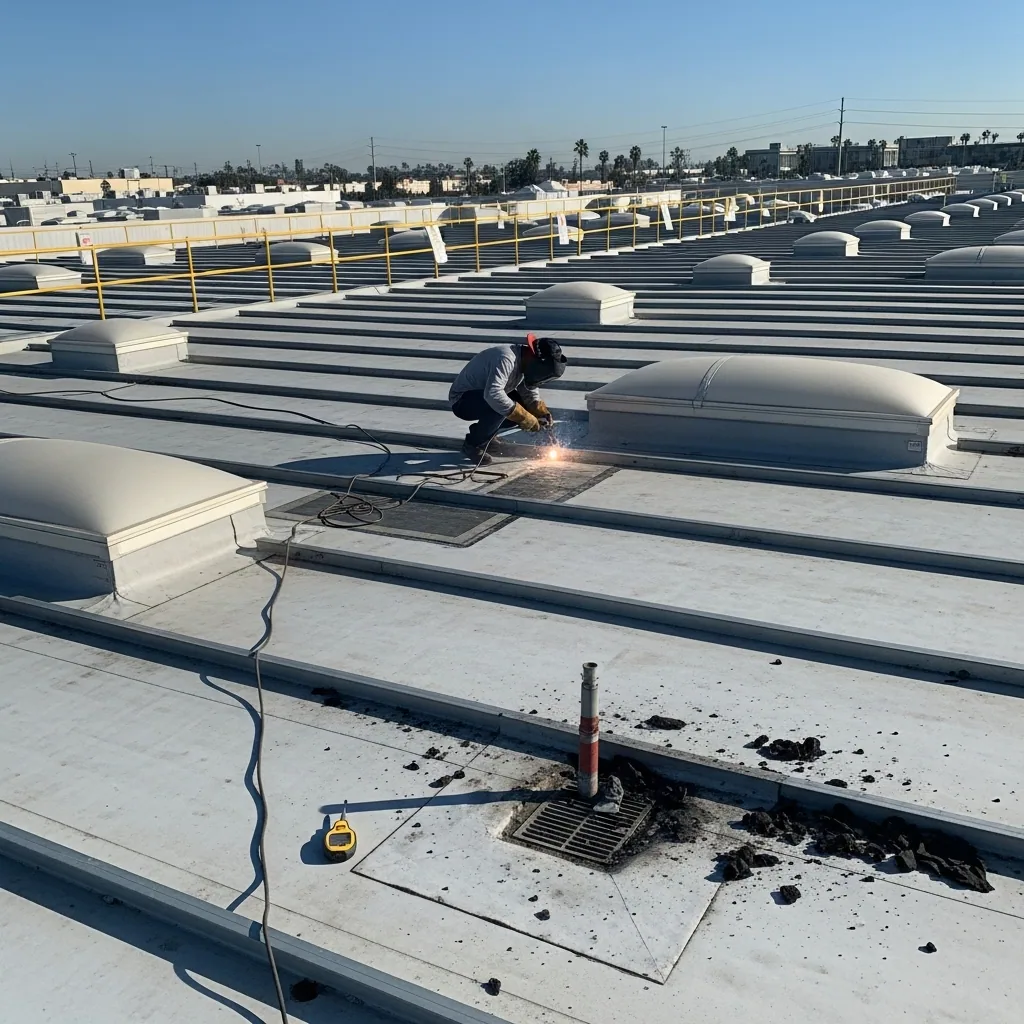
A leak over a production area gets traced fast. The plant marks the spot inside on a plan, and the search moves outward across drains, penetrations, seams and wall joints. A scan maps the wet layer, cores verify it, and a tarp or temporary membrane closes the opening the same day.
The written trail ties the spot inside to the opening above and the route between them, with the weather and dates alongside. The plant can use it to decide what to inspect below, such as electrical panels, product and equipment. A leak repair that follows the trail fixes the opening and not only the stain.
Water that reaches a plant interior can carry roof dust, tar flakes or insulation fibers with it, and that matters for clean zones and finished product. The trail records what the water carried, as far as can be seen, and the repair plan includes a clean-up of the roof area above before the next rain.
Working around shifts and shutdowns
Plants run on schedules that roofs have to fit. We meet the plant manager, list the areas under the work and agree on hours. Noisy tasks and crane lifts move to low-production windows where possible. Shutdowns for a curb repair or an equipment move are scheduled with maintenance.
Interior protection goes up under the work area, and sensitive equipment is covered first. Work proceeds in sections small enough to close before the shift ends. Larger projects run like an occupied building reroofing job, with a daily log of what was opened and closed. The plant contact approves changes if hidden damage appears.
The same file helps with budgeting. A plant that tracks repairs by roof section can show which sections absorb the most spending, and a capital request backed by that record is easier to approve. A rated baseline lays out the options, what drives their cost and what waiting could bring.
Plants and industrial areas around Franklin
Franklin's largest employers include Nissan North America, Mars Petcare US, Schneider Electric and Lee Company, and Nissan and Mitsubishi Motors have corporate or regional headquarters in the city. Southall carries most of the industrial development along Columbia Avenue south of Downs Boulevard, and in Spring Hill the GM manufacturing plant that once built Saturns has been retooled for flexible vehicle assembly.
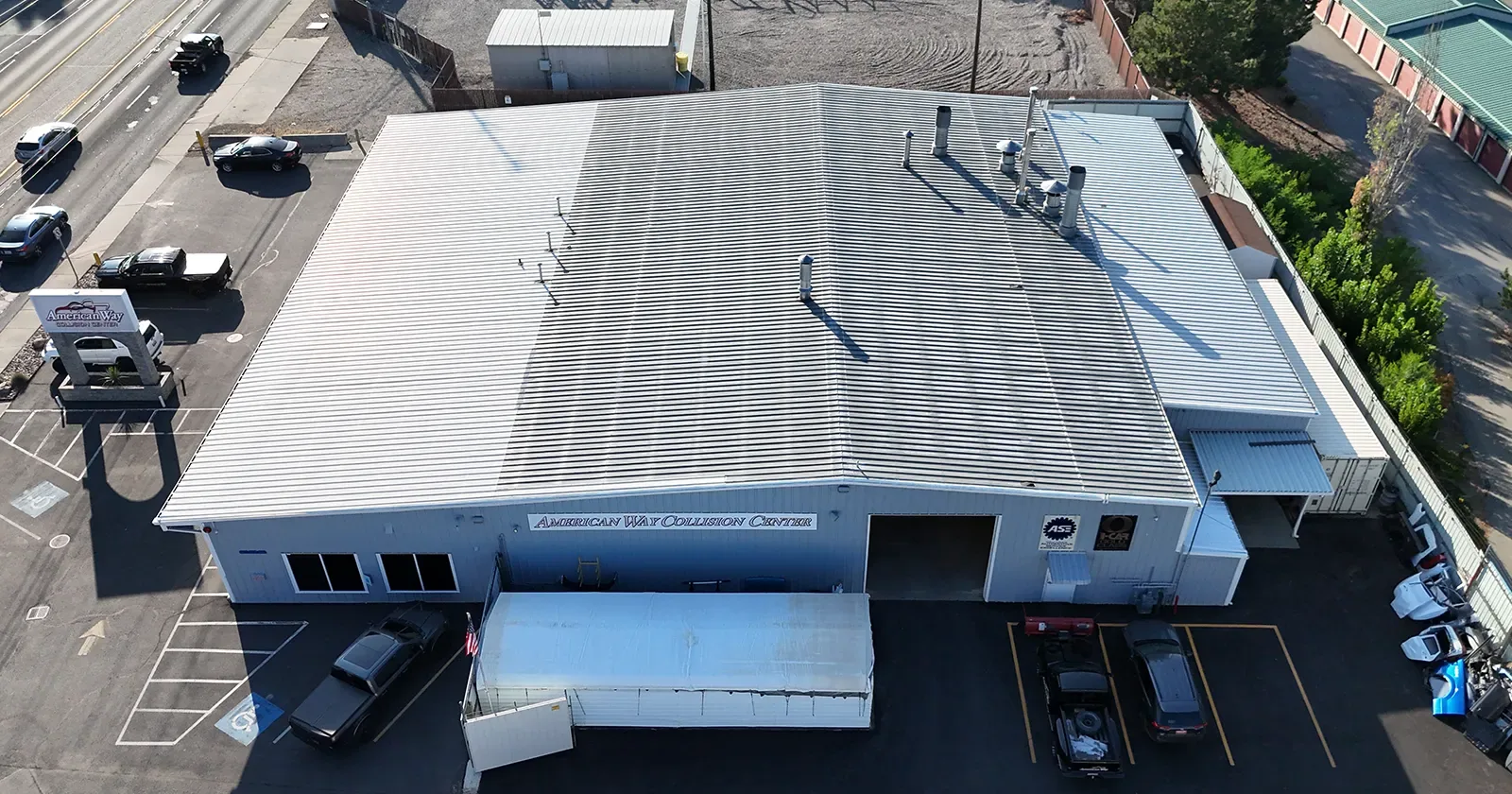
A manufacturer with facilities in Columbia Avenue and Southall and in Spring Hill can use one inspection format for each building. Each building is rated on its own roof walk, whoever occupies it. A manufacturing plant roof and a flex industrial building follow the same log.
Hail is a smaller but real risk. The warning for northeastern Williamson County in July 2026 put hail of up to three-quarters of an inch beside gusts near 60 mph. Hail of that size can bruise a membrane around equipment, and pressing suspect spots after a storm, with dated photographs, separates bruises from old scuffs.
A plant also changes over time. New lines, moved equipment and added exhaust all alter the roof's load and its penetrations. Each change is a reason to update the roof plan, so the next leak trace starts from what is actually up there and not from drawings that no longer match.
Storm lines and production continuity
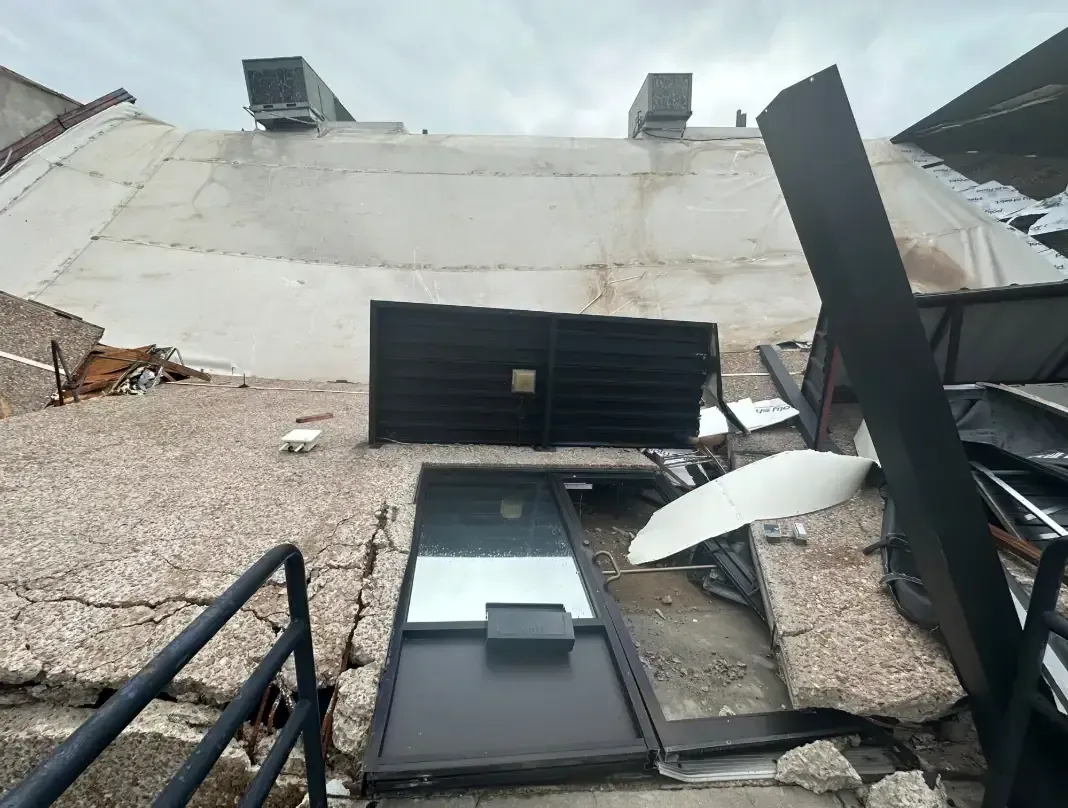
Tornadoes are a Dixie Alley hazard, and Brentwood, next door to Franklin, sits inside that zone. Franklin's EF0 in August 2023 did minor roof and exterior damage to a few businesses on Highway 96, while the March 2020 outbreak across Middle Tennessee damaged large warehouses in Mount Juliet. Large industrial roofs have long edges that catch wind.
After a storm, the perimeter and the equipment get walked, each finding is photographed with a date and the plant receives a summary it can pass to its insurer. A line on production impact helps set the repair order, and insurance and restoration teams use the same photographs. The logistics side of a plant shares the same roof questions around docks and drains.
Commercial Roofing Questions
Can a leak over production be fixed without a shutdown?
Often. The opening is closed from the roof while equipment below is covered, and any task that needs a short shutdown is scheduled with maintenance.
Does exhaust damage the roof membrane?
It can. Heat, oil and chemicals soften some membranes near outlets. We rate the area around each outlet and recommend protection where needed.
Who services rooftop equipment safely?
Your maintenance team or mechanical contractor does. We mark routes and walk pads so service crews do not damage the roof.
How do we plan for a full replacement?
Start with a rated inspection. It shows the options, the cost drivers and the timing, and it supports a capital request.
How often should a plant roof be walked?
A walk each spring and fall covers most plants, with extra visits after a severe storm or where heavy equipment sits.