Self-Storage Roofing in Franklin, TN
A water-stained cardboard box on the floor of a ground-level unit is the first sign, and it often arrives as a customer complaint before it shows up in any inspection. The box only shows where the water landed. The work is to trace it back: from the floor to the ceiling, from the ceiling to the roof and from the roof surface to the single screw, seam or flashing that let the rain in. Self-storage buildings in Franklin, TN are long and low, and one failed detail can wet a whole row of units. A short written trail of what was found keeps that from happening twice.
Long roofs, many small openings
A storage facility is built of repeated bays. The roof over each row runs a long distance with few interruptions, so water moves along the surface and the details at ends, walls and vents take most of the load. Whether the roof is metal panels or a membrane, the failure points repeat: fasteners, laps, end walls, ridge, gutters and the small penetrations for vents and lights.
Because the pattern repeats, a leak in one bay is a hint about the next. When we find a backed-out screw on one panel, we check the same location on the neighboring panels. The photo trail then shows how many bays share the problem, and the repair is priced as a run, not as a single patch.
Gutters carry more weight on storage roofs than on most. Long runs collect leaves and sediment, and a clogged gutter spills water along the wall and into the first bay. A downspout that discharges against the foundation can undermine the slab. We check slope, brackets and outlets in the same visit.
What happens to metal panels
Metal roofs fail slowly and in order. Heat expands the panel, cold shrinks it and the fastener holes widen a little each season. Sealant at laps dries and cracks. Washers harden and lose their grip. Then a heavy rain gets under the lap and runs down the screw. Summer afternoons near 91 F, and a record high of 108 F, give that movement room to work.
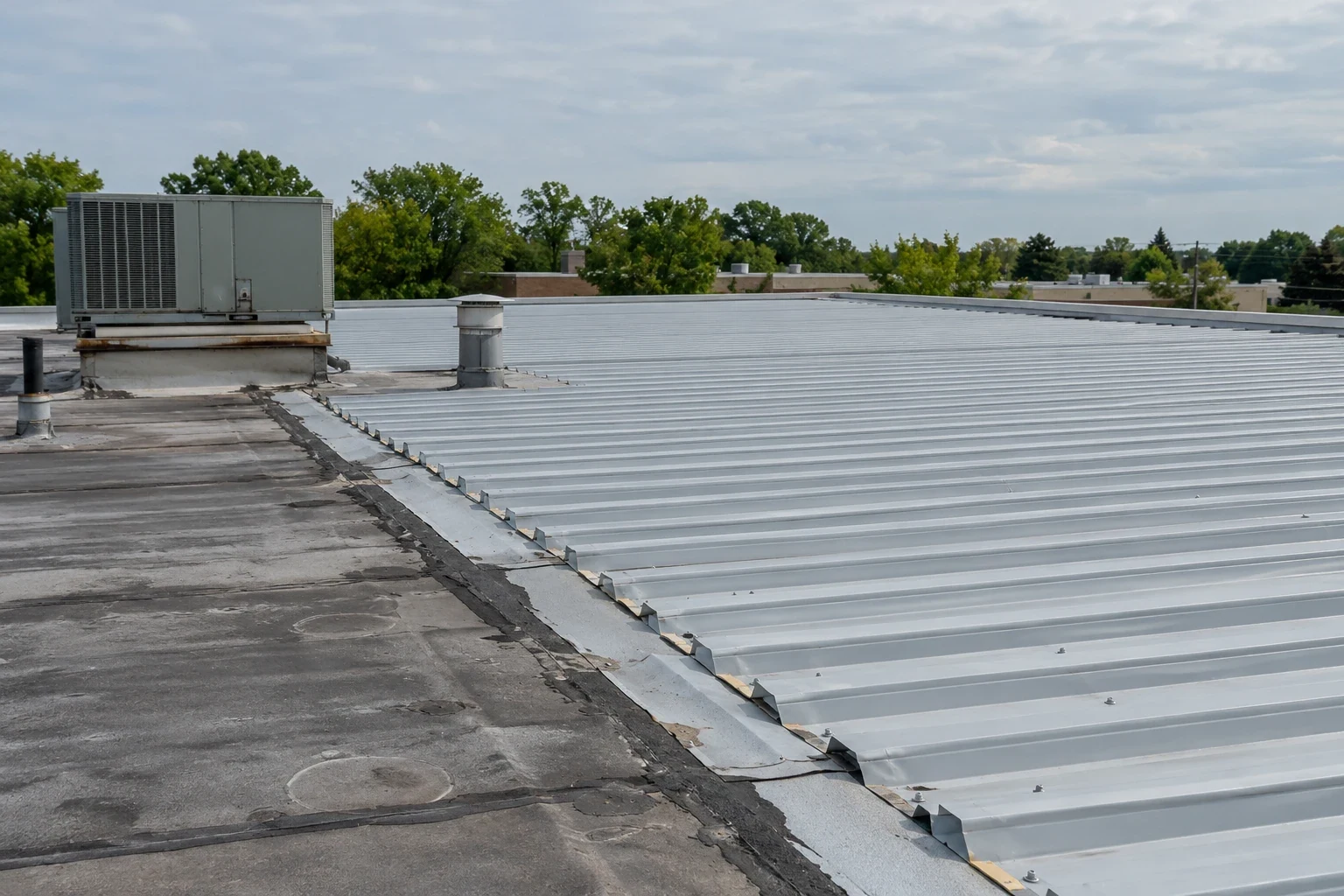
We confirm it by looking for rust streaks below fasteners, checking washers for gaps, and pressing along laps to find loose sealant. Repair can be as simple as replacing fasteners and resealing laps, or as large as a metal roof retrofit over the existing panels when the old roof is sound underneath. A standing seam system replaces exposed fasteners altogether.
What happens to flat sections
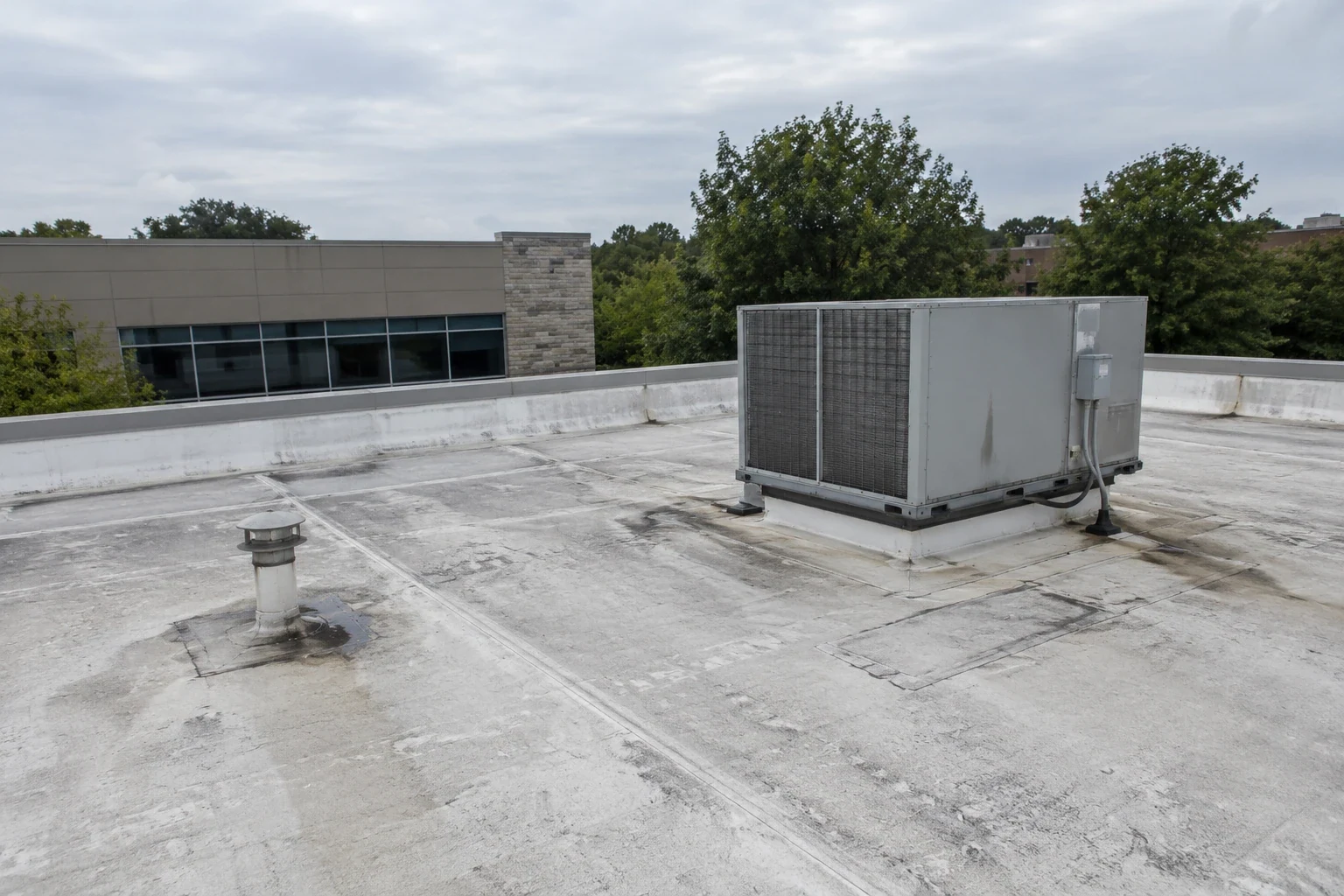
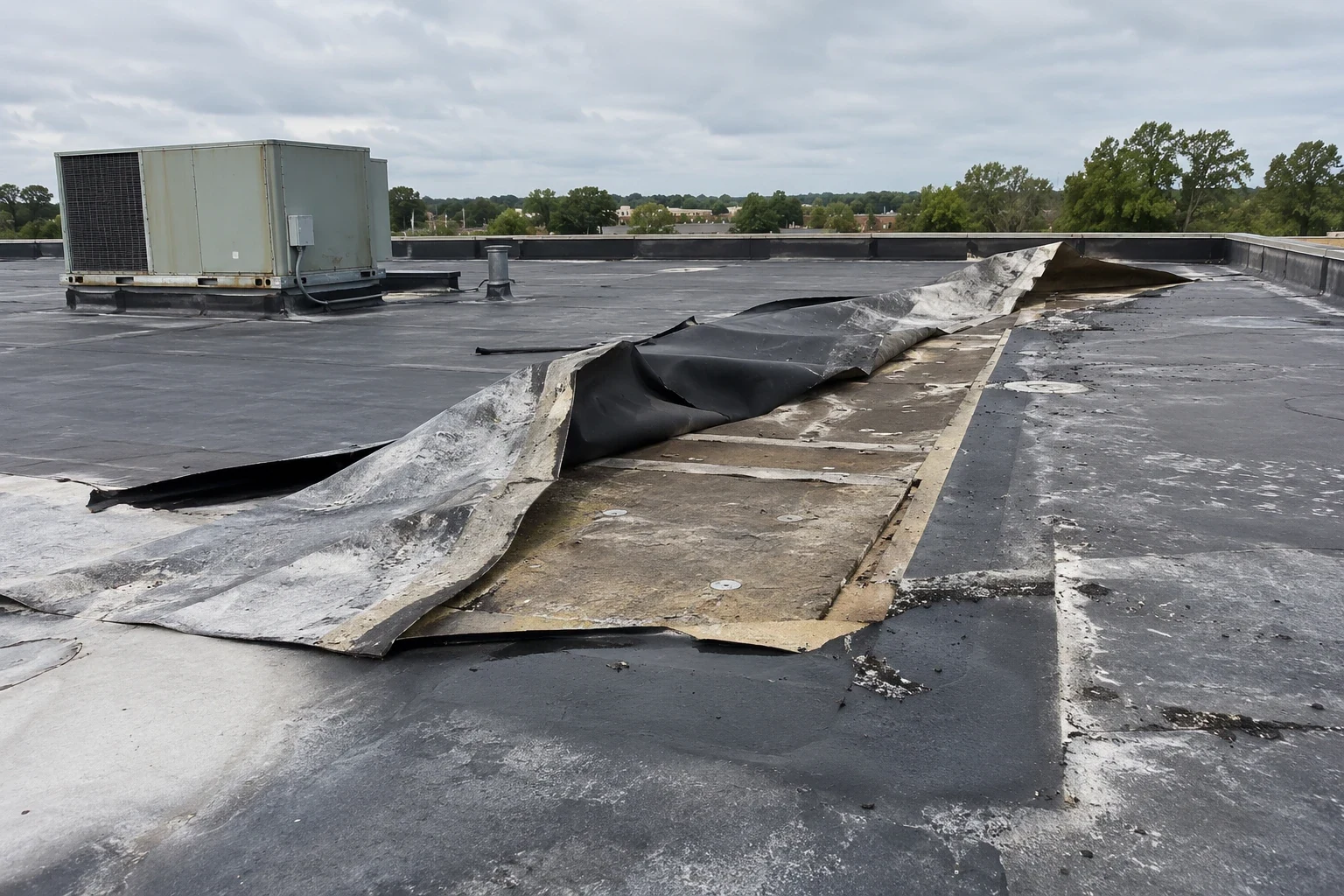
A storage building may include a low-slope section over an office or a climate-controlled wing. Flat roofs fail through ponding, open seams and flashing at walls and rooftop units. With roughly 54 inches of rain a year, water that stands after a storm has plenty of chances to work into a seam.
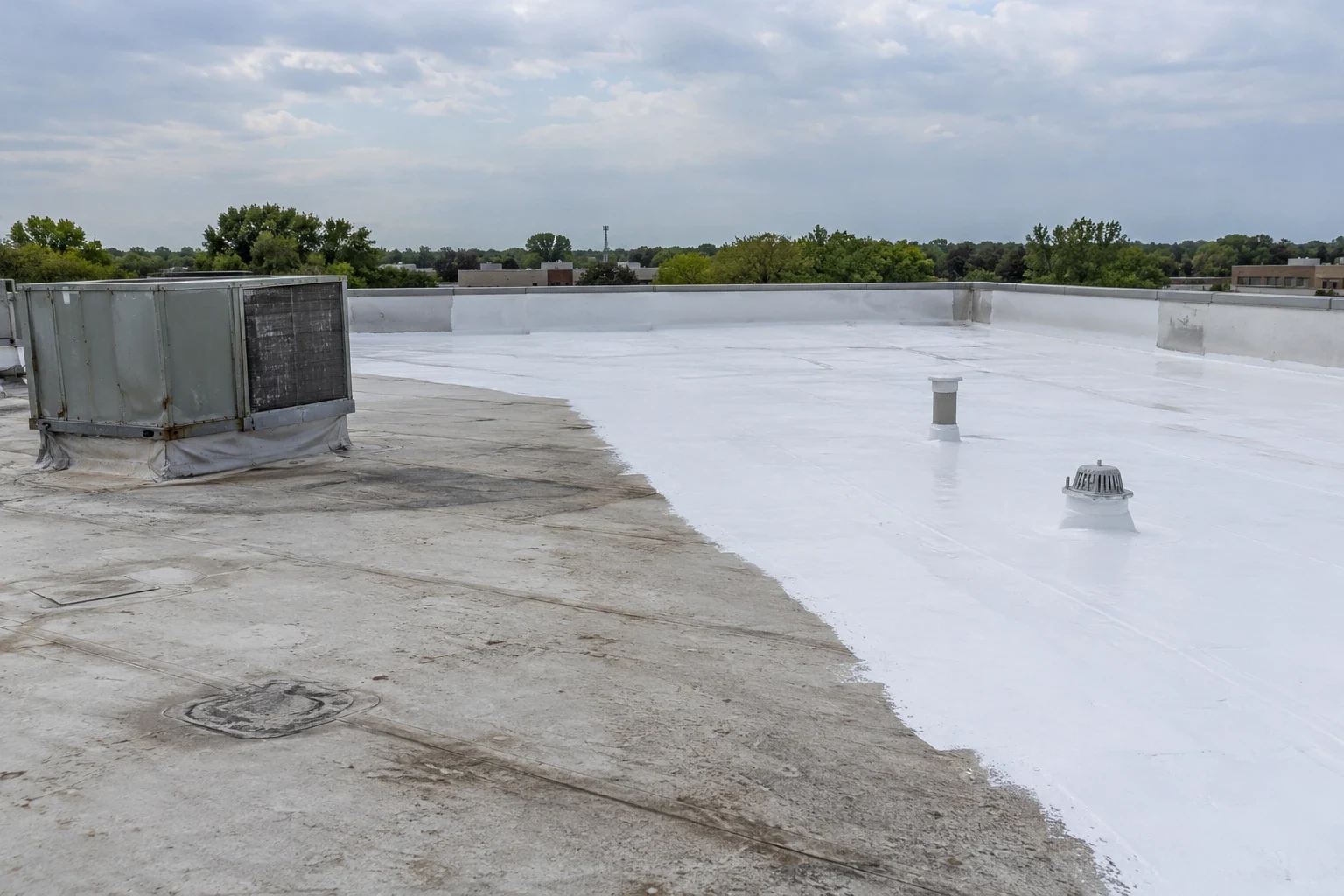
We check the drains, watch where water stays after rain and probe seams for lift. A scan outlines the wet layer, and a few cores verify it. Where the membrane is sound but tired, a coating may extend its life, and tests on adhesion and moisture decide whether roof coating restoration is a sound spend.
Wind, hail and storm lines
Franklin's EF0 tornado of August 2023 showed how fast a storm line can pass, and Brentwood next door sits in Dixie Alley. The thunderstorm warning for northeastern Williamson County in July 2026 named Franklin, Brentwood and Nolensville and put gusts near 60 mph and hail running to about three-quarters of an inch in play. Long metal roofs catch wind at their edges and ridges.
After a storm, we walk the ridge, the eaves and the gable ends, and look for lifted trim, loose panels and dents in ridge caps. Hail small enough to leave only cosmetic marks may still matter to a coating or a thin membrane. Findings are photographed with dates, which helps any wind damage repair claim.
What to check on a roof walk
A good walk follows a fixed order, and the order makes the results comparable between visits. These are the checks, in the order we make them:
- Gutters and downspouts at each row, for debris, sag and open joints.
- Eaves and end walls, where wind-driven rain first gets in.
- Fasteners and washers along sample panels, for rust streaks and backed-out heads.
- Laps, ridge and trim, for loose sealant and lifted edges.
- Vents, lights and any rooftop equipment, for flashing and seals.
- Roof surface, for dents, scuffs and standing-water lines.
Each finding gets a photograph, a position on the roof plan and a rating. The set is short enough to read in an afternoon and detailed enough to compare next season.
Keeping units rentable and costs clear
A leaking unit cannot be rented, and a wet unit can damage a customer's belongings. The roof plan should mark which units sit under each repair so the manager can move customers or hold units while work proceeds. We mark them on the plan and list them in the work order.
Repairs are scheduled by row, so only a few units are affected at a time. The crew works from the roof, so the units below stay accessible, and we protect doors and walkways. A same-day dry-in is available when a storm opens a panel, followed by the permanent fix once the damage is mapped.
Cost follows a short list of drivers. Roof area and the number of rows come first, then access, the height of the building, the condition of the panels or membrane and the amount of sealant and fastener work. A retrofit adds framing and new panels, and a coating adds cleaning, primer and two coats. Interior damage, if any, is a separate line.
We list each driver in the written summary and price repairs by run, so the manager can see what a row costs and decide which rows go first. Phasing across budget years is common for large facilities, and the rating shows which rows are urgent. A commercial roof inspection gives the baseline for those choices.
Facilities along the main corridors
An operator with sites on the Murfreesboro Road corridor, on Columbia Avenue through Southall or in Nolensville and Spring Hill can walk every roof the same way.
The record notes each building's roof type, age, repair history and next step. Sites in Nolensville and Franklin can be compared on the same rating scale, so the capital plan puts money where the evidence points. A flex industrial building or a warehouse shares many of these details, and the same walk order fits both.
Commercial Roofing Questions
Can repairs be done while customers use their units?
Yes, in most cases. Work is done from the roof by row, and we protect doors and walkways.
How do we trace a leak to one panel?
Start at the wet unit, follow the stain up and check the fasteners, laps and flashing above it. A moisture scan helps on flat sections.
Is a coating a good option for an old metal roof?
Sometimes. The panels must be sound, the fasteners tight and the surface clean. Tests decide before any coating goes down.
What does a retrofit involve?
A new metal system goes over the old roof on framing that spaces it above the old panels. The old roof must be dry and sound.
How often should a storage roof be inspected?
Walk it in spring and again in autumn, and once more after any severe storm. Older roofs earn extra visits.